

I'm Vivian Slade, and for years my mornings started the same way. I'd wake up, touch my cheek, and feel that tight, papery pull that meant my skin had spent the whole night losing more water than it held onto. Nothing dramatic, just persistent dryness that got worse every winter and never fully let up even in summer, plus fine flaking along my jawline that no amount of daytime lotion ever seemed to reach. What actually changed things wasn't a new serum or a more complicated routine. It was rebuilding my nighttime habits around one plain, unglamorous moisturizer, CeraVe PM Facial Moisturizing Lotion, applied the right way at the right time. Here's the exact sequence, step by step, plus what a week of doing it consistently actually looks like on my own face.
Before the steps, a couple of honest caveats. Ordinary dry, mature skin responds well to a consistent nighttime routine built around the right moisturizer, but this isn't a fix for eczema, dermatitis, or skin that's actually broken, bleeding, or weeping. If you have patches that crack open, itch relentlessly, or never improve no matter what you put on them, that's a conversation for a dermatologist, not a routine like this one. What follows is what helped with the common, ordinary dryness that comes with age, dry indoor air, and hot showers, nothing more dramatic than that.
Waking Up Tight and Papery Every Morning Isn't Just "Getting Older"
For years I blamed my age instead of my routine. What actually settled my skin overnight was switching to a dedicated night moisturizer applied the right way at the right time. Here's the exact bottle I use, laid out step by step below, plus where to check today's price if you want to start with it.
Amazon Check Today's Price on Amazon →Step 1: Follow the Lukewarm-Water Rule
The first change I made had nothing to do with what I put on my face and everything to do with the water I washed it with. A hot shower feels wonderful on a cold night, but heat strips away the natural oils holding moisture in, and for skin that's already running dry, that's the opposite of what you need right before bed. I switched to lukewarm water for washing my face, warm enough to feel comfortable, cool enough that my skin doesn't come out pink and tight afterward. It took about a week to stop missing the hot water out of habit.
I still take a normal hot shower for my hair and body most nights. I just rinse my face separately with lukewarm water at the sink afterward, or turn the shower head away from my face for the last minute or two. That small adjustment made a bigger difference than I expected. My skin stopped feeling raw and tight the second I stepped out of the bathroom, which was the first sign something in the routine was actually working instead of fighting against itself. If you share a bathroom with someone who likes the water scalding, this is the easiest step to fight over, and also the easiest one to solve by simply doing your own face separately at the sink.
Step 2: Apply to Damp Skin Inside a Three-Minute Window
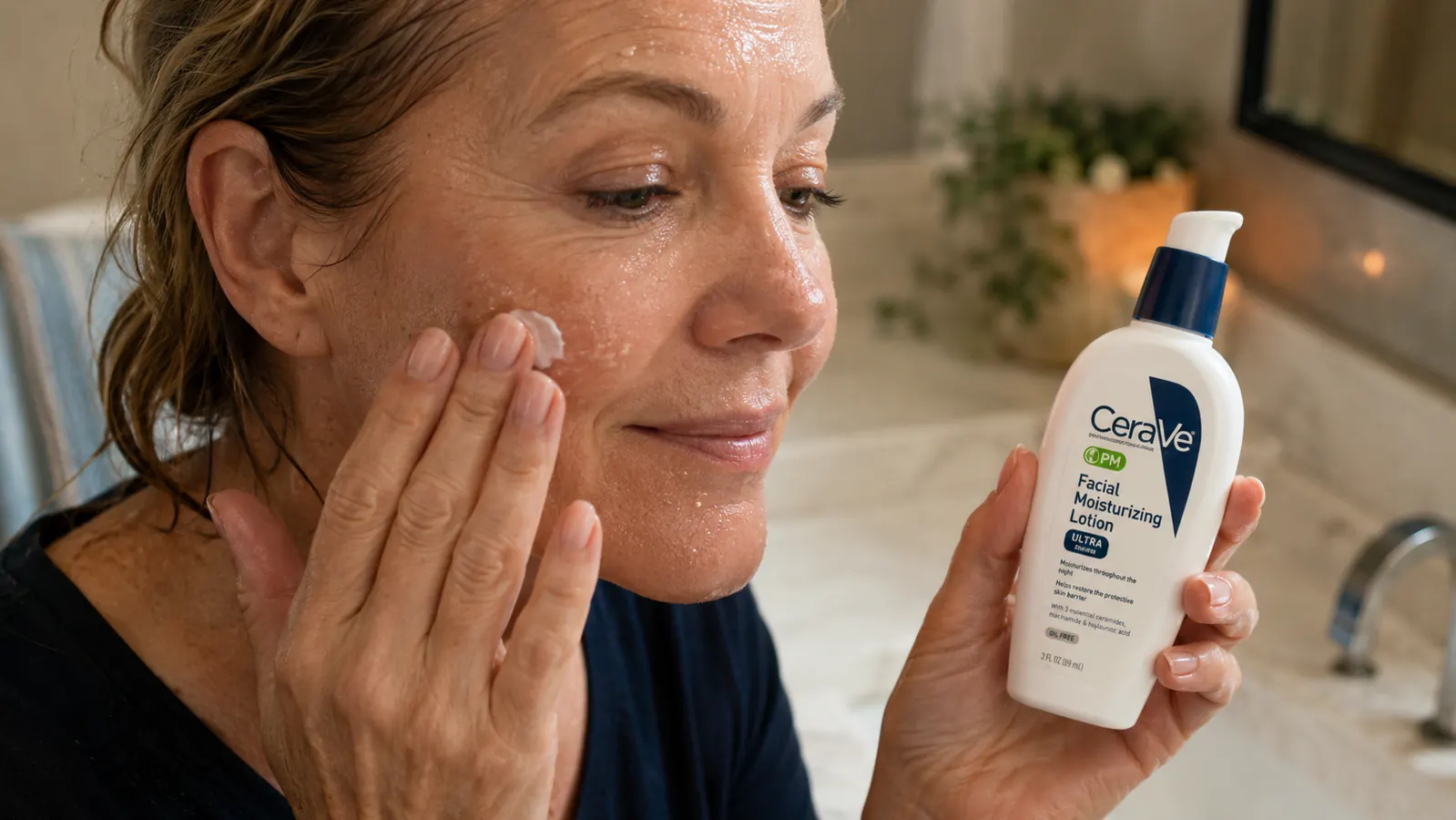
The second habit is timing, and it's the one I ignored for years without realizing it mattered. After washing my face, I pat it mostly dry, not bone dry, and apply CeraVe PM within about three minutes, while there's still a slight dampness left on my skin. A moisturizer applied to damp skin traps some of that surface water underneath it instead of just sitting on top of dry skin trying to pull moisture from somewhere else. Wait too long, past five minutes or so, and the water on your skin evaporates into the air instead of getting locked in, so the whole habit undoes itself.
In practice, this means keeping the bottle somewhere I'll actually reach it fast, on the bathroom counter next to my toothbrush, not tucked in a drawer three steps away. That sounds like a small detail to bother mentioning, but the window is short enough that a bottle in the wrong spot genuinely changes whether I catch it in time or not. I timed myself with my phone the first few nights just to feel out what three minutes actually is, since it's shorter than it sounds once you've finished cleansing, brushed your teeth, and started thinking about anything else.
Step 3: Get the Layering Order Right
If you're using anything else at night, a retinol, a treatment serum, an eye cream, apply those first, on the same damp skin, and let CeraVe PM go on last. Thinner, more active products need to reach your skin directly, and putting a moisturizing lotion down first can block them from absorbing the way they're meant to. I apply my nighttime serum first, wait about a minute, then follow with the CeraVe PM everywhere including over the areas the serum covered, plus my neck, which I used to skip entirely and regret every time I looked in a mirror at an angle.
For the moisturizer itself, I use a dime-sized amount for my whole face and neck, warmed slightly between my fingers first, then pressed into my skin rather than rubbed in hard. It's a lightweight lotion, not a thick balm, so it doesn't take much to cover everything, and pressing instead of rubbing seems to help it settle without pilling under whatever comes next.
Step 4: Add an Occlusive Layer on Top in Winter
Come late fall, CeraVe PM alone stopped being enough for me, especially around my nose, chin, and the corners of my mouth, where dryness always shows up first. What helped was adding a thin layer of a plain occlusive, something like petroleum jelly, over just those specific dry patches after the CeraVe PM had a minute or two to absorb. An occlusive doesn't add hydration on its own, it just seals in the moisture already sitting underneath it, which is exactly what dry winter air keeps pulling away overnight.
I only do this on the driest spots, not my whole face, since my forehead and the center of my cheeks don't need the extra layer even in January, and an occlusive everywhere just felt heavy and unnecessary. I drop this step entirely by late spring, once the heat's off overnight and the air in my apartment isn't as dry. Matching the routine to the season, instead of running the same routine year-round, made more of a difference than I expected going in. Skip this step on skin that runs oily or breaks out easily, since sealing in that much moisture on areas that don't need it can cause its own problems.
Step 5: Fix the Humidity in Your Bedroom
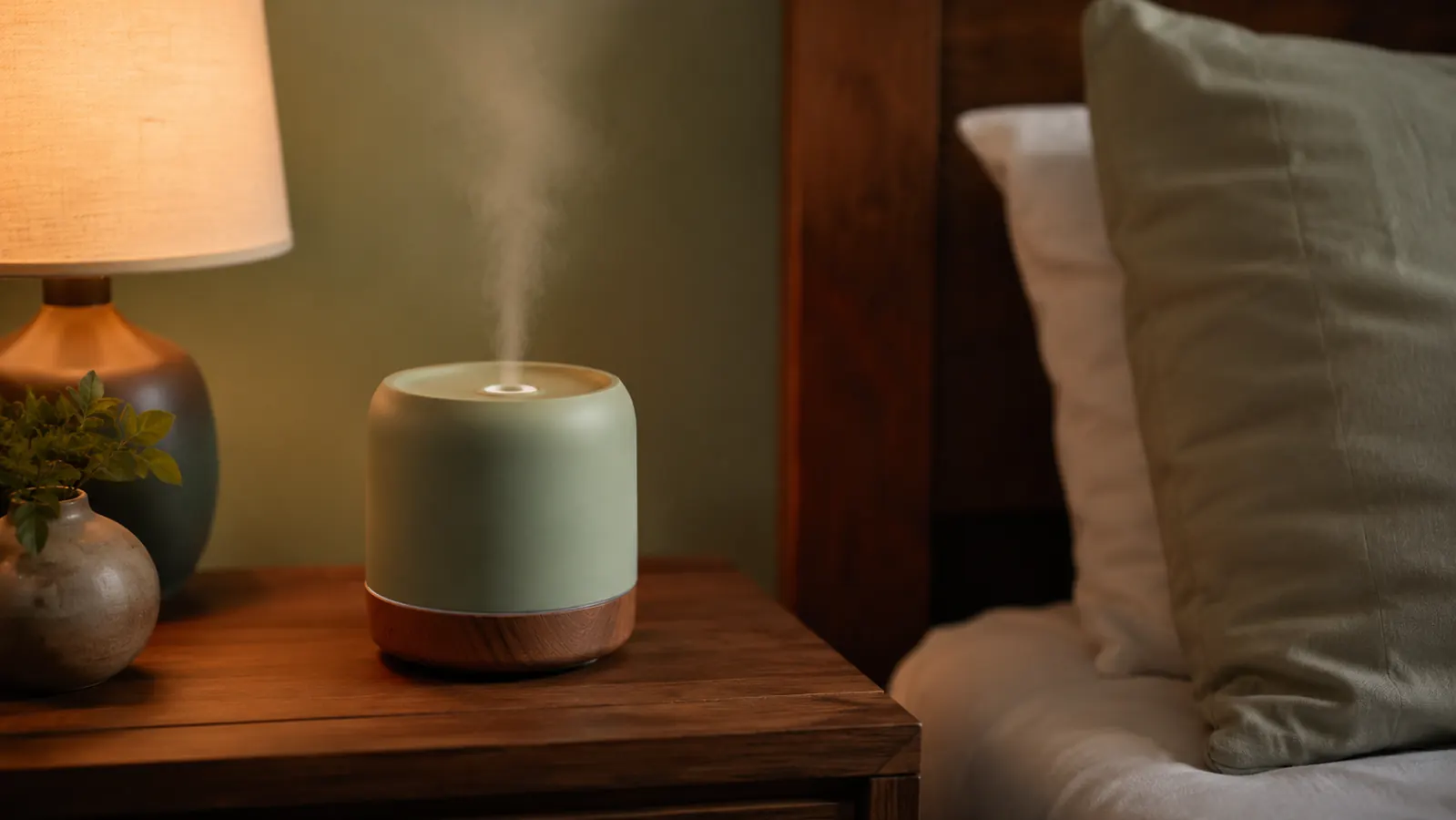
None of the steps above do much if the air you're sleeping in is actively pulling moisture out of your skin all night, which is exactly what a heated bedroom in winter does. I added a small humidifier to my nightstand and keep it running most nights from around November through March, aiming for somewhere in the 40 to 50 percent humidity range rather than guessing. A cheap hygrometer, the kind that costs less than a dinner out, told me my bedroom was sitting around 25 percent some nights before I started paying attention, which is dry enough to undo a decent chunk of whatever a moisturizer is doing.
I clean the humidifier's tank weekly, since a neglected one can grow the kind of buildup you don't want blowing into the air you're breathing all night. This wasn't a step I expected to matter as much as it did. My skin felt noticeably less tight by the second week of running it consistently, and that's a habit that has nothing to do with the moisturizer itself, it just gives everything else a fair chance to work.
Step 6: Change Your Pillowcase and Hot-Shower Habits
The next habit is the one I resisted longest because it felt fussy, changing my pillowcase more often and paying attention to what it's made of. Cotton pillowcases pull moisture and product off your skin overnight and hold onto oil and residue between washes, so I switched to washing mine twice a week instead of once, and I keep a silk pillowcase in rotation because it doesn't absorb as much off my skin as cotton does. I'm not going to pretend the fabric alone changed my skin, but combined with everything else, it stopped undoing a chunk of what the routine was building each night.
The hot-shower habit ties back to the first step. I used to take long, very hot showers right before bed because they felt relaxing, and I hadn't connected that habit to how tight and dry my skin felt the next morning. Shorter, cooler showers before bed, plus that lukewarm face rinse, made a real difference within the first week, well before the moisturizer routine had time to show its own results. None of these habits are complicated on their own. What made the difference was doing all of them together instead of treating any single one as the fix.
What a Week of This Actually Changes
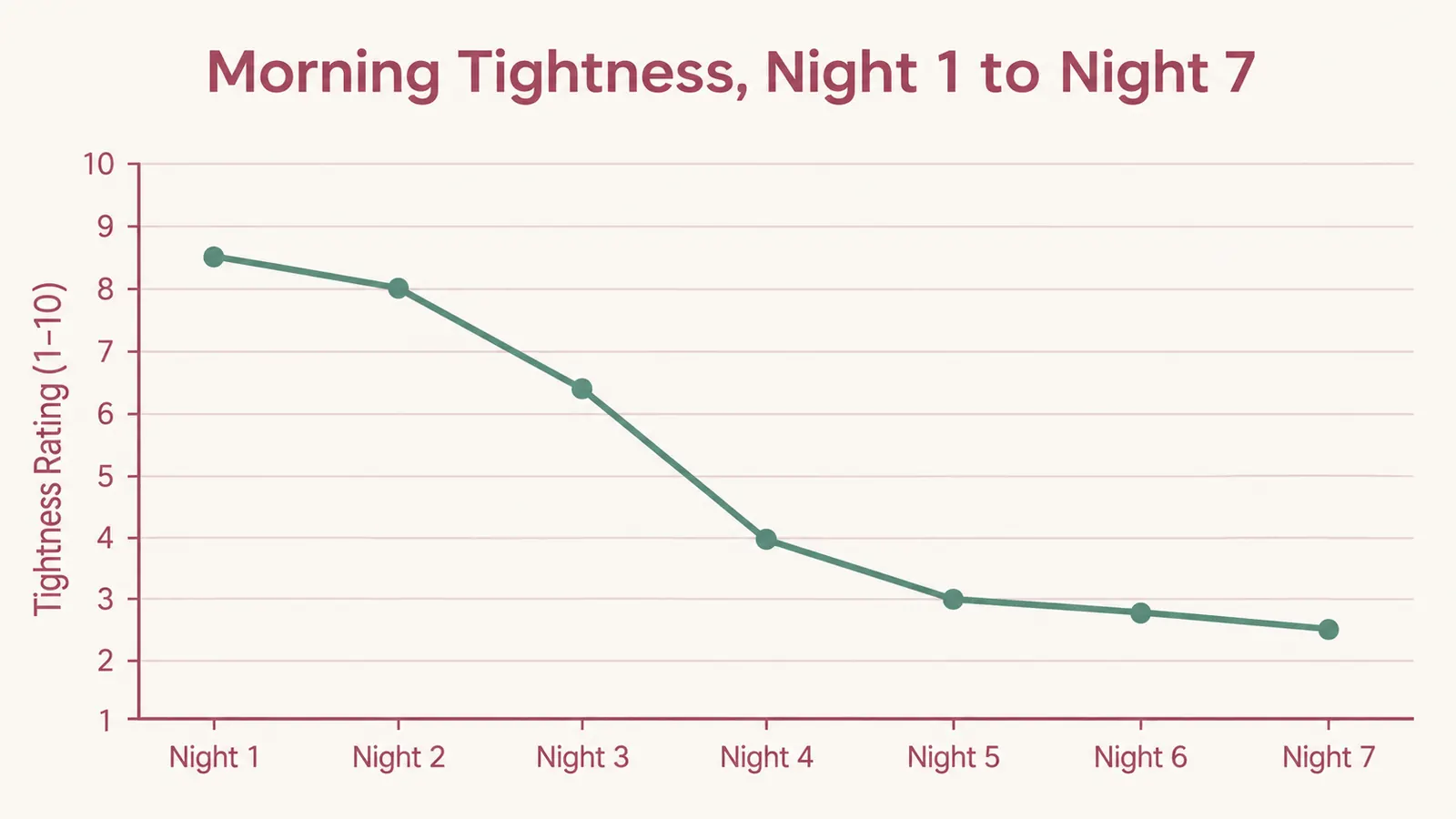
Here's what actually shifted in the first week, without exaggerating it. The morning tightness I'd had for years was noticeably softer by day four, and mostly gone by day seven. My skin looked less flaky around my nose and chin, the two spots that always showed dryness first, and my makeup stopped catching on rough patches along my jawline by around day five. What didn't change in a week: any actual fine lines, the general thinning and looseness that comes with being in my fifties, or the deeper texture changes that took years to show up and weren't going to reverse in seven days just because I finally started applying moisturizer at the right time.
By about the one-month mark, the improvement held steady rather than continuing to build, which tells me the routine had done what a consistent moisturizer and a few habit changes can reasonably do, restore comfortable, hydrated-feeling skin, not rebuild collagen or erase decades of sun exposure. I think that distinction matters. A moisturizer, even a good one used correctly, manages dryness. It doesn't reverse aging, and anyone telling you otherwise is selling something.
What Else Helps
A few habits outside the nighttime routine made a real difference too. I switched to a gentle, fragrance-free cleanser instead of the foaming one I'd used for years, since foaming cleansers tend to strip more oil than dry, mature skin can spare. I also started wearing sunscreen every single morning, since sun exposure makes dryness and fine lines worse over time regardless of how good your night routine is, and I keep a glass of water on my nightstand as a small reminder to actually drink more during the day. If you want the longer version of how this same moisturizer performed over six months of nightly use, including where it fell short, I wrote about that in my full long-term review, and the shorter, more blunt take is in the honest review of the same bottle. If you're curious why a dedicated night moisturizer matters in the first place, I laid out the case in ten reasons a nightly moisturizer fixes persistent dry skin.
My skin didn't get younger in a week. It just stopped feeling like paper by the time I sat down for coffee, and that alone was worth the small habit changes.
Ready to Stop Waking Up Tight and Papery?
Everything above is the exact nighttime routine I still use, built around a plain moisturizer that does the quiet work while you sleep. Check today's price on Amazon if you want to start with the same bottle.
Amazon Check Today's Price on Amazon →