

Nobody warned me this serum would turn my bathroom smell faintly like an orange peel left in a drawer, that the color would darken from pale yellow to something closer to weak tea by week six, or that the glass dropper would leave a little smear on the counter every single morning. I found all of that out on my own, over the sink, at 7am, the way most of us find out anything about skincare.
I'm Vivian. I'm 54, my skin is dry through the cheeks and a little rough at the jawline, and I've been putting TruSkin's Vitamin C Serum on my face most mornings since early March. What follows is not a takedown and it's not a love letter. It's what actually happened, starting with the parts that bothered me, because I think that's the part everyone else skips.
The Quick Verdict
A genuinely decent vitamin C serum with real drawbacks, the smell, the dropper, the early tingle, none of which I'd call dealbreakers once I understood them.
Amazon Check Today's Price →Here's Why I Still Reach for This Bottle, Flaws and All
Every one of the issues below is real. None of them stopped me from finishing the bottle and buying a second one. See today's price and decide for yourself.
Amazon Check Today's Price on Amazon →How I've Actually Used It
I apply the TruSkin serum after washing my face and before whatever moisturizer I'm using that week, usually two to three drops across my forehead, cheeks, and chin, patted in rather than rubbed. Some mornings that's five drops if my skin looks dull. I skip it the two or three nights a month I'm also using a retinol product, because I learned the hard way that stacking active ingredients on dry, mature skin just leaves it raw.
I've gone through one full bottle and I'm most of the way through a second. That's roughly five months of near daily use, with maybe a dozen mornings skipped for travel or plain forgetfulness. I wrote up the fuller, week by week version of that stretch, including what my skin looked like at the one month and three month marks, in a longer piece on how this held up over time, if you want the slow version.
I also tested whether it plays nicely with makeup, since I still wear a light foundation most days for work. Waiting a full five minutes for it to absorb before applying anything on top made the difference between a smooth base and foundation that pilled slightly around my nose. That five minute wait isn't optional in my experience, it's the whole trick.
This piece is different on purpose. I'm not walking you through the whole arc again. I'm starting with the things that annoyed me, because those are the things that make people put a bottle back on the shelf at the store, and I don't think that's always the right call.
The Smell Nobody Warns You About
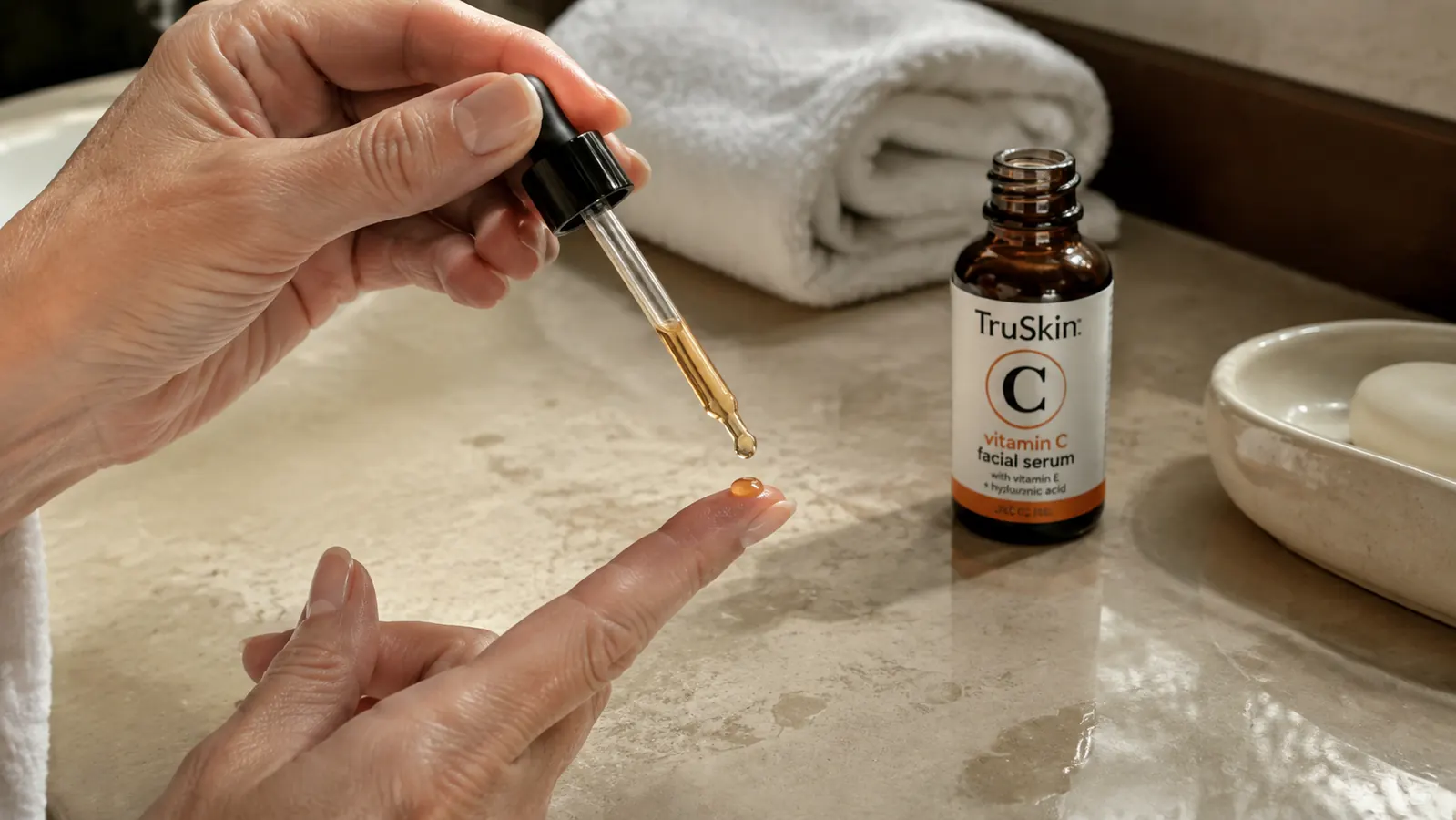
The first time I opened the TruSkin bottle, I actually checked the cap to see if something had gone wrong. It has a citrus smell, sharper than an orange, closer to the smell of orange peel that's been sitting out for a day. It's not unpleasant exactly, but it's not the soft, spa-like scent you get from a lot of serums that are mostly marketing fragrance.
That smell is stronger straight out of the bottle and fades within a minute or two of it being on your skin. It's also, from what I've read about vitamin C formulas generally, a normal sign of an ascorbic acid based product doing what it's supposed to do, rather than a sign of anything wrong with the batch. Still, if you're sensitive to strong citrus smells first thing in the morning, it's worth knowing before it surprises you.
It's stronger than my citrus body wash and noticeably stronger than any facial cleanser I've used, closer in intensity to fresh orange rind than anything I'd call a beauty product scent. I found myself washing my hands right after applying it those first two weeks, just out of habit, though that turned out to be unnecessary since it doesn't linger on skin the way it lingers in the bottle.
By month two the smell didn't bother me at all. I stopped noticing it the way you stop noticing your own kitchen. But I remember being genuinely put off the first week, and I would have appreciated someone telling me that ahead of time instead of finding glowing five star reviews that never mentioned it.
What Happens to the Color, and Why That's Not the Red Flag You Think It Is
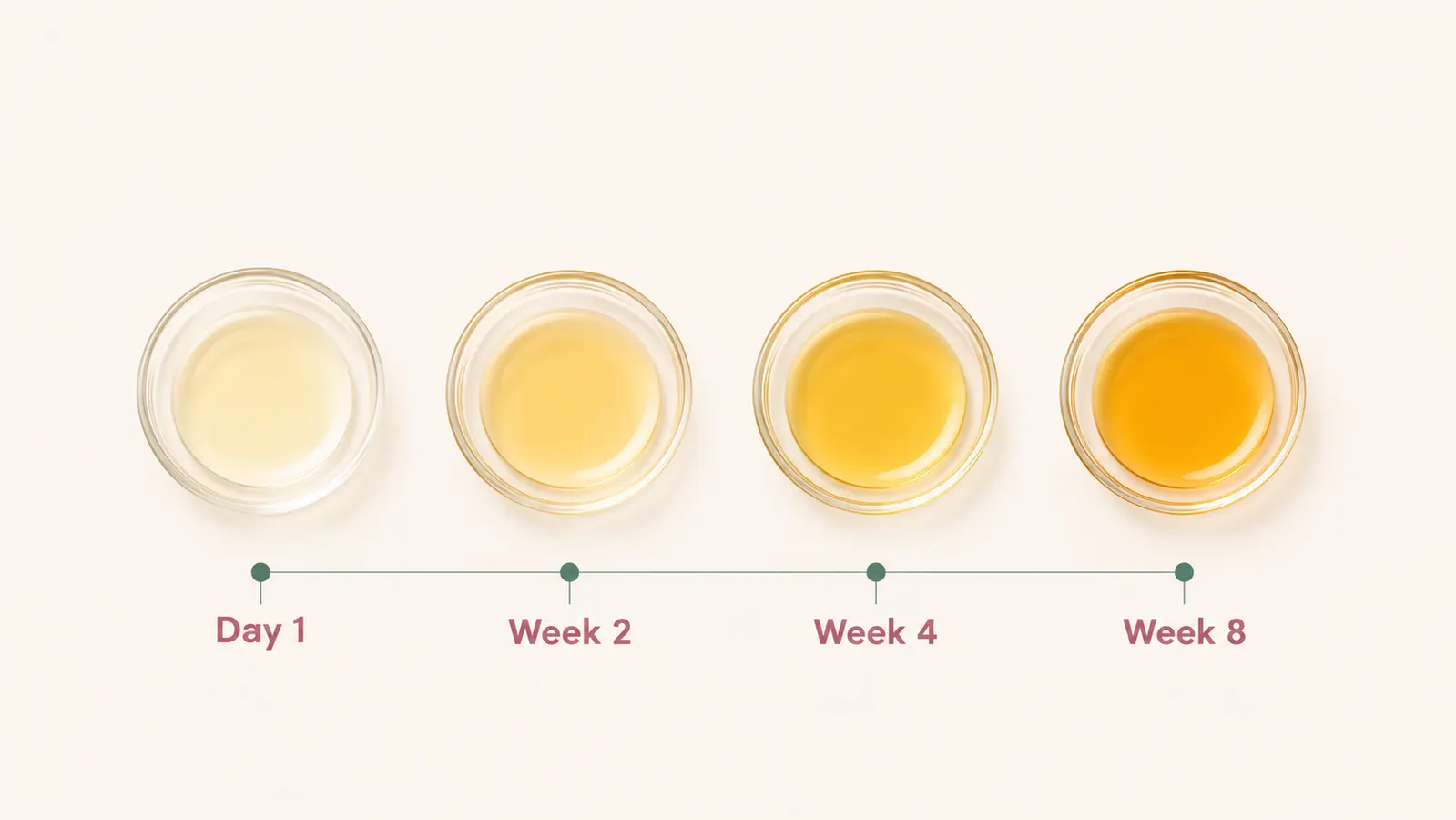
My first bottle started out a pale, almost watery yellow. By the six week mark it had darkened to something closer to weak black tea. By the time I finished it, it was a deeper amber. If you've used any vitamin C product before, you probably know where this is going. If you haven't, that color shift can look alarming, like the product has gone bad.
Vitamin C in serum form is genuinely unstable once it's exposed to air and light, and that darkening is oxidation, the same basic chemistry that turns a sliced apple brown. It doesn't mean the bottle is unsafe to use, but it's honest to say that a fully oxidized serum likely isn't delivering as much of the original active ingredient as a fresh one, so a serum that's gone very dark, closer to brown than amber, is one I'd stop using rather than push through.
What I do now, and wish I'd started doing from day one, is keep the bottle in the cardboard box it came in, away from the bathroom window, and I try to finish a bottle within two to three months of opening it. That single habit change made a noticeable difference in how slowly the color shifted on my second bottle compared to my first.
I also started writing the date I opened each bottle on the box itself, in pen, so I'm not guessing later whether it's been six weeks or four months. It sounds fussy, but it took me twenty seconds and it's the only way I've stopped second guessing whether the bottle in my cabinet is still doing what it should.
The Dropper Is the Weakest Part of the Bottle
The glass dropper on this TruSkin bottle is the one design choice I'd change if I could. It's a standard press bulb dropper, and on both bottles I've owned, the seal around the neck has gotten slightly loose after a few weeks of daily use, enough that a small drop sometimes escapes down the side of the bottle onto the counter or into the little groove around the cap.
It's not a major flaw. I keep a folded hand towel under the bottle now, the way I would under a bottle of good olive oil, and that solved it entirely. But I mention it because a smeared amber ring on a white bathroom counter is exactly the kind of small daily annoyance that makes a product feel less premium than the ingredients inside it deserve, and I'd rather you know to keep a towel handy than discover the ring the way I did.
A pump bottle would solve this outright, and I've used serums with pumps that never left a mark on the counter in months of use. I don't think the dropper is a dealbreaker, since it does let you control exactly how many drops you're using, but it's a fair tradeoff to know about before the bottle arrives.
The Tingle on Day One
The first two mornings I used this, I felt a mild tingling on my cheeks, not painful, more like the feeling right after you've been out in cold wind. It lasted maybe ninety seconds and faded on its own. By the third day, nothing. My skin had adjusted, or I'd simply gotten used to the sensation, and either way it never came back, even on the mornings I used more than my usual two or three drops.
The tingle was strongest on my cheeks, where my skin runs driest, and barely noticeable on my forehead, which tends to be a little more resilient. That pattern lined up with how my skin has reacted to other actives over the years, so it didn't worry me, but it's worth knowing your own trouble spots before you apply this across your whole face for the first time.
If you have skin that's reactive to actives in general, that initial tingle is worth taking seriously rather than pushing through. I'd patch test on the inside of your wrist or along your jawline for two days before putting it across your whole face, especially if you already know fragrance or acids tend to bother you. This isn't medical advice, just the same caution I'd give a friend before she tries anything new on her face.
For me, someone with dry, somewhat sensitive skin who's dealt with plenty of products that stung and kept stinging, the fact that this settled down after two days and never flared again was one of the more reassuring parts of the whole experience.

What It Actually Did, Once I Got Past All That
Here's the part that matters more than any of the above. Once the smell stopped registering, the color shift was under control, and the tingle was long gone, what I was left with was a TruSkin serum that noticeably evened out the dullness across my cheeks, particularly in the mirror at 7am, which is the least forgiving light in my house. My skin looked less flat, more like itself on a good day, most mornings by week three.
The dry patches along my jawline didn't disappear, and I don't think any serum was ever going to fix that on its own, that's a moisturizer's job. But the hyaluronic acid in this formula meant my skin didn't feel tighter or more stripped after applying it, which had been my worry going in given how dry my skin runs in general.
A few small sun spots on my left cheek, the kind I've had for years from decades of not wearing enough sunscreen, looked a shade less noticeable by month three, though I want to be careful here, that's a subtle change I noticed in good light and photos, not a dramatic before and after, and I can't say for certain how much of it was this serum versus the sunscreen I finally started wearing consistently around the same time.
If you want the broader case for what a vitamin C serum can realistically do for skin like mine, dull, a little uneven in tone, mature, I laid out the fuller argument in this separate rundown. This piece was always meant to be the warts-and-all version.
What I Liked
- Noticeably evened out dullness by around week three of daily use
- Contains hyaluronic acid, so it didn't leave dry skin feeling tighter
- Initial tingle settled within two days and never returned for me
- Current price is reasonable for a full ounce bottle used daily
Where It Falls Short
- Strong citrus smell straight out of the bottle, especially the first two weeks
- Serum darkens with oxidation, needs to be stored out of light and used within a couple months of opening
- Glass dropper seal loosens slightly over weeks of use and can drip onto the counter
- Mild tingling on the first one to two days for sensitive skin
None of the annoying parts were dealbreakers. They were just things nobody bothered to mention before I opened the box.
Who This Is For
This is a fit for someone with dry to normal skin, mature or not, who wants a straightforward TruSkin serum without paying for a fragrance-free lab formula, and who's willing to store it properly and use it up within a couple months rather than let it sit in a cabinet for a year. It's also a fit if you've been put off by more clinical, expensive serums and want to see whether vitamin C does anything for your skin at all before spending three times as much elsewhere.
It's also worth it if mornings are already rushed and you want something you can apply, wait five minutes, and move on with your routine, rather than a multi step application with timing that has to be exact.
Who Should Skip It
If you're sensitive to fragrance and know that citrus scents bother you even briefly, or if you've had bad reactions to vitamin C or acid-based products before, I'd look elsewhere or patch test carefully first. And if you're the type who forgets a bottle exists once it's opened, you'll likely end up applying a fully oxidized, less effective serum by the time you remember it, so this only makes sense if you'll actually use it up on a normal schedule.
If a pump dispenser is a non negotiable for you, or you're not willing to deal with any dropper mess at all, it's fair to look at other formats instead. This one asks a little patience of you in exchange for what it does.
The Bottle That Earned a Spot on My Counter Even After I Told You Everything Wrong With It
The smell fades, the tingle settles, and the dropper is a five second fix with a hand towel. What's left is a serum that did what I needed it to do.
Amazon See Today's Price on Amazon →