

I'm Vivian Slade, and the dark spot that finally made me pay attention sits just under my left cheekbone, a coin-sized patch of brown that showed up sometime in my late forties and never left on its own. For years I covered it with concealer instead of doing anything about the skin underneath. What actually moved the needle, slowly and only partway, was a plain routine built around a vitamin C serum used the right way, every morning, for months at a time. This is that routine, step by step, using the TruSkin Vitamin C Serum I've relied on for the better part of a year, with honest timelines instead of the overnight promises most articles like this one make.
Before we get into the steps, I want to set expectations correctly, because this is where most people give up too early or expect too much. A vitamin C serum is not a peel and it's not a prescription treatment. It works slowly, on the surface, and it does more for general dullness and uneven tone than it does for a single, deep, long-standing spot. If you have a mole or mark that's changed shape, color, size, or started bleeding, that's a question for a dermatologist, not a skincare routine, and nothing below replaces that visit. What follows is what actually helped with ordinary dullness and typical sun-related dark patches, and roughly how long each part took.
Tired of Covering the Same Dark Spot Every Morning Instead of Fading It?
I spent years hiding mine under concealer before I built a routine around a real vitamin C serum instead. Here's the exact one I use, laid out step by step below, plus where to check today's price if you want to start with the same bottle.
Amazon Check Today's Price on Amazon →Step 1: Start With a Vitamin C Serum That's Actually Formulated to Work
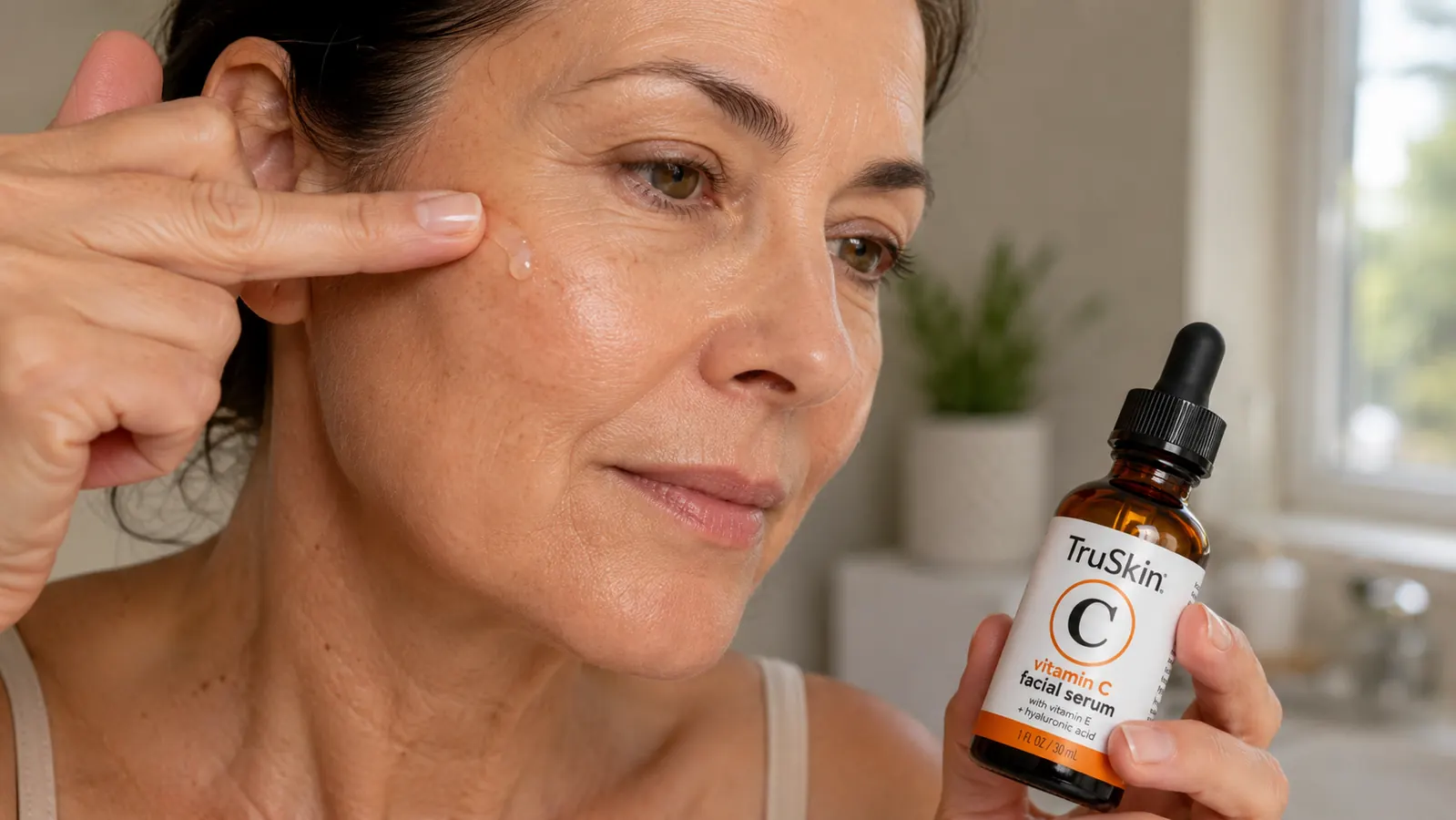
Not every bottle labeled vitamin C does much. The form of vitamin C matters, so does the concentration, and so does how the product is packaged, since vitamin C breaks down with light and air exposure. I use the TruSkin Vitamin C Serum, which pairs vitamin C with hyaluronic acid and vitamin E and comes in amber glass, which slows that breakdown down compared to the clear plastic bottles a lot of drugstore versions use. It's also priced low enough that using it every single morning, instead of rationing drops to make an expensive bottle last, was realistic for me.
If you're shopping around instead of starting with what I use, look for a concentration somewhere in the 10 to 20 percent range on the label, a bottle that isn't clear glass or clear plastic, and a texture you'll actually tolerate under makeup or sunscreen. A serum that sits unused in your medicine cabinet because the smell or feel bothers you won't do anything for a dark spot no matter how well it's formulated. I've written a more complete breakdown of what changed and what didn't over six months of daily use in my full long-term review of the TruSkin serum, if you want the longer version before committing to a bottle.
Step 2: Patch Test First, Then Introduce It Slowly
I patch tested on the inside of my forearm for two full days before I put a drop anywhere near my face, and I'd tell anyone to do the same regardless of what the label promises about being gentle. Apply a small amount to unbroken skin, wait 48 hours, and only move to your face if you see nothing, no redness, no itching, no small bumps. This step feels like it slows you down for nothing when your skin is fine, and it saves you a week of irritated, flaking skin when it isn't.
Even after a clean patch test, I started on my face every other morning for the first two weeks rather than jumping straight to daily use. Vitamin C can cause a mild tingling or a light warmth on application, especially early on, and easing in gives your skin a chance to adjust without a full week of discomfort. Mine tingled lightly for about thirty seconds each morning for the first two weeks and then stopped entirely, which is a normal pattern. If tingling turns into real redness or burning that doesn't fade, stop and give your skin a break instead of pushing through it.
By week three I was using it every morning without any lingering irritation, and that's roughly the timeline I'd expect for most people with average, non-sensitive skin. If you have a known sensitivity to acids or a history of reactive skin, stretch this step out longer. There's no prize for rushing it, and an irritated face sets back the timeline further than a slow, patient start ever would.
Step 3: Apply It in the Right Order, on Clean, Dry Skin
Order matters more than most people expect. I cleanse first, pat my face fully dry, and actually wait about a minute before applying anything, since vitamin C serums don't perform as well on damp skin, the water can dilute the formula right where you need it working. Then I use one to two full droppers across my forehead, cheeks, and the areas with visible dark spots, pressing rather than rubbing it in, and I avoid the very thin skin right up against my eyes.
After the serum sinks in, usually ninety seconds to two minutes, I follow with a plain moisturizer and then sunscreen. Applying moisturizer too soon, before the TruSkin serum has actually absorbed, is the single biggest reason I've seen people complain about pilling or a sticky feeling under makeup. Give it the full two minutes even on a rushed morning. It's a small habit that makes a real difference in how the rest of your routine sits on your skin for the day.
I apply it to the specific spots I'm targeting a little more deliberately, an extra light pat directly on the darker patch near my cheekbone, rather than assuming an even, all-over application will do more for one stubborn spot than the general dullness around it. That targeted attention hasn't sped things up dramatically, but it's the closest thing to a shortcut I've found within what a serum can realistically do.
Step 4: Pair It With Sunscreen Every Single Morning, No Exceptions
This is the step people skip and the one that matters most. Vitamin C can make skin slightly more sensitive to UV exposure while it's working, and dark spots from sun damage will not fade, and can get worse, if you're applying an active serum in the morning and then walking out into direct sun with nothing protecting your skin. I wear a broad-spectrum sunscreen every single day I use this TruSkin serum, rain or shine, even on days I'm mostly indoors, because UV exposure through windows and daily errands adds up more than people think.
I think of the serum and the sunscreen as a single step now, not two separate habits, because using one without the other genuinely undoes a meaningful part of the effort. If you only have room for one non-negotiable step in your entire skincare routine, this is the one. Sunscreen does more for dark spots and overall aging than nearly anything else you could put on your face.
Step 5: Track Progress Honestly and Give It Real Time
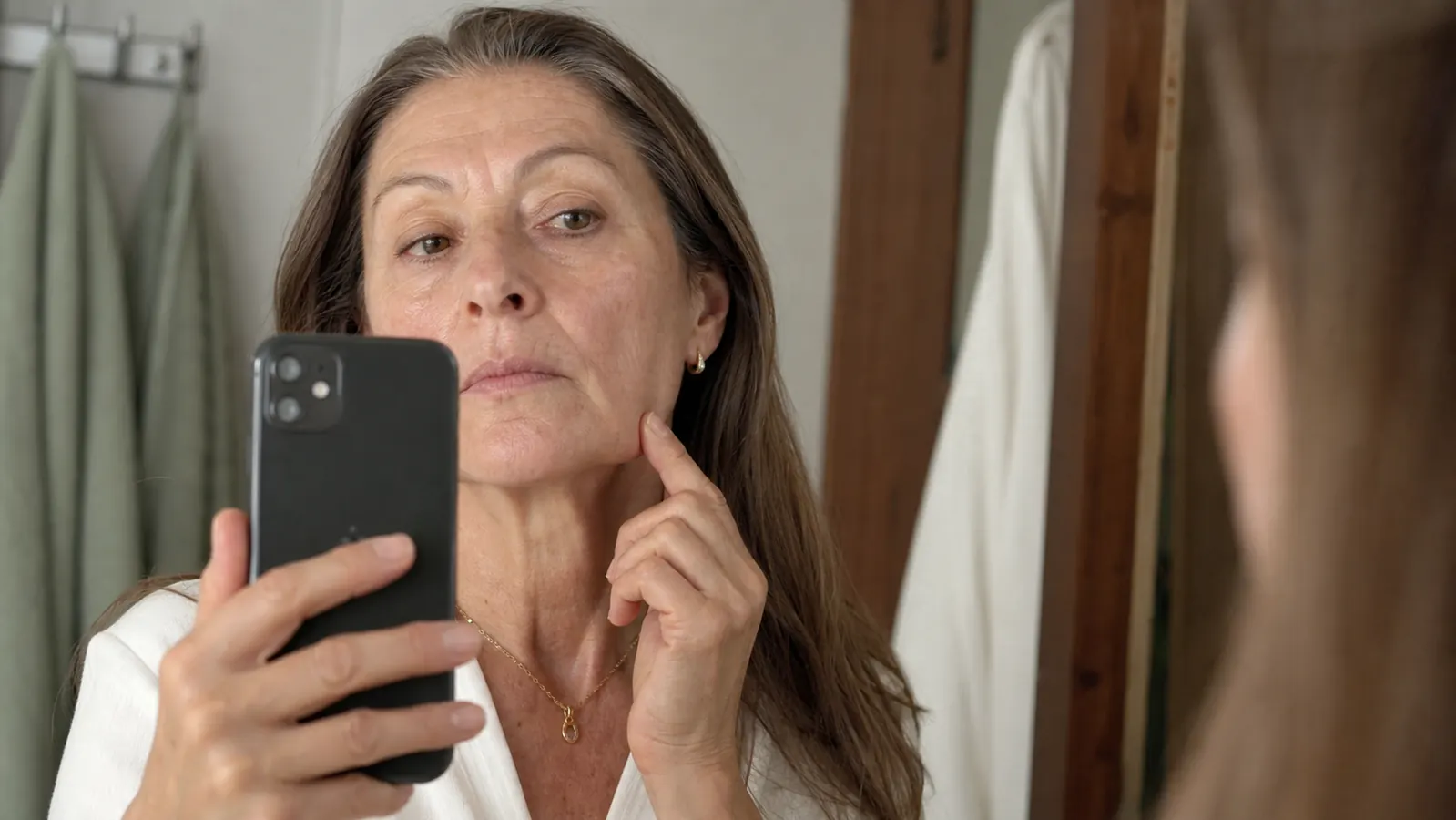
I took a photo in the same bathroom light every couple of weeks, same time of morning, same angle, because memory alone is a terrible way to judge slow change. Looking in the mirror every single day, you genuinely cannot see gradual improvement, but photos two months apart make it obvious. This is the single habit that kept me from quitting around week four, when nothing felt different day to day even though, looking back at the photos later, the general dullness had already started shifting.
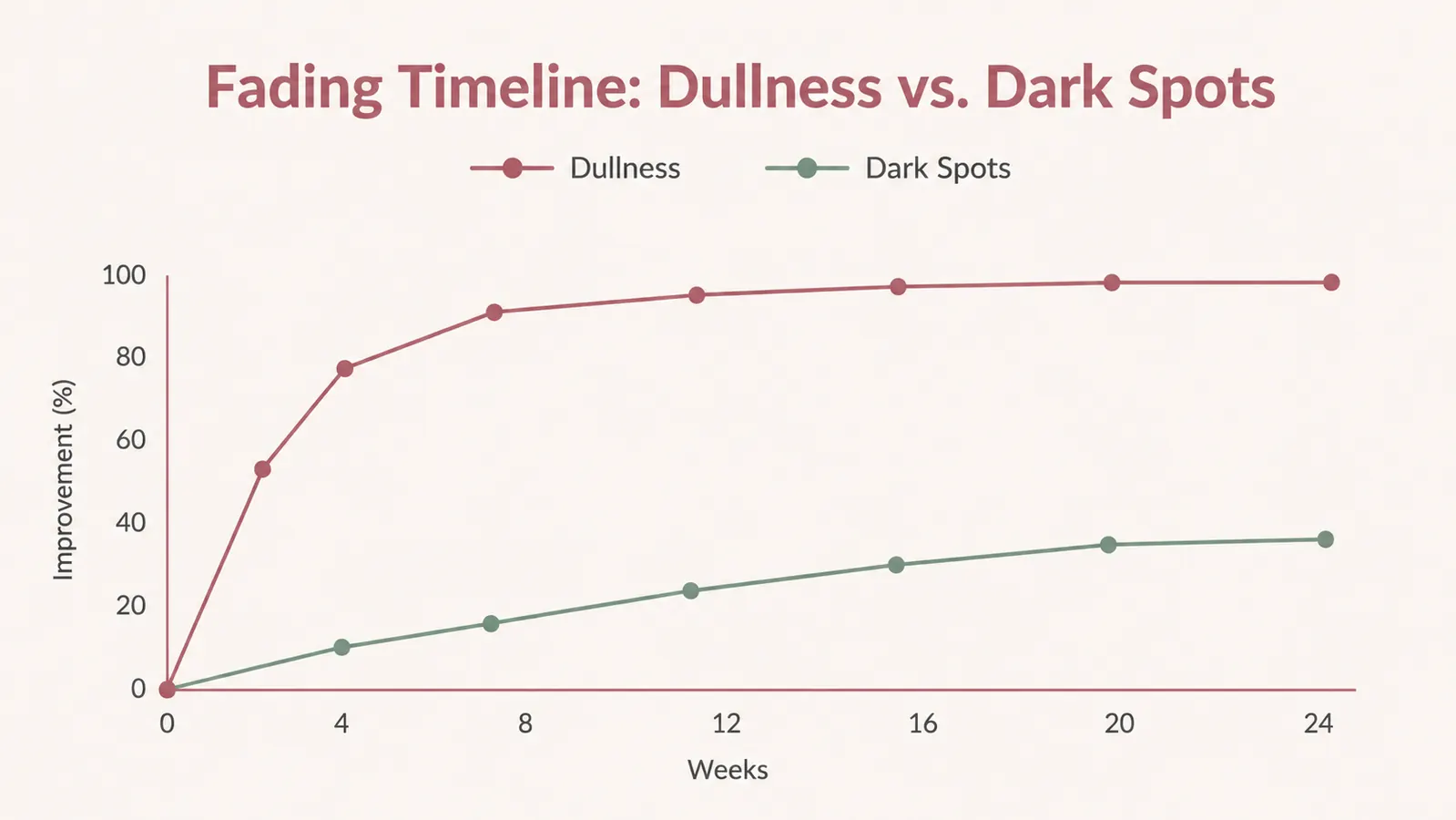
Realistically, expect general dullness to improve within three to four weeks of consistent daily use. Expect lighter, more recent sun spots to soften somewhere between two and three months. My own oldest, deepest spot, the one near my temple I've had for over fifteen years, barely moved even after six full months, and I don't think any over-the-counter serum was ever going to fully resolve something that established. Knowing that going in would have saved me some disappointment around month three, when I kept checking a spot that was never going to be the serum's biggest win.
If a spot hasn't budged at all after three or four months of genuinely consistent use, or if anything about it changes in a way that worries you, its shape, its texture, sudden growth, that's the point to talk to a dermatologist instead of trying a stronger serum or a different brand on your own. A vitamin C serum is a reasonable first step for ordinary dullness and typical sun spots. It isn't a diagnosis and it isn't a guarantee, and I don't want to pretend otherwise just because it worked reasonably well for most of my face. I also wrote a shorter, more blunt account of what surprised me most about this same serum in the honest review of this same product, if you'd rather read the condensed version before the six-month one.
What Else Helps
A vitamin C serum works better as part of a routine than as a stand-alone fix, and a few other habits made a real difference alongside it. Gentle exfoliation once or twice a week, nothing aggressive, helped the TruSkin serum reach fresher skin instead of sitting on top of dry, flaky patches, especially during the winter months when my skin runs drier. I kept this separate from the vitamin C mornings, exfoliating in the evening instead, since layering too many actives on the same skin at the same time is how irritation starts.
Hydration from the inside matters more than I gave it credit for early on. Skin that's chronically a little dehydrated looks duller regardless of what you're applying to the surface, and I noticed a small but real difference in overall texture on weeks I was drinking enough water and sleeping close to seven hours a night versus weeks I wasn't. None of that fades a dark spot directly, but it changes how obvious dullness looks next to one, which affects how the whole picture reads in the mirror.
If you're specifically after fine lines and rough texture rather than dark spots and dullness, a nighttime retinol is the more targeted tool, and it works on a different schedule than a morning vitamin C serum, so the two can coexist without conflict as long as you're not applying both in the same routine. For anyone curious about why a vitamin C serum specifically earns a spot in a morning routine in the first place, I laid out the full case in ten specific reasons it helps with dullness that go beyond just dark spots.
The spot near my temple never fully moved. I think that's worth saying plainly, because a routine that's honest about its limits is more useful than one that promises to erase something a serum was never going to erase.
Ready to Start the Same Five-Step Routine?
Everything above is the exact routine I still use every morning, built around a serum that's easy to stick with because it doesn't ask much of you beyond showing up daily. Check today's price on Amazon if you want to start with the same bottle I did.
Amazon Check Today's Price on Amazon →