

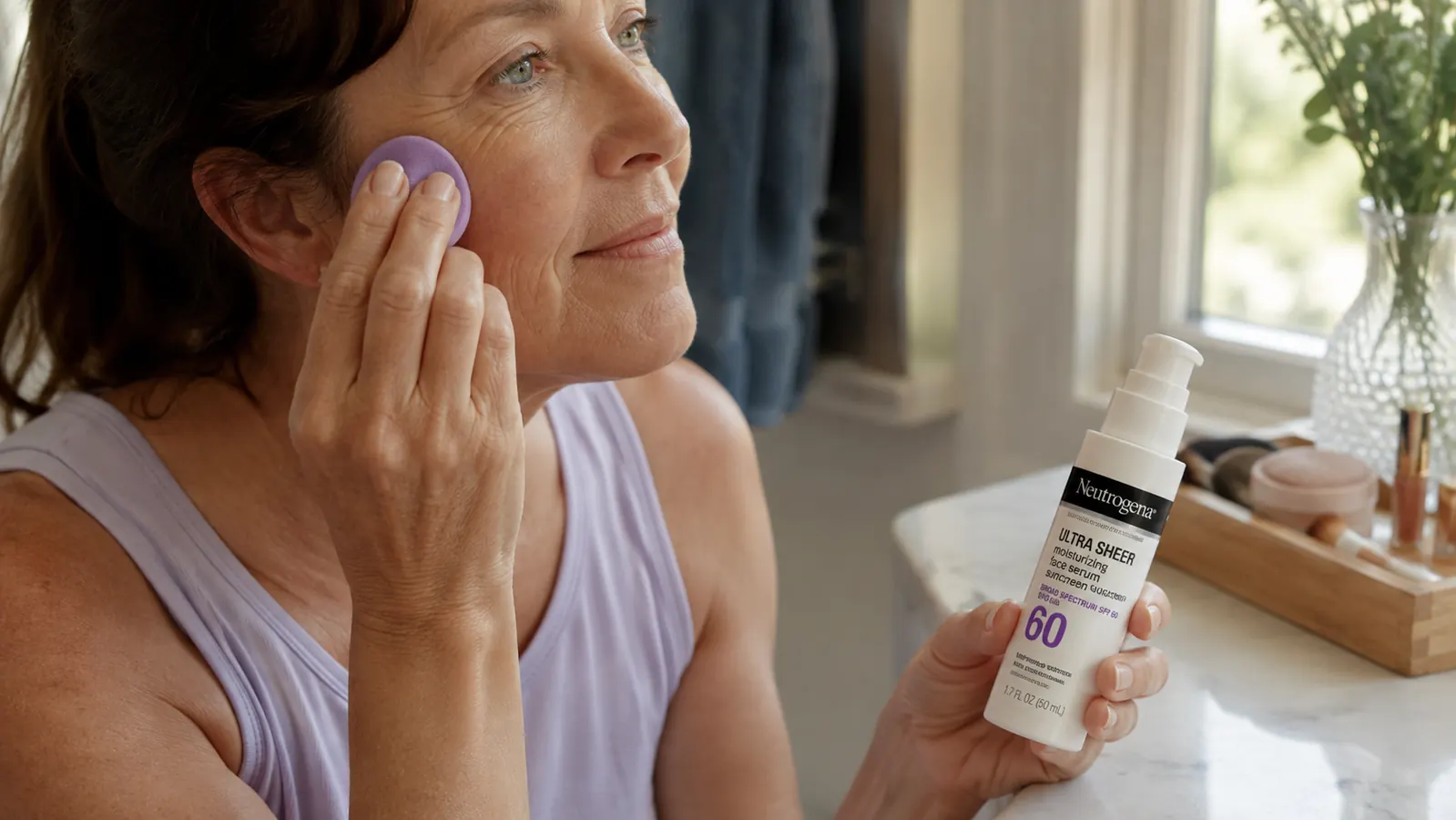
I'm Vivian Slade, and for longer than I want to admit, sunscreen under makeup meant one of two outcomes. Either my foundation slid around on little gray rolls of product by the time I got to the kitchen, or I skipped the sunscreen entirely on days I had somewhere to be, which defeats the whole point of putting it on in the first place. What finally fixed it wasn't a different sunscreen, though the one I settled on, Neutrogena Ultra Sheer Sunscreen Serum SPF 60, made this a lot easier than the thicker creams I used before it. What actually fixed it was the order I applied things in, the timing between layers, and a technique I'd been getting wrong for years without realizing it.
None of this is complicated once you know it, but nobody ever sat me down and explained the actual mechanics, so I spent years assuming pilling was just something certain skin types had to live with. It isn't, and it has nothing to do with age or oil level either, I've watched women with completely different skin than mine make the exact same layering mistake I did. Here's the exact seven-step method I use now, with the reasoning behind each step so you can adjust it for whatever sunscreen and makeup you already own instead of buying anything new.
Tired of Foundation Balling Up on Little Gray Rolls by Nine A.M.?
Pilling isn't a skin problem, it's a layering problem, and once I understood why it happens I stopped fighting my own routine every morning. Here's the sunscreen I use under makeup with none of that gray-roll mess, plus the exact method below.
Amazon Check Today's Price on Amazon →Step 1: Understand Why Pilling Actually Happens in the First Place
Pilling is what happens when two products that don't play well together get pushed around on your skin before either one has fully settled. Most facial sunscreens, including the Neutrogena serum I use, lean on silicones to spread thin and feel smooth, and silicones form a light film on the surface of your skin rather than sinking in the way a water-based moisturizer does. When you layer a water-based primer or foundation on top of that film before it's finished setting, the two textures fight instead of merging. Add friction from rubbing the next product in with your fingers, and that fight shows up as visible little rolls of product, usually right where your fingers moved the most, along the nose, the chin, and the outer edges of the cheeks.
It's rarely the sunscreen alone or the makeup alone. It's almost always the combination plus timing plus technique, all three at once, which is exactly why so many of us blame the wrong thing and keep buying new sunscreens that don't actually fix anything. I didn't believe that until I changed only my technique one week without switching a single product I owned, and the pilling I'd blamed on my skin for years mostly disappeared. That was the week this whole method started, and it's the reason I stopped shopping for a new sunscreen every spring.
Step 2: Give It a Real Ninety Seconds Before Anything Else Touches Your Face
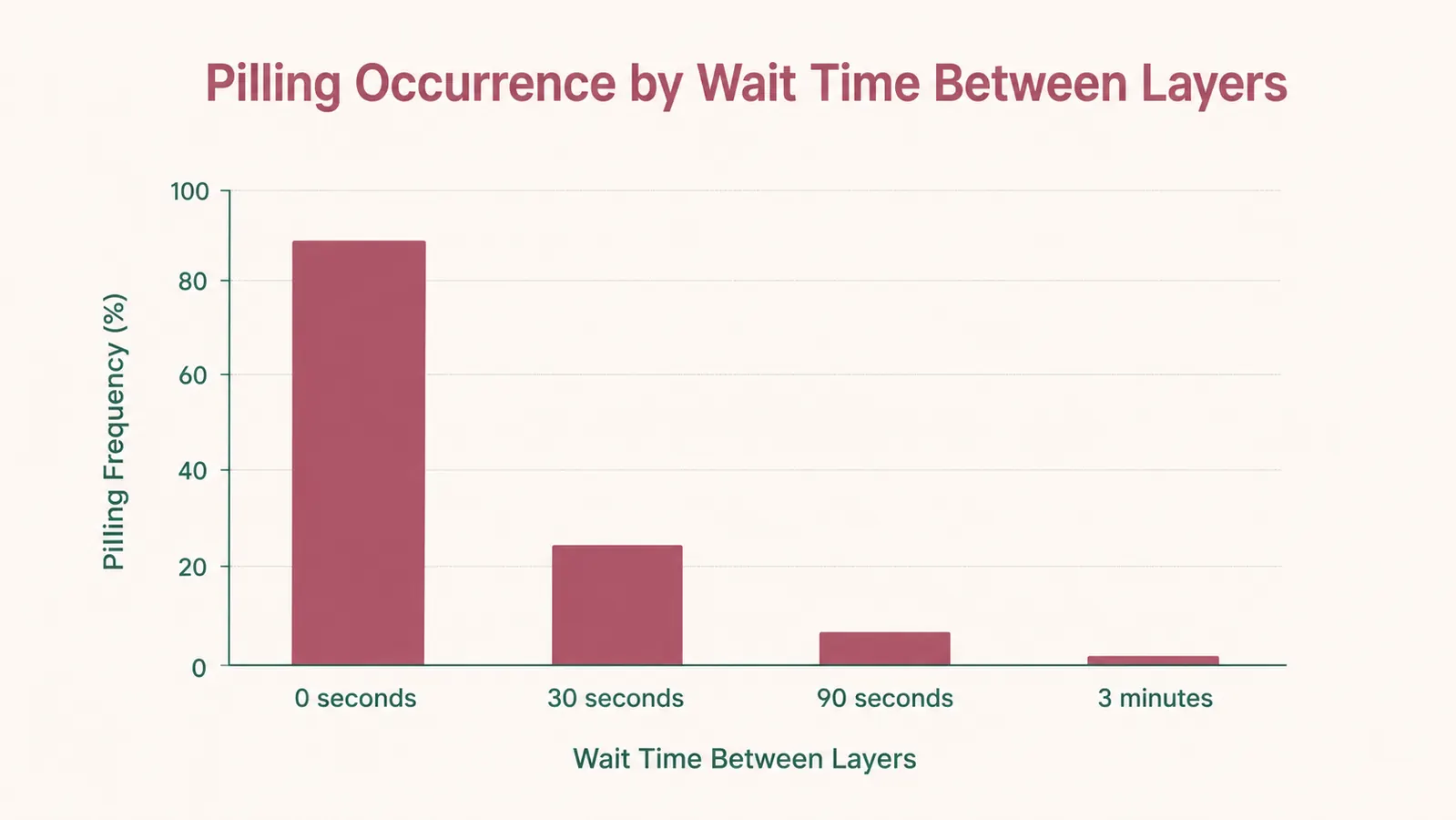
This is the step I skipped for years without realizing it mattered. After I smooth on the Neutrogena serum, I set a timer, an actual timer on my phone, for ninety seconds and use that window to brush my teeth or pick out an outfit, anything that keeps my hands off my face. Ninety seconds is roughly how long it takes the silicone film to finish settling into skin that's fully absorbed it, and reaching for primer at the thirty-second mark is the single most common reason pilling shows up at all, more common than the actual products involved.
On humid days I push that to a full two minutes, since moisture in the air slows how quickly anything absorbs on my skin. I know two minutes sounds like nothing to write down as a rule, but before I started timing it, my own sense of when it was ready was consistently wrong by at least thirty seconds, and that thirty seconds was the whole difference between a clean base and a chin full of little rolled-up beads I'd then have to wipe off and start over.
Step 3: Press Every Layer After That, Never Rub It In
Rubbing is friction, and friction is what physically breaks up a half-set film and rolls it into visible pills. I switched from rubbing primer and foundation in with my fingertips to pressing everything in instead, using either a damp makeup sponge or the flat pads of my fingers in a patting motion, straight down and lift, straight down and lift, never side to side and never in circles. It felt slower the first week and genuinely isn't once it's a habit, maybe an extra thirty seconds across a whole face.
A slightly damp sponge helps more than a dry one, since the dampness gives the sponge some glide without the dragging motion your fingers naturally fall into. I keep mine in a small dish of water on the counter and squeeze it out before I start, not soaking, just enough that it isn't bone dry, and I replace it every couple of weeks since a worn-out sponge starts dragging no matter how damp it is. That one swap, sponge instead of fingers, pressing instead of rubbing, solved more of my pilling than any product change ever did.
Step 4: Use Enough Sunscreen, Not the Thin Layer You've Been Taught to Use
Ironically, using too little sunscreen causes more pilling than using enough, because a too-thin layer never fully forms the protective film it needs to, so it stays tacky and unsettled no matter how long you wait. For a full face and neck, I use a dollop of the Neutrogena serum about the size of a nickel to a quarter, not the pea-sized amount I used to think counted as generous. That's roughly a quarter teaspoon, which sounds like a lot until you actually measure it against what most of us have been applying for years.
This matters for sun protection on its own, since most people apply less than half the amount a sunscreen was tested with, but it also matters for how it wears under makeup. A proper amount, spread evenly and given its full ninety seconds, sets into a smoother, more finished film than a scant amount rushed on and covered up too soon. I split the dollop into two smaller amounts now, one for the center of my face and one worked outward toward my hairline and jaw, since applying it all at once in one spot left the outer edges thinner than the rest.
Step 5: Know Which Primers and Moisturizers Are Most Likely to Fight It
Not every combination causes trouble, but a few pairings are repeat offenders. Heavy, pore-blurring silicone primers layered on top of a silicone-based sunscreen tend to slide against each other rather than bond, since two silicone films don't grip one another the way a film and a water-based layer sometimes do. Thick, occlusive night creams used as a daytime base can do the same thing if they haven't fully absorbed. And high-alcohol vitamin C serums or a morning exfoliating acid applied right before sunscreen can dry too fast on the surface, leaving a slightly rough film that then pills the moment foundation goes over it.
My own fix was simple once I identified the culprit. I moved my vitamin C serum to the morning shower routine instead of right before the Neutrogena serum, giving it more time to fully absorb, and I switched my old silicone-heavy primer for a lighter, water-based one. I didn't have to give up any product I actually loved, I just had to change the order of two steps or swap one specific item that was consistently the problem, and it took a single Saturday of experimenting to find it.
Step 6: Reapply Over Finished Makeup Without Wrecking Any of It
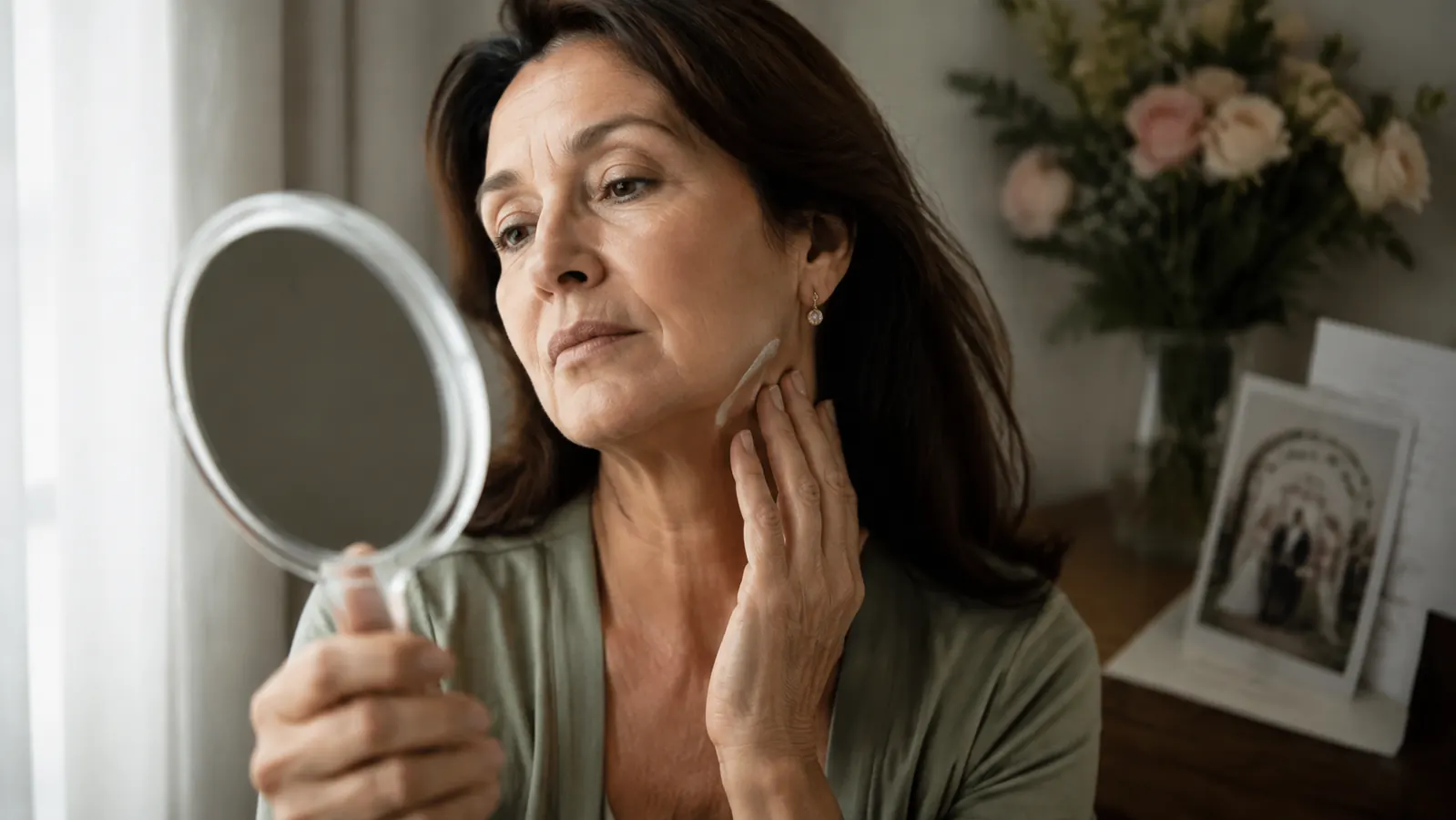
Reapplying liquid or serum sunscreen over a finished face isn't realistic, and I stopped pretending it was. For midday touch-ups on days I'm out in real sun, gardening or sitting through my grandson's soccer games, I use a pressed mineral powder sunscreen with a fluffy brush, applied in a light dusting rather than pressed on hard, which won't disturb foundation the way a cream or serum would. A fine sunscreen mist held at arm's length works too, in a light pass rather than a heavy spray that pools and drags on your skin, and I always close my eyes and mouth while I spray it.
I blot any midday shine with a tissue first, then reapply, since patting powder or mist onto oily skin is more likely to smear than to set cleanly. It's not a perfect substitute for a full reapplication on bare skin, and I say that plainly rather than pretending powder alone carries the same protection as the original layer, but it's the realistic version of reapplying over a face that's already made up for the day, and it's a lot better than skipping reapplication entirely.
Step 7: Test the Exact Combination Before a Day That Actually Matters
Before any day I can't afford to redo my face twice, a wedding, a big work presentation, my niece's graduation, I run the full combination two or three days ahead, at the same time of day the event happens, not the night before when the lighting and my skin's oil levels are completely different. I apply the sunscreen, wait my ninety seconds, press in the same primer and foundation I plan to wear, then leave it alone for a few hours to see how it actually holds up rather than judging it in the first five minutes after I finish.
This caught a problem for me once, a new primer that looked perfectly smooth going on but started separating along my nose by hour three, well before I'd have caught it on the actual day. A short trial run costs you twenty minutes and an ordinary Tuesday. Skipping it costs you finding out at the worst possible moment, standing in a receiving line wondering why your nose looks patchy in every photo someone's taking of you that afternoon.
What Else Helps
A couple of smaller habits made the whole routine more reliable. I stopped washing my face with hot water in the morning, since it leaves skin slightly more reactive to whatever goes on next, and I keep the Neutrogena bottle on the bathroom counter instead of in a drawer so I never rush the step out of impatience to find it. I also stopped applying sunscreen and moisturizer at the exact same time by mixing them in my palm, a shortcut I tried once to save time that made pilling worse, not better, since neither product got the full attention it needed to settle on its own. If you want the fuller story of how this exact sunscreen wore for me over an entire summer, cast, shine, sting, and all, I wrote about that in my full long-term review, and the shorter, more direct version is in the honest review of the same bottle. If you're still deciding whether a daily habit like this is worth building at all, I made that case separately in ten reasons daily sunscreen belongs in your routine.
Pilling was never a verdict on my skin. It was a timer I wasn't setting and a rubbing motion I didn't know I was using.
Ready to Stop Fighting Your Own Morning Routine?
The method above is the exact sequence I use every morning, built around a sunscreen serum light enough to actually cooperate with makeup instead of fighting it. Check today's price on Amazon if you want to start with the same bottle.
Amazon Check Today's Price on Amazon →