

Nobody told me that the number 60 on this bottle assumes I'm using roughly a quarter teaspoon on my face alone, every single morning, and that most people, myself included for the first two months, use closer to a third of that. I found this out the hard way, not from the label, not from the Amazon listing, but from a dermatology article I read after wondering why my nose kept looking pink on long dog walks even though I was diligent about applying every day.
I'm Vivian. I'm in my fifties, my skin runs combination, oily through the T-zone and drier at the cheeks, and I've been using Neutrogena's Ultra Sheer Sunscreen Serum most mornings since early spring. I already wrote the slower, month-by-month account of how my skin looked over that stretch. This piece is different on purpose. I'm starting with everything that surprised me, the gaps between the label and real life, because those are the things that make people either underuse a good product or put it back on the shelf entirely, and I don't think either one is the right call once you know what you're working with.
The Quick Verdict
A genuinely pleasant, well-formulated sunscreen with real gaps between the SPF on the label and what most people actually apply, none of which are dealbreakers once you know to close them yourself.
Amazon Check Today's Price →Here's Everything the Label Doesn't Tell You, Before I Explain Why I Still Wear It Daily
The real-world SPF gap is real. The eye sting on hot days is real. None of it stopped this from becoming the sunscreen I actually reach for instead of skipping the step entirely. See today's price and read the rest below.
Amazon Check Today's Price on Amazon →How I've Actually Used It
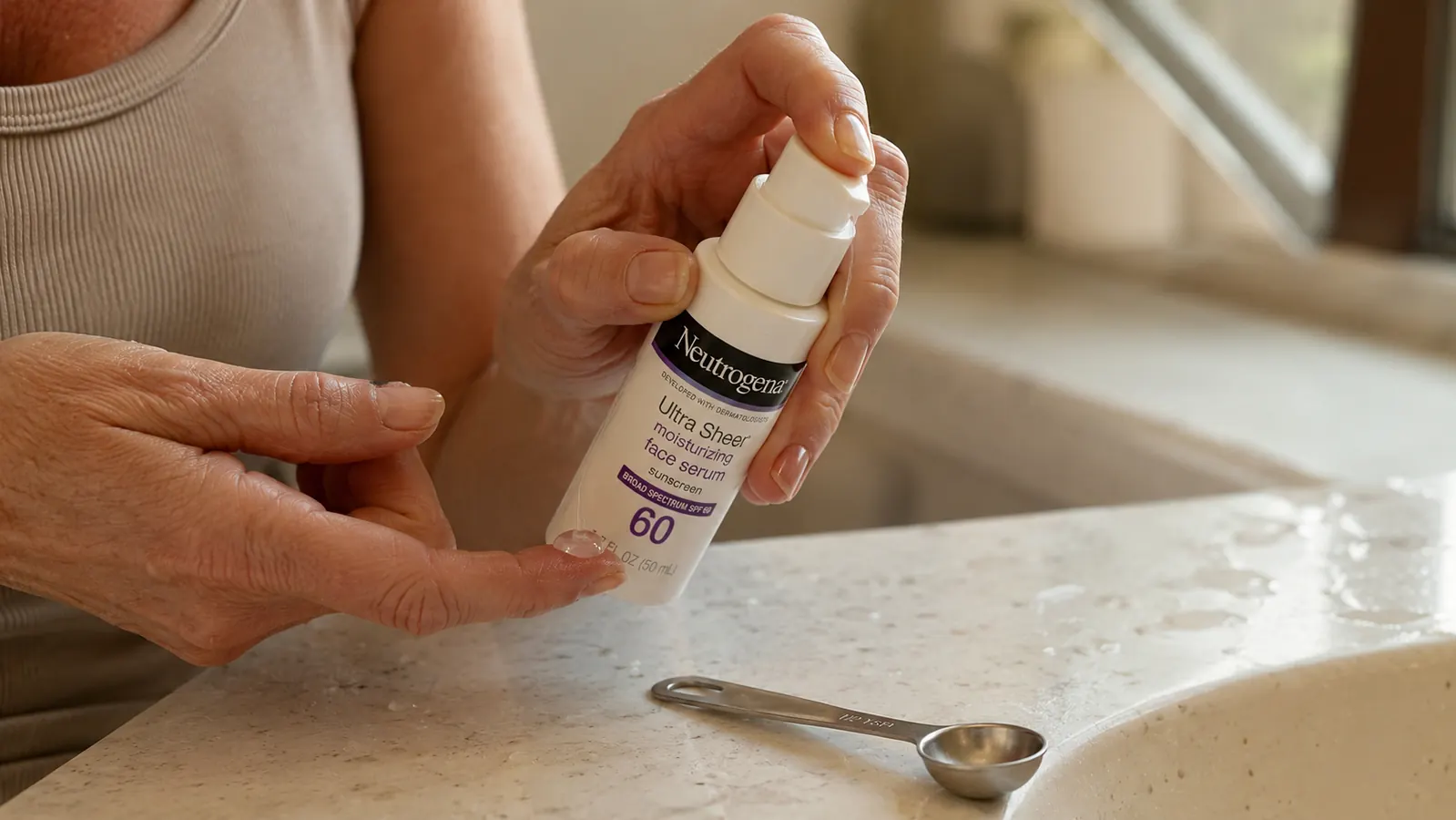
I apply the Neutrogena serum last, after my moisturizer has had a minute or two to sink in, using two full pumps for my face and neck, which I measured against a quarter teaspoon early on just to see how it compared to what the label assumes. It's close, closer than I expected before I checked. I press it in rather than rub it, since rubbing a thin sunscreen too hard seems to push more of it into a washcloth than onto your skin.
I've gone through one full bottle and I'm about two-thirds through a second, which puts me at roughly five months of near daily use, with maybe ten days skipped here and there for travel. I wrote up the fuller, week by week version of that stretch, including whether it actually helped with the faint sun spots on my cheek and how my skin held up through a hot, humid July, in a longer piece on how this held up over several months, if you want that slower version.
This piece is deliberately not that. I'm leading with the parts of daily sunscreen use that nobody explains clearly, the gap between the number on the bottle and what actually reaches your skin, because I think that gap matters more to how well any sunscreen performs than which brand you buy.
The Real-World SPF Number Nobody Explains
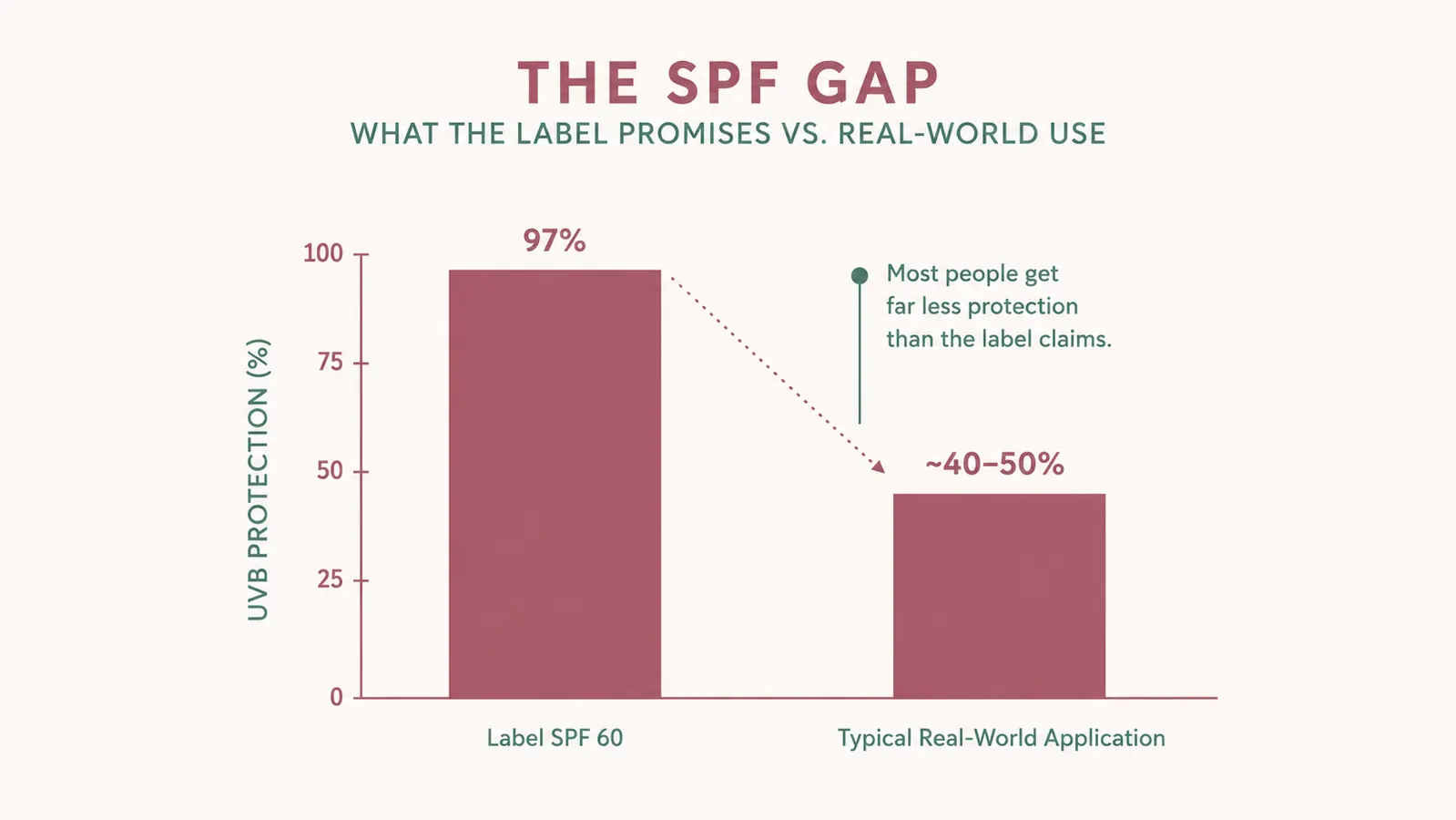
The SPF 60 printed on the Neutrogena bottle is not a number you get automatically just by owning it. It's a lab measurement based on applying about two milligrams of product per square centimeter of skin, which works out to roughly a quarter teaspoon for your face alone, not counting your neck or ears. Almost nobody applies that much. Multiple published studies on real-world sunscreen use have found that most people apply somewhere between a quarter and a half of that amount, which functionally cuts the protection level well below what's printed on the bottle, sometimes closer to an SPF in the twenties or thirties rather than sixty.
I didn't know any of this when I started. I was using roughly one pump for my whole face, which felt like plenty since the texture spreads so thin and so easily. It wasn't until I measured a pump against an actual quarter teaspoon that I realized I'd been applying maybe half the amount the label's SPF number assumes, for two straight months, without ever suspecting it.
This isn't a flaw unique to this sunscreen. It's true of every sunscreen sold, chemical or mineral, drugstore or department store. But it matters more here specifically because the whole appeal of a serum texture is that it disappears, and a product that disappears easily is a product that's easy to under-apply without ever noticing. I now use two full pumps every morning, checked against that quarter teaspoon measurement, and I'd genuinely encourage anyone using this to do the same math once, just so you know what a real dose actually looks like on your own hand.
The Reapplication Problem Over Makeup
Here's the part that nobody selling sunscreen wants to dwell on. Any sunscreen, the Neutrogena serum included, is only rated to last about two hours of continuous protection before it needs to be reapplied, and reapplying over a full face of makeup is genuinely awkward. I wear a light foundation most workdays, and for the first month I simply didn't reapply at all after my morning routine, because I didn't have a clean way to do it without smearing everything else I'd put on.
What actually solved this for me was accepting that reapplication over makeup doesn't need to look like the morning application. I keep a small sunscreen stick in my bag now and press it lightly over my cheekbones, nose, and forehead around midday, patting rather than rubbing so it doesn't disturb my foundation underneath. It's not a full second coat and I don't pretend it restores the full SPF number, but it's a meaningfully better than doing nothing, which is what most days looked like before I built the habit.
If you spend most of your day indoors away from windows, this matters less. If you're driving regularly, sitting near a sunny window at work, or outside for any stretch of the afternoon, the two hour window is worth taking seriously rather than assuming your morning application is doing its job all day. I go into the mechanics of doing this without ruining your makeup in more detail in a separate piece on wearing sunscreen under makeup without the pilling and patchiness, since it's a big enough topic on its own.
The Chemical Filter Question, Fairly Stated
This sunscreen uses chemical UV filters rather than the mineral filters, zinc oxide or titanium dioxide, that some people prefer. There's a real, ongoing conversation about chemical filters, some studies have found certain chemical filter ingredients are absorbed into the bloodstream at low levels, and the FDA has asked for more long-term safety data on several of them while still classifying properly formulated sunscreens as generally safe and effective when used as directed. I'm not a dermatologist and I'm not going to pretend to settle that debate here. What I can tell you is what I did with that information as one user.
I read enough to understand this isn't a fringe question, respected sources take it seriously, but I also didn't find anything that made me think daily use of a well-formulated, FDA-regulated chemical sunscreen was reckless. I decided the tradeoff was worth it for me personally, mostly because a mineral sunscreen I'd tried previously left a visible white cast on my skin that I found genuinely distracting, and I was more likely to skip sunscreen altogether on the days I dreaded that cast than to consistently wear a mineral formula. Consistent use of an imperfect sunscreen beats inconsistent use of a perfect one, at least in my own daily life.
If chemical filters are a hard no for you, for any reason, I'd respect that and look at a mineral formula instead, and I'd rather tell you that plainly than pretend this product is the right fit for everyone. But if your hesitation is more of a vague unease than a firm decision, it's worth reading a bit further on your own before ruling this category out entirely, since the alternative for a lot of people isn't a better sunscreen, it's no sunscreen at all.
The Eye Sting on Hot, Sweaty Days
On genuinely hot days, the kind where I'm sweating within twenty minutes of being outside, the Neutrogena serum stings my eyes if it migrates down from my forehead or temples. It's not constant and it doesn't happen on mild or cool days at all, but I noticed it clearly on three separate hundred-degree afternoons in July, a sharp, watery sting that made me want to rub my eyes, which of course only makes it worse.
This isn't unique to this formula, most sunscreens sting on contact with eyes to some degree, but I think it's worth naming directly rather than glossing over, because it changed how I apply it on hot days specifically. I now keep it a little farther from my hairline and browbone in summer than I do in cooler months, and I carry a small towel in my bag on days I know I'll be sweating, mostly so I have something to blot with before it has a chance to run.
If you have naturally sensitive eyes, wear contacts, or know from experience that most sunscreens bother you around the eye area, I wouldn't call this a dealbreaker, but I would go in expecting it on hot, active days rather than being caught off guard the way I was.

Why the Serum Texture Backfires for Some People
The texture here is genuinely lovely, it feels closer to a lightweight serum than a sunscreen, which is exactly the point and exactly why it sells so well. But that same quality is what leads people to under-apply it without realizing they're doing it. A traditional sunscreen lotion has enough visible presence that you can tell when you've covered your whole face. The Neutrogena serum absorbs so quickly and so invisibly that it's genuinely hard to eyeball whether you've used enough, especially compared to a heavier cream that leaves an obvious sheen until it's fully worked in.
I caught myself doing exactly this in month one, using what felt like a generous amount, watching it disappear within seconds, and assuming that meant I'd done it right. It wasn't until I started measuring against that quarter teaspoon that I realized how much I'd been underestimating. If you're someone who likes a product you can visibly see and feel sitting on your skin as reassurance that it's working, this texture might genuinely bother you, not because it's ineffective, but because it removes the visual feedback a lot of us rely on without meaning to.
What I Liked
- Genuinely weightless, fast-absorbing texture that layers well under makeup once you wait a minute for it to set
- Fragrance-free, which mattered to me given how easily scented sunscreens irritate my eyes
- No white cast at all, even at two full pumps
- Current price is reasonable for a bottle I go through roughly every ten weeks at a proper dose
Where It Falls Short
- Real-world SPF is almost certainly lower than 60 unless you measure your application against a quarter teaspoon
- Stings on contact with eyes on hot, sweaty days specifically
- Reapplying over makeup takes a separate stick or powder, this bottle alone doesn't solve that step
- Uses chemical UV filters, a dealbreaker for anyone who has firmly decided against them
The label doesn't lie. It just assumes an amount almost nobody actually applies, and that gap matters more than the brand you pick.
Who This Is For
This is a fit for someone with combination to oily skin who wants a daily sunscreen that genuinely disappears under makeup rather than sitting on top of it, and who's willing to apply a full, measured amount instead of trusting a thin swipe to do the job. It's also a fit if a white cast has kept you from wearing sunscreen consistently in the past, since that specific complaint is fully solved here. And it's a good option if mornings are already rushed and you want a single step that doesn't require waiting through a chalky, slow-absorbing lotion before you can put anything else on your face.
If you already have a workday that keeps you near windows or outside for real stretches of time, this is also worth pairing with a small stick or powder sunscreen for midday touch-ups, since the two hour reapplication window applies here the same as it does to any sunscreen. I go through the whole real-world case for making daily sunscreen a non-negotiable step, chemical filter debate aside, in a separate rundown on what consistent daily use actually does over time.
Who Should Skip It
If you've made a firm, informed decision against chemical UV filters, for any reason, this isn't the product to talk yourself into. Look at a mineral formula instead, and accept that you may need to manage a white cast as the tradeoff. If you know from experience that most sunscreens sting your eyes badly, or you're especially active outdoors on hot days without a good way to blot sweat before it runs, this specific formula is likely to be more frustrating than a heavier, more eye-safe mineral stick.
And if you're the type who likes to feel a product sitting visibly on your skin as proof it's there, this texture may leave you unconvinced no matter how well it's actually performing, in which case a sunscreen with a bit more visible presence might simply suit you better, even if the sun protection itself is comparable. None of this is a mark against the formula. It's a question of which tradeoffs you're willing to live with.
The Sunscreen That Earned a Spot on My Counter, Even After I Told You Everything the Label Leaves Out
The real SPF gap is real, the eye sting on hot days is real, and reapplying over makeup takes a little extra effort. Once I measured a proper dose and built the habits around it, this became the sunscreen I actually use every single morning instead of skipping the step.
Amazon See Today's Price on Amazon →