
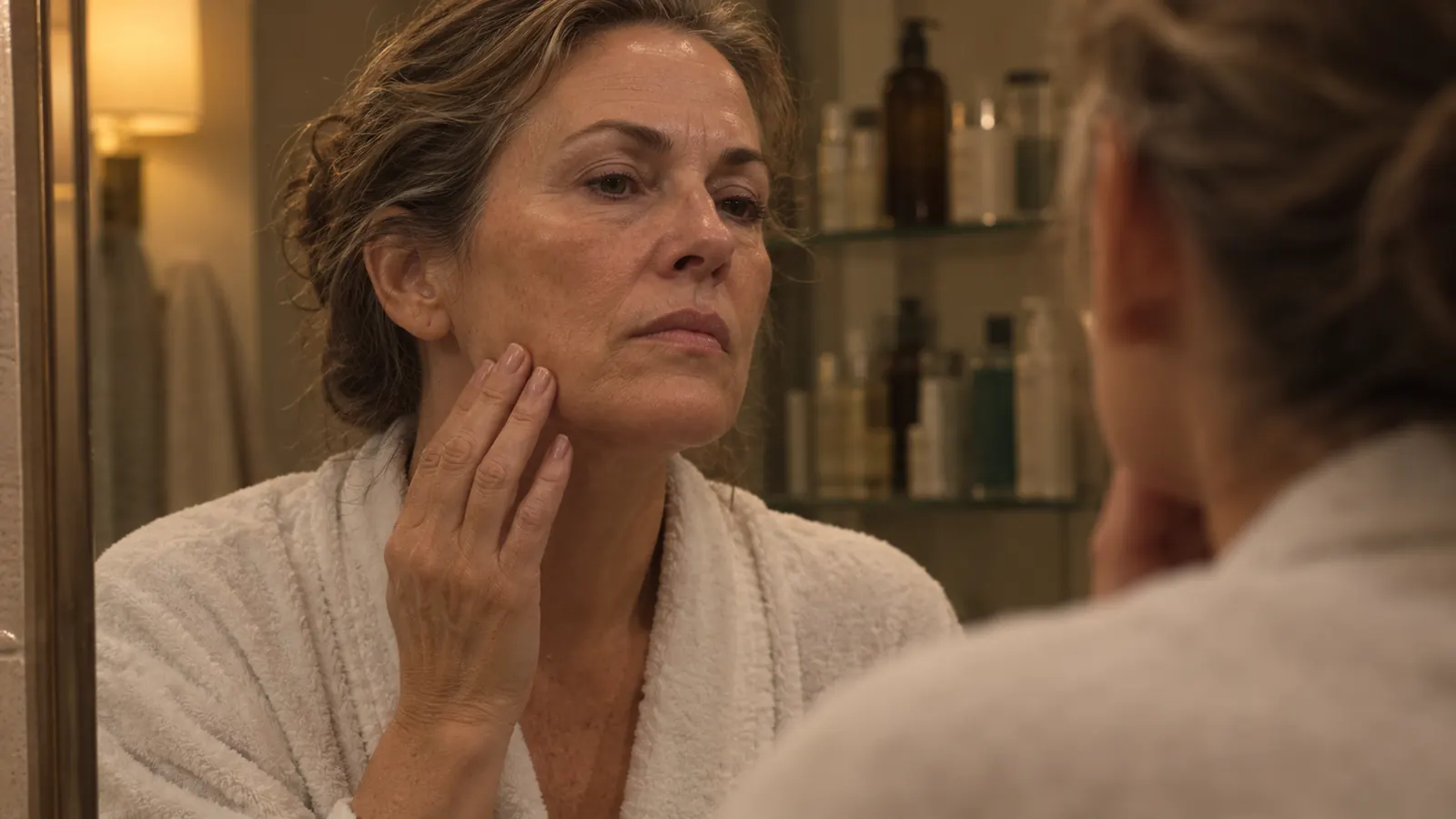
Nobody told me the strength wasn't printed anywhere on this bottle. Not on the front label, not on the back, not in the fine print, not anywhere in the Amazon listing I read three times before ordering. I bought it because it was inexpensive and had a lot of reviews, assumed that meant it was gentle enough for a first-timer, and then spent nine days flaking along my jawline like I'd overdone a chemical peel. That gap, between what the price tag implies and what the bottle actually contains, is the whole reason I'm writing this.
I'm Vivian. I'm in my fifties, my skin runs dry through the cheeks with fine lines that have gotten more visible the last few years, and I've been using Tree of Life's retinol serum a few nights a week since late winter. This isn't the slow, week-by-week account of how it changed my skin, I already wrote that version. This is the part I think matters more before you buy anything, the part where I tell you what actually surprised me, starting with the least flattering details.
The Quick Verdict
A genuinely capable budget retinol with real caveats, the missing strength label, the adjustment flaking, and the temptation to over-apply because it's so cheap, none of which are dealbreakers once you know to expect them.
Amazon Check Today's Price →Here's Everything That Surprised Me, Before I Tell You Why I Kept Using It
The flaking was real. The strength isn't on the label. None of that stopped this from becoming my regular nighttime step once I understood how to use it properly. See today's price and read the rest below.
Amazon Check Today's Price on Amazon →How I've Actually Used It
I apply the Tree of Life serum at night, after washing my face and letting my skin dry completely, because putting retinol on damp skin makes it absorb faster and sting more, something I learned the uncomfortable way in week one. One pump, roughly the size of a small pea, covers my whole face if I dot it across my forehead, cheeks, and chin before smoothing it in. I do not layer more on the areas I'm most worried about, which was my instinct at first and turned out to be exactly backward.
For the first three weeks I used it two nights a week, Tuesday and Friday, with a plain moisturizer over top every time, no exceptions. Once my skin stopped reacting I moved to three nights a week, and that's where I've stayed. I skip it entirely the nights I've been in the sun that day longer than usual, or if my skin already feels tight from wind or a dry hotel room.
I wrote up the fuller, slower version of this, including what my skin looked like at the one month and three month marks and whether the fine lines around my eyes actually softened, in a longer piece on how this held up over several months, if you want that side of it. This piece is deliberately different. I'm leading with the parts that made me hesitate, because those are the parts that make people put a bottle back on the shelf, and I don't think that's always the right call.
The Strength Isn't on the Label, and That Bothered Me More Than I Expected
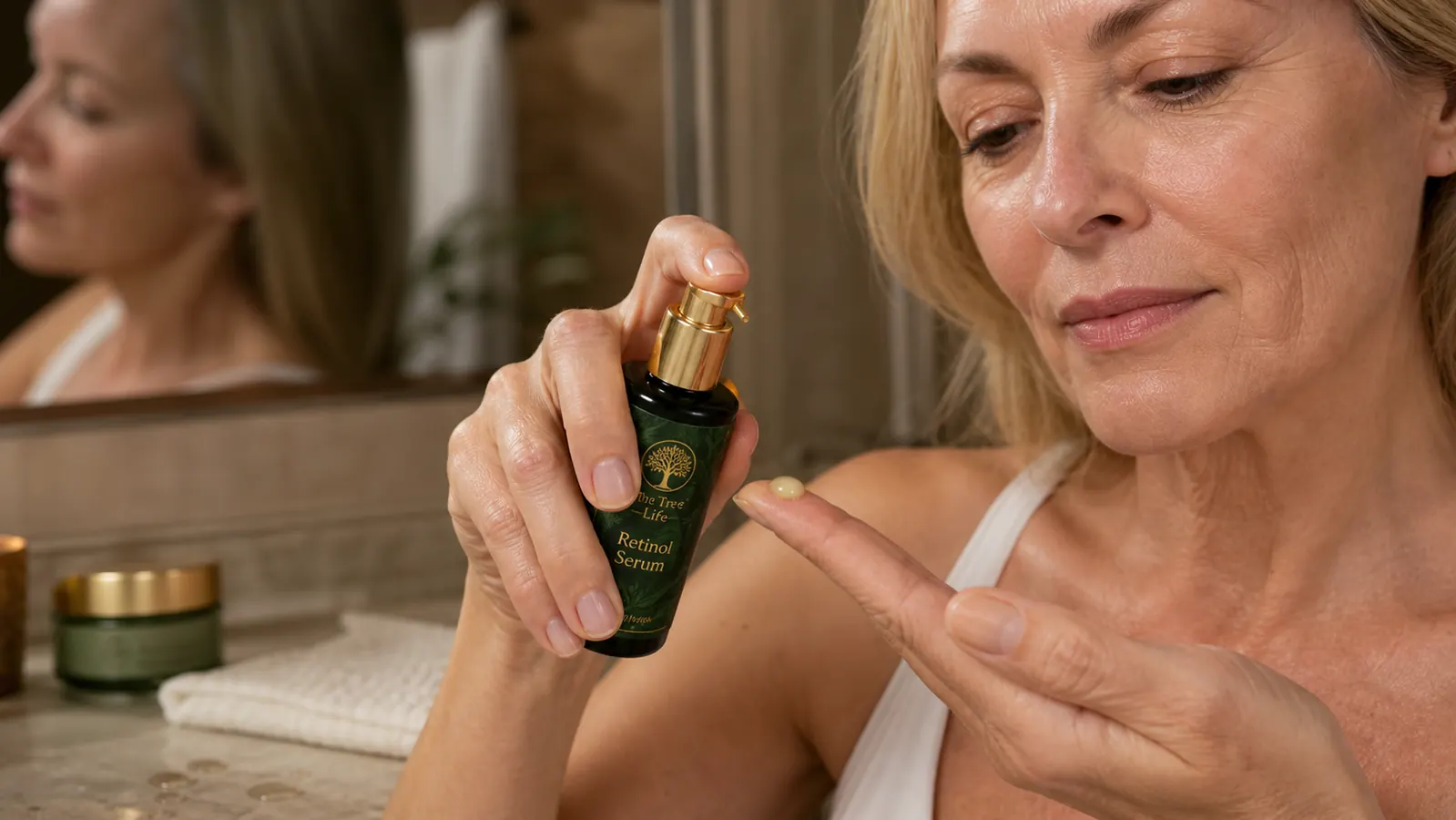
Most retinol products worth buying tell you the concentration somewhere, half a percent, one percent, something you can compare against other bottles. This one doesn't state a percentage on the packaging or the Amazon listing, and that omission is the single biggest thing I wish someone had flagged for me before I started. I was applying it the way I'd apply a mild over-the-counter retinol, generously and every other night, and my skin let me know within a week that whatever was in this bottle was not the gentlest version available.
That's not a claim that the formula is dangerously strong, plenty of long-time users tolerate it fine at a few nights a week. It's a claim that you cannot calibrate your starting dose the way you normally would, because the number you'd use to calibrate simply isn't provided. I now treat it as a moderate-strength product by default, start slow, and adjust based on how my own skin responds rather than any number on the box, and that approach has served me a lot better than my first two weeks did.
The Adjustment Weeks Nobody Warns You About
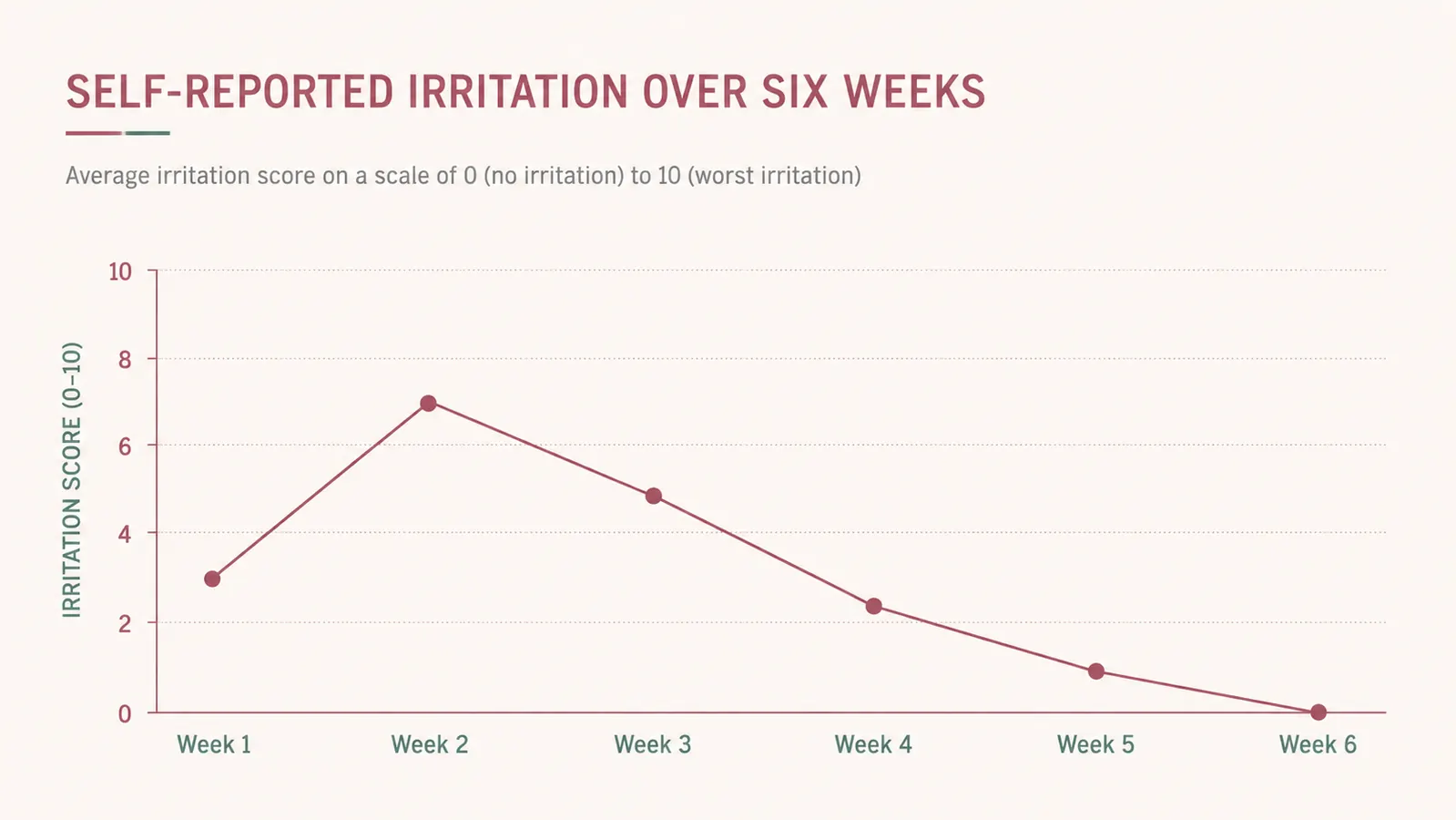
Somewhere around day five of using the Tree of Life serum, the skin along my jawline and beside my nose started flaking, small dry patches that looked worse in bright bathroom light than they actually felt. It wasn't painful, more like the peeling you get after a mild sunburn, but it was visible enough that I wore a heavier moisturizer during the day for close to two weeks so it wouldn't show under makeup.
This is what dermatology sources typically call retinization, the skin's adjustment period to a new active ingredient, and it's common enough with retinol products generally that I don't think it's unique to this one. What I do think is specific to this bottle is that nothing in the packaging prepares you for it. There's no insert, no dosing chart, no line that says expect some dryness in the first two to three weeks. I found that out from my own bathroom mirror instead.
By week three the flaking had stopped almost entirely, and by week six my skin had settled into tolerating three nights a week without any visible peeling at all. If you go into this expecting a rough couple of weeks rather than being blindsided by one, it's a much easier stretch to get through. Buffering with a plain moisturizer either mixed in with the serum or applied five minutes after made a real difference for me, and cutting back to once a week the moment flaking shows up, rather than pushing through it, shortened the whole adjustment period noticeably.
Sunscreen Isn't Optional With This, It's the Other Half of the Bottle
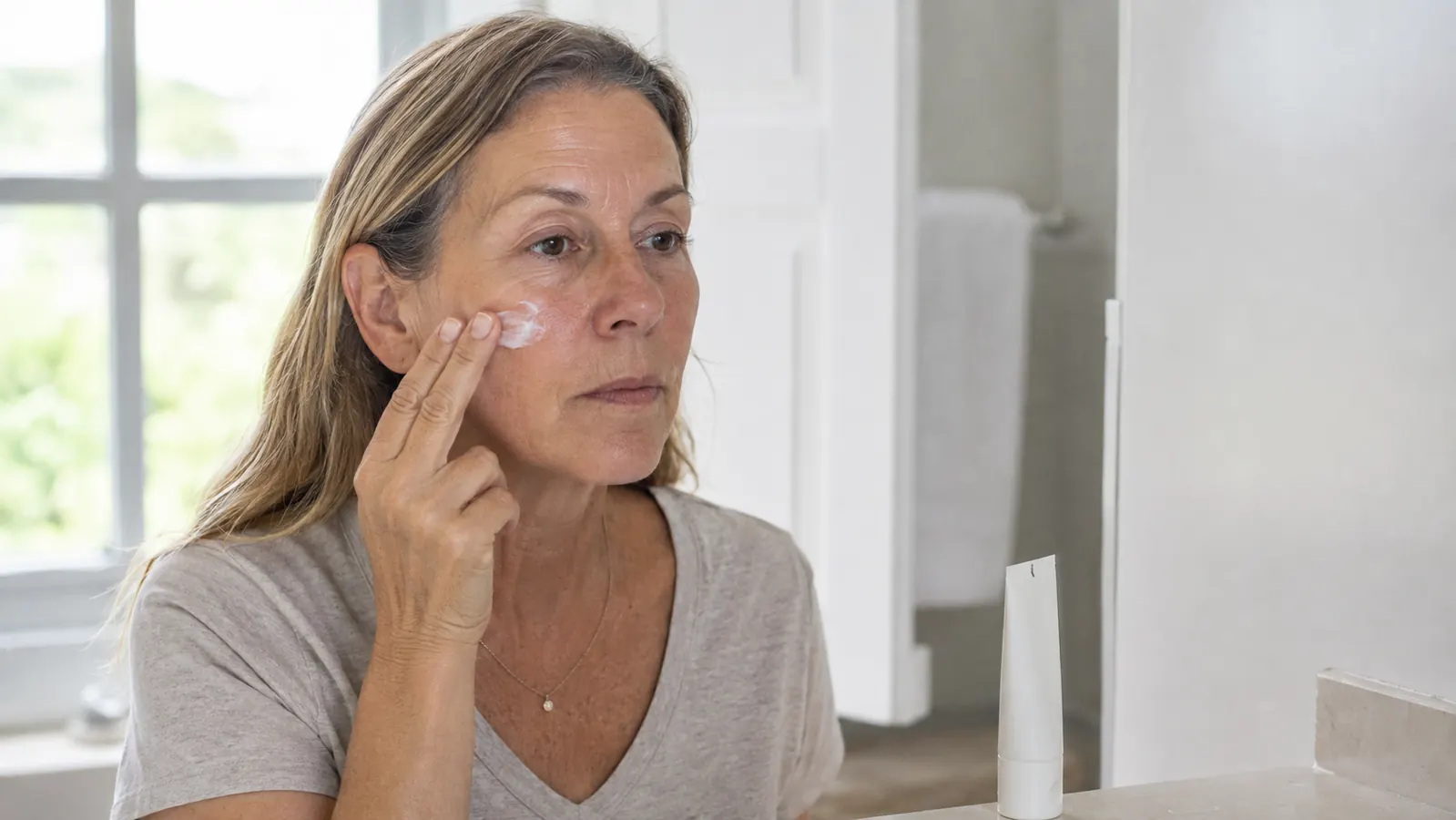
Retinol makes skin more sensitive to sun, that part isn't a debate, it's why every dermatology resource I've come across pairs any retinol product with daily sunscreen as a non-negotiable, not a nice-to-have. I didn't take that seriously enough the first two weeks, went for my normal morning walk without reapplying sunscreen the way I usually do, and came back with cheeks that felt raw in a way they hadn't before I started using this.
Since then, sunscreen every single morning after a retinol night is simply part of the routine, not something I decide about based on whether it looks sunny. I keep a small tube by my toothbrush so I genuinely cannot forget it, the same way I keep floss by the sink. If you're not willing to add a daily sunscreen step regardless of the season, I'd think twice before starting any retinol, the Tree of Life serum included, because the serum and the sunscreen aren't really two separate products in my mind anymore. They're one routine.
Why the Low Price Backfires for Some People
At under ten dollars, the Tree of Life serum is priced like something you can be careless with, and I think that's exactly the trap. When a serum costs three or four times as much, most people are careful with it out of instinct, a dot here, a dot there, because wasting it feels expensive. At this price, the instinct flips. I caught myself in week two thinking more product would mean faster results, and used closer to a full dropper's worth instead of a pea-sized amount, which is almost certainly why my skin reacted as hard as it did.
The bottle itself doesn't discourage that behavior either. There's no measured dropper markings, no visual cue for how much is too much, just a pump that will keep dispensing as long as you keep pressing it. I'd genuinely recommend treating the low price as a reason for more discipline, not less, since a bigger dose of retinol doesn't work faster, it just irritates skin faster. If you want the fuller argument for what a properly applied retinol serum can realistically do for fine lines and texture over time, I laid that out separately in this rundown of what changed and why.
None of this means the formula is bad value, if anything the opposite. It means the low price removes a guardrail that a pricier product gives you automatically, so you have to supply that discipline yourself, measuring out a pea-sized amount on purpose rather than trusting the bottle to ration it for you.
What It Actually Did, Once I Stopped Fighting It
Here's the part that matters more than any of the caveats above. Once I dropped the Tree of Life serum to a pea-sized amount, three nights a week, with sunscreen every morning without exception, the texture across my cheeks changed in a way I noticed in ordinary daylight, not just under a magnifying mirror. My skin felt smoother under my fingertips by week five, the kind of smoothness I used to only get right after a facial and lose again within a few days.
The fine lines that had started forming at the corners of my eyes looked a shade softer by week eight, not gone, and I want to be careful here because I don't think any nine dollar serum erases a decade of sun exposure and squinting. But the lines looked less carved in, particularly in morning light, which is the harshest light in my house and the one I trust most for judging whether something is actually working or whether I'm talking myself into it.
My forehead, where I have a couple of deeper horizontal lines, changed the least, and I think that's a fair, honest data point rather than a disappointment. Deeper, more established lines respond slower to any topical retinol, and I'd rather tell you that plainly than let the earlier praise imply this is a miracle in a bottle. What it gave me was smoother, more even texture and slightly softer fine lines with consistent, careful use, and for the price, I think that's a genuinely fair trade.
What I Liked
- Noticeably smoothed texture and softened fine lines by around week six of consistent, buffered use
- Full-size bottle at a genuinely low current price compared to most retinol serums
- Flaking settled almost entirely after the first three weeks once I found the right frequency
- Pump dispenser is easy to use, though it makes over-application easy without conscious restraint
Where It Falls Short
- No printed strength or percentage anywhere on the label or listing
- No dosing guidance included, so the flaking weeks caught me off guard
- Requires strict daily sunscreen, this is not optional with a retinol product
- Low price makes over-application tempting, and that's what caused my worst irritation
The bottle doesn't tell you the strength, doesn't warn you about the flaking, and doesn't stop you from using too much. Once I supplied all three of those myself, it worked.
Who This Is For
This fits someone who has used a retinol product before, even a mild one, and knows roughly how their skin reacts to actives, and who's comfortable starting slow and reading their own skin rather than following printed instructions that this product simply doesn't provide. It's also a fit if you want to test whether retinol does anything for your fine lines and texture before spending significantly more on a dermatologist-branded version, as long as you're willing to be the one supplying the caution.
It's a reasonable fit too if you already have a consistent sunscreen habit, since that piece isn't negotiable here and it's a lot easier to add a retinol into a routine that already includes daily SPF than to build both habits from scratch at once. It's also a sensible starting point if you're curious about retinol in general but haven't wanted to commit to a pricier bottle before knowing whether your skin tolerates the ingredient at all, since the low cost makes that first experiment a lot less of a financial gamble.
Who Should Skip It
Retinol is not something to use during pregnancy or while nursing, and that applies to this product the same as any other, so if that's you, skip this one and talk to your doctor about alternatives instead. If you're brand new to active ingredients and tend to react strongly to new skincare, the absence of any strength labeling makes this a harder product to start slow with safely, and I'd look at something with clearer dosing guidance first.
If you're already using a prescription retinoid or another strong active several nights a week, this isn't something to stack on top without real caution, and if you're not willing to commit to daily sunscreen no matter the weather, I'd hold off on any retinol until that habit is solid. And if irritation of any kind, even mild flaking, is something you won't tolerate for even a few weeks, this particular bottle asks more patience of you than a gentler formula would. Patience really is the whole deal here, and if that's not something you have room for right now, it's fair to wait for a calmer season of life before starting.
The Bottle I Kept Using Even After Telling You Everything That Went Wrong First
The strength isn't on the label, the first weeks flake, and the price tempts you to use too much. Once I slowed down and paired it with real sunscreen, it earned its spot in my routine.
Amazon See Today's Price on Amazon →