Short answer first, because I know that's why you're here: I use the Tree of Life Retinol Serum every night now, and I keep a bottle of The Ordinary Granactive Retinoid 2% Emulsion in the cabinet for the weeks when my skin needs something gentler. They are not the same product wearing different labels. One is a straightforward retinol blended with hydrating oils. The other is a lab-engineered retinoid ester built specifically to be milder. I bought both with my own money in the same month, used each one on a clean, dry face at night, and wrote down what happened for six weeks. Neither one was a mystery box, and neither one needs a chemistry degree to use correctly.
I'm not a chemist and I'm not going to pretend to explain the molecular structure of hydroxypinacolone retinoate like I understand it better than the people who formulated it. What I can tell you is what showed up on my own forehead and around my mouth, on what day, and how long it took to settle down. That's the comparison most of these ingredient breakdowns skip, and it's the part that actually matters when you're the one applying it at 10pm with a work day ahead of you.
How I Tested Both, Side by Side
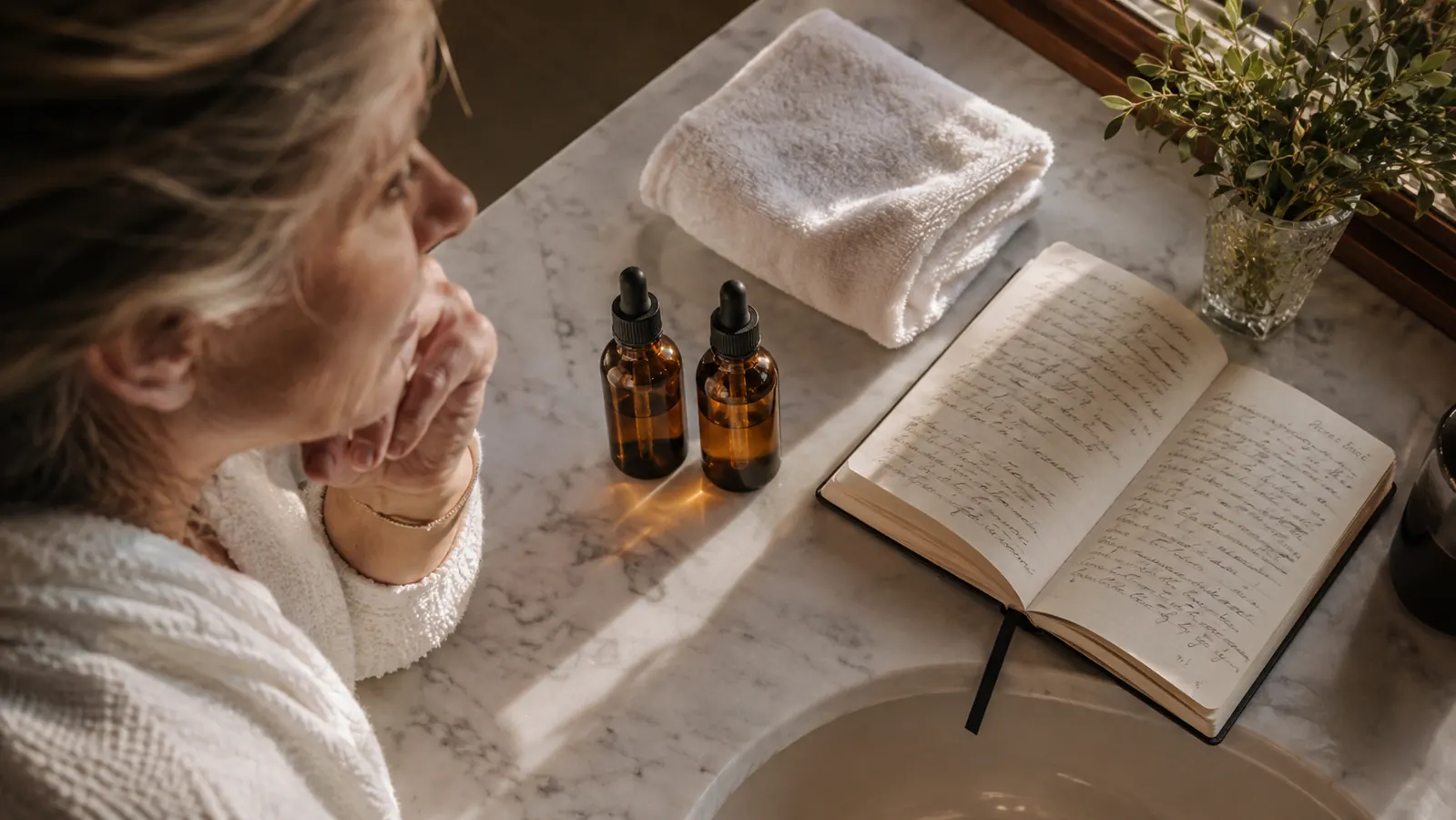
I didn't run them at the same time on the same face, that would have muddied everything and I wouldn't have known which product deserved credit or blame for any given morning. Instead I used Tree of Life nightly for six weeks first, gave my skin a two week break with nothing but a plain moisturizer, then ran The Ordinary for six weeks the same way, same routine, same cleanser, same pillowcase changed on the same schedule. I kept a small notebook by the sink and wrote down three things every morning: any flaking I could see, any tightness I could feel by 9am, and how my skin looked under the bathroom light I use to put on makeup.
That two week washout period mattered more than I expected. My skin needed time to reset between the two trials so one product wasn't just riding on the coattails of whatever the other had already started. It's not a lab study and I'm not claiming it is one, it's one woman's face over roughly four months total, but it's more honest than a lot of what gets written about these two products by people who clearly never opened either bottle.
| Tree of Life Retinol Serum | The Ordinary Granactive Retinoid 2% | |
|---|---|---|
| Active Ingredient | Retinol blended with hyaluronic acid, vitamin E, and jojoba oil | Granactive Retinoid (hydroxypinacolone retinoate) at 2%, in a squalane base |
| Strength Disclosure | Percentage not printed on the label | 2% concentration stated clearly on the bottle |
| Texture on Skin | Lightweight oil-serum hybrid, slightly tacky for the first minute | Thin lotion-like emulsion, sinks in almost immediately |
| Bottle Size | 1 fl oz / 30 mL | 1 fl oz / 30 mL |
| Price Band | Single digits at today's price | Low double digits at today's price |
| Irritation, First 10 Days | Noticeable flaking and tightness for me around day 4 through day 9 | Mild tingling, no visible flaking on my skin |
| Who It Suits Best | Beginners who want hydration built into the same bottle | People who want a published percentage and a drier, minimal finish |
| Where to Buy | Widely stocked on Amazon with fast shipping | Mostly sold through the brand's own retailers, spotty on Amazon |
Where Tree of Life Wins
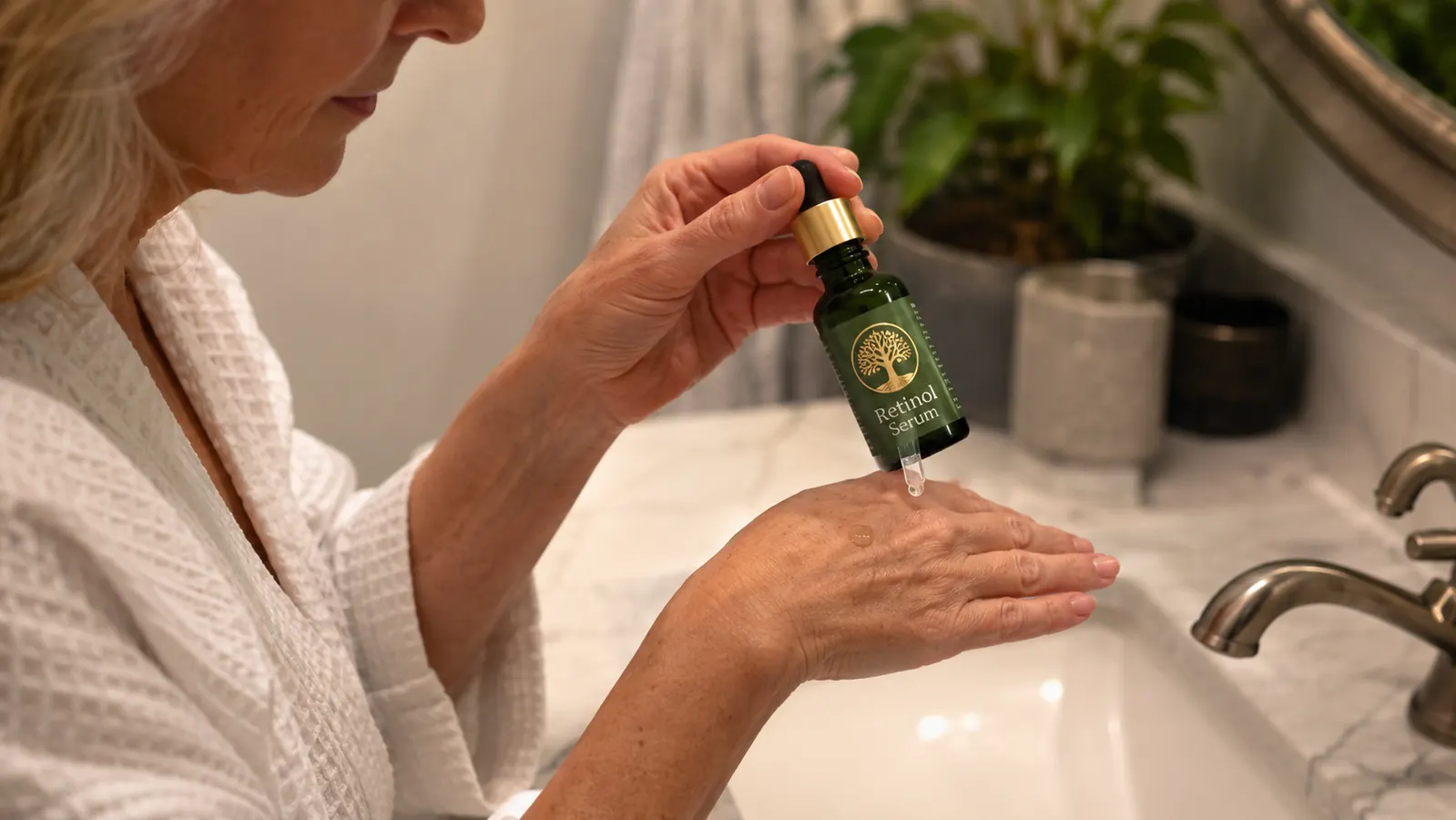
The first thing I noticed with the Tree of Life Retinol Serum is that it doesn't leave you scrambling for a moisturizer afterward. The formula already has hyaluronic acid and jojoba oil sitting in it, so on nights when my skin was already a little dry from the ceiling fan running, I didn't need to layer three separate products before bed. That matters more than it sounds like it should when you're tired and just want to get through your ten minutes and go to sleep. My skin looked less like I'd been standing in front of a hand dryer and more like I'd used a normal night cream that happened to also be doing something.
The other place Tree of Life pulled ahead was price. At today's price it sits at less than half of what I paid for The Ordinary bottle, and the bottle lasted me almost exactly as long, about ten weeks of nightly use with a dropper and a half each time. For anyone starting out and not sure retinol is even going to agree with their skin, that lower entry cost matters. You're not out much if week two convinces you retinoids aren't for you right now. I've linked to the longer breakdown of my first six months with it in my long-term Tree of Life review if you want the full week-by-week notes.
Where The Ordinary Granactive Retinoid Wins
I want to be fair here because I know how these comparison articles usually go, everything conveniently favors the product being sold. It doesn't in this case, not entirely. The Ordinary's bottle tells you exactly what you're putting on your face, 2%, right there on the label. Tree of Life doesn't disclose a percentage, and when I emailed asking, I got a general customer service reply, not a number. If you're the kind of person who wants to track exactly what you're using and adjust dose the way you'd track a supplement, that transparency is worth something and I won't pretend it isn't.
The other honest win is texture. The Ordinary's emulsion is thin and almost weightless, it disappears into skin in under a minute with none of the slight tackiness I got from the oil-based Tree of Life formula. If you wear makeup early and hate any lingering residue on your pillowcase, that faster absorption is a real, noticeable difference, not a marketing claim. My skin also flaked less in the first ten days with The Ordinary, which tracks with what it's designed to do. Granactive retinoid was built as a milder alternative to straight retinol, and on my face, in this small sample of one, it behaved that way.
Still deciding? Here's the one I'd actually restock tonight.
If you want the version that costs less, does double duty as hydration, and is easy to find with Prime shipping when your bottle runs out, this is the one I keep going back to.
Amazon Check Today's Price on Amazon →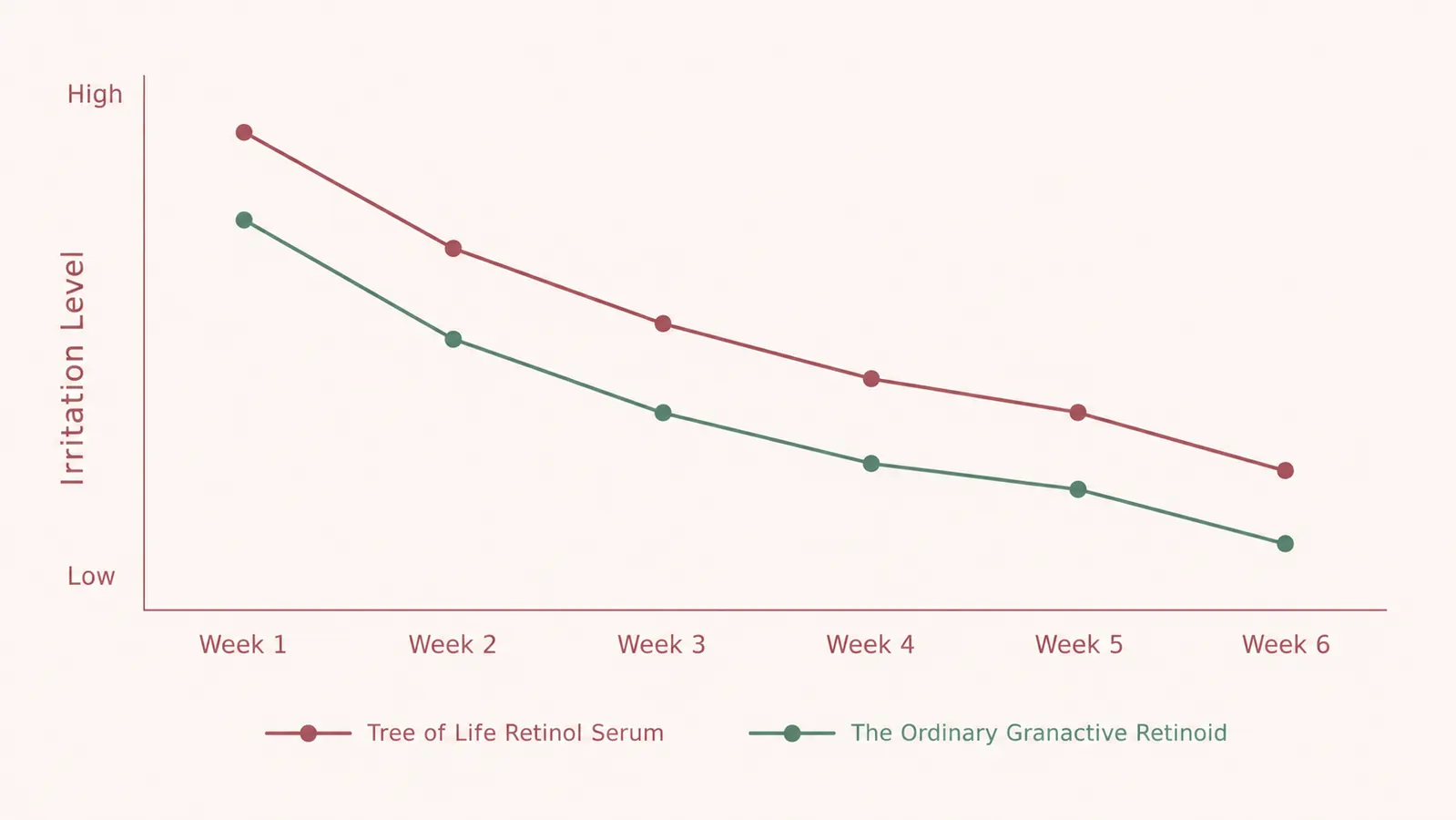
The Irritation Question, Week by Week
I started both trials on a Sunday night, three drops, clean dry skin, nothing else layered on top. With Tree of Life, days one through three were quiet. Day four is when I started seeing flaking at the corners of my nose and a tight feeling across my cheeks by mid-morning. It peaked around day seven, then eased off steadily, and by day twelve my skin had adjusted and I was back to using it every night without any drama. That's a fairly typical retinol adjustment window, and if you've read anything about starting retinol slowly, this is the exact reason people say to start twice a week instead of nightly.
With The Ordinary, the adjustment period was shorter and quieter. Some tingling on application, especially near my mouth, but almost no visible flaking through the full six weeks. I'll say plainly that if your skin has reacted badly to retinol before, or you've never used one and you're nervous about it, The Ordinary's gentler profile is a legitimate reason to start there instead. I go into starting slow in more detail in this piece on easing into retinol without irritation, and most of what applies there applies to either bottle, just adjust the pace to whichever formula you pick.
Neither bottle did anything overnight. The difference between them showed up in how much my face complained along the way, not in the mirror at the end.
Price and What You Actually Use Over Six Months
I tracked how much product I actually used, not just how the bottles looked at the start. Both lasted roughly ten weeks with nightly use and a normal dropper amount, so cost per week ends up favoring Tree of Life pretty clearly since it starts at a lower price at today's listing. Over six months, that's two bottles of Tree of Life versus two bottles of The Ordinary, and the gap between them adds up to real money, not pocket change. If you're testing whether retinol is going to become a permanent part of your routine, starting with the lower-cost option and only moving to the pricier one if you decide you want the precise percentage is the order I'd do it in.
The texture change I noticed over those six months was gradual with Tree of Life, my skin felt smoother by around week eight, less like sandpaper near my chin where I tend to get rough patches in dry months. I go into what specifically changed, and what didn't, in this piece on how the texture shifted over time. Nothing about either serum erased fine lines or made my pores disappear, and anyone telling you a nine dollar serum will do that isn't being straight with you.

What Neither One Fixed
I'll say this plainly because it gets left out of most comparison pieces. Neither serum touched the deeper lines around my eyes, and neither one changed my pore size in any way I could actually see, no matter how the bathroom light hit my face in the morning. What both did was even out the rough texture across my cheeks and soften the look of a few sun spots I've had since my thirties, gradually, over months, not weeks. If a headline anywhere promises a dramatic transformation from either of these bottles, that headline is selling something a nine or twenty dollar serum was never going to deliver on its own.
One habit mattered more than which bottle I picked: sunscreen every single morning, no exceptions, because both of these ingredients make skin more sensitive to sun during the day. I skipped it twice in the first month out of laziness and paid for it with a patch of redness that took a week to calm down. That's on me, not the products, but it's worth saying since nobody puts that warning in bold on the label. Consistency mattered just as much. The weeks I skipped two or three nights in a row, whichever serum I was using, my skin seemed to reset and I'd get mild irritation all over again when I went back to it, almost like starting from day one.
Who Should Buy Which
If you've never used a retinoid before, your budget matters, and you don't mind a short adjustment period with some flaking, I'd start with Tree of Life. It's cheaper, it's easier to find, and the built-in hydration takes one step out of your nightly routine. If your skin has reacted to retinol in the past, you want a labeled percentage you can track, or a faster-absorbing texture matters more to you than price, The Ordinary is the more sensible pick, even though it costs more and can be harder to track down in stock. I use both now, on a rotation that depends on how my skin is behaving that particular week, and honestly that's probably the most useful answer either of these companies would rather I not give you. Buy one, give it a full six weeks before you judge it, and only then decide if the other one is worth the extra money.
The one I keep restocking, at a price that makes trying it easy.
If you're just starting out with retinol and want something forgiving on both your skin and your wallet, this is where I'd begin.
Amazon Check Today's Price on Amazon →