
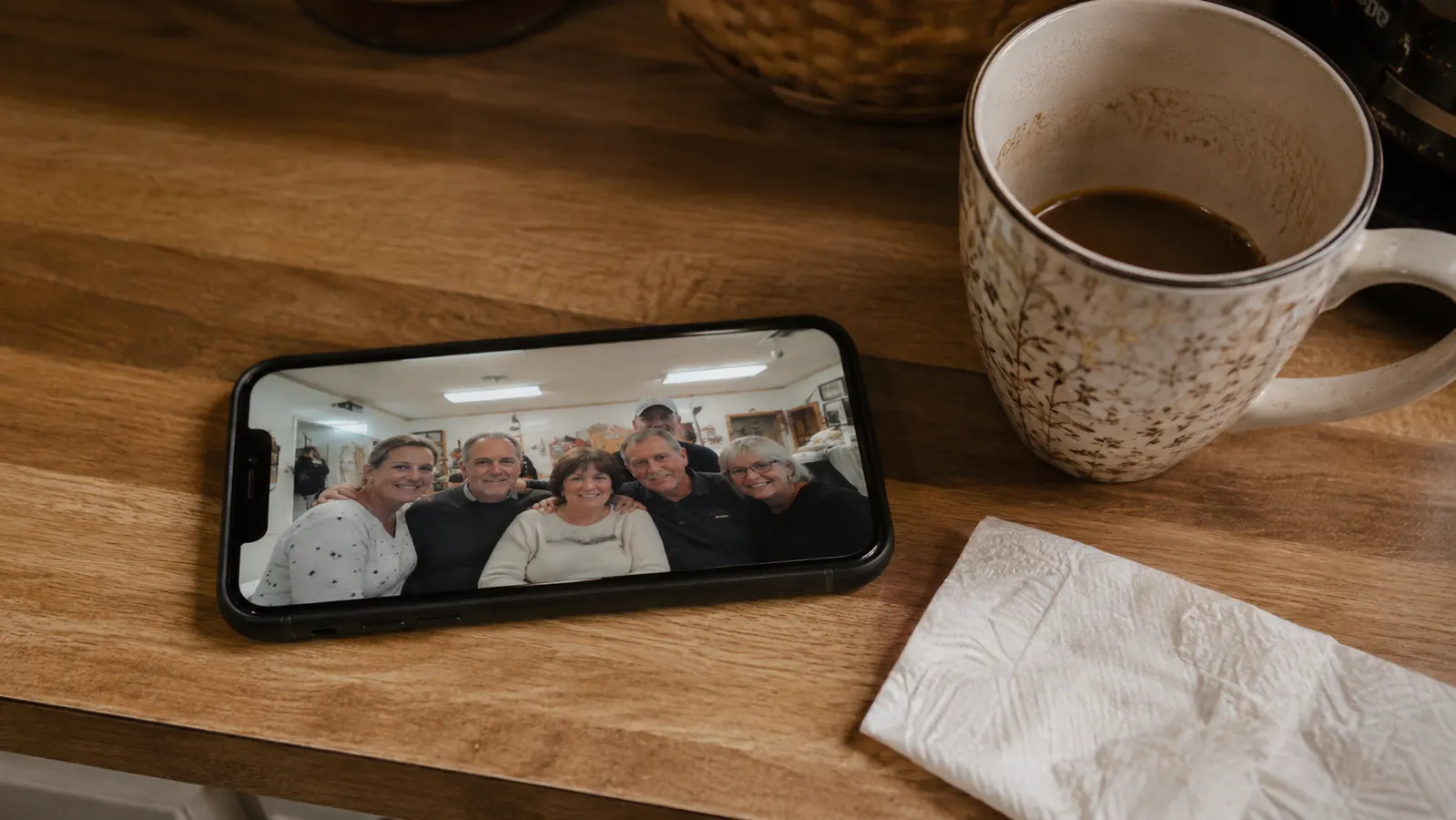
My cousin Carol retired from the hospital billing office in March, and at her lunch a coworker of hers took a photo across the table and airdropped it to me before I'd even finished my salad. Fluorescent light, straight overhead, the kind that doesn't flatter anyone. But when I opened it that night, I didn't blame the lighting. I saw a face that looked tired in a way sleep hadn't fixed in a long time, a grayish cast along my jaw and under my eyes, skin that looked like it had stopped asking to be noticed. That photo is the reason I ended up trying TruSkin's vitamin C serum a few weeks later.
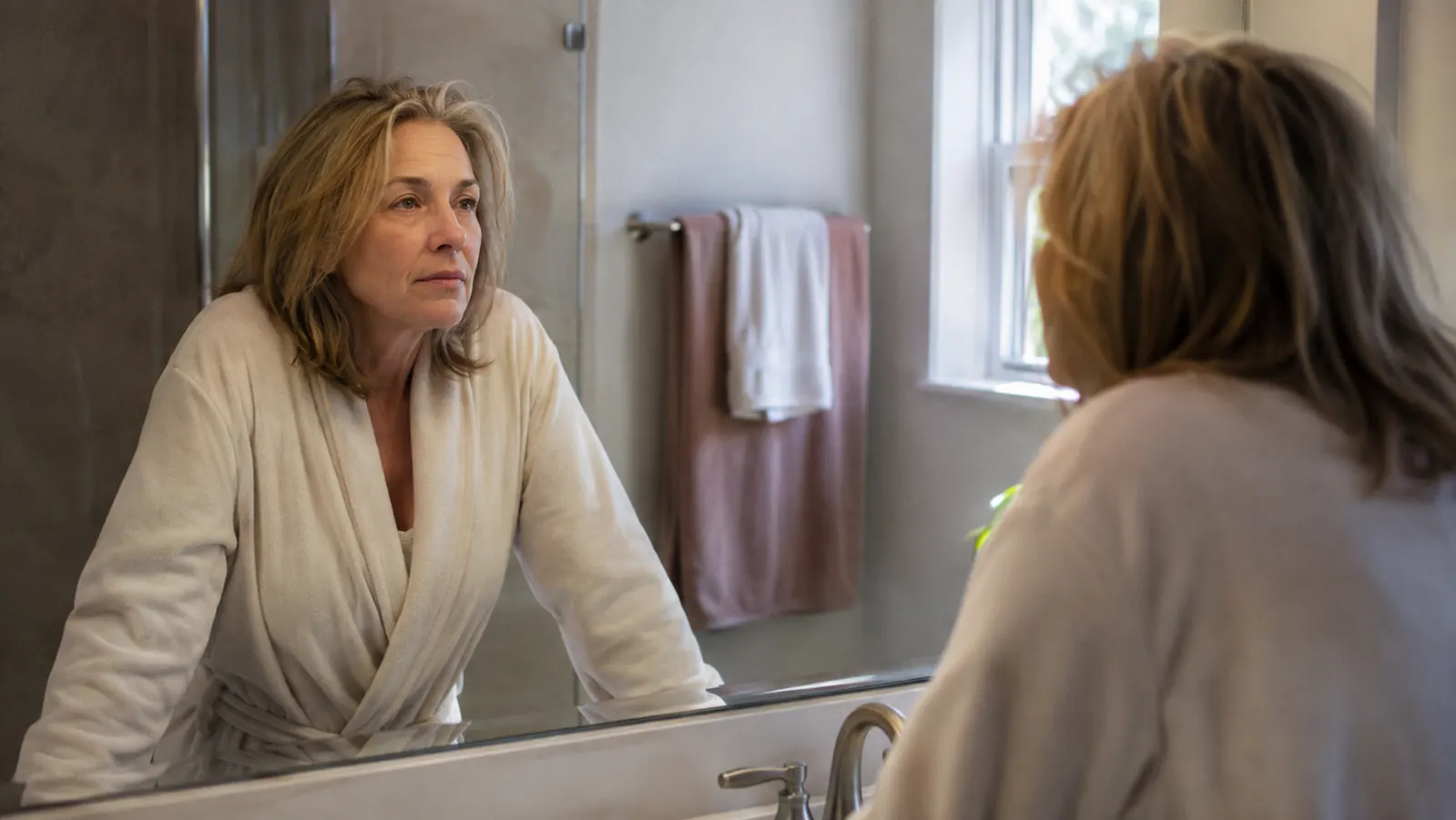
I stood at my bathroom mirror the next morning and looked closer than I had in months. Not for wrinkles, I'd made my peace with those years ago. It was the tone that bothered me, dull and a little sallow, with dry flaking just beside my nose no matter how much moisturizer I layered on. I was fifty-two, and my skin looked like it hadn't seen daylight in a decade, even though I walk every morning without fail.
I'd tried things before. A retinol cream that left my face raw and peeling for a week straight. A drugstore brightening cream that smelled like a scented candle and did about as much for my skin. So I wasn't rushing to spend real money chasing what might have just been bad lighting at a retirement lunch. But I kept thinking about that grayish cast, and one Sunday night I searched 'vitamin C serum for dull skin' more out of curiosity than commitment.
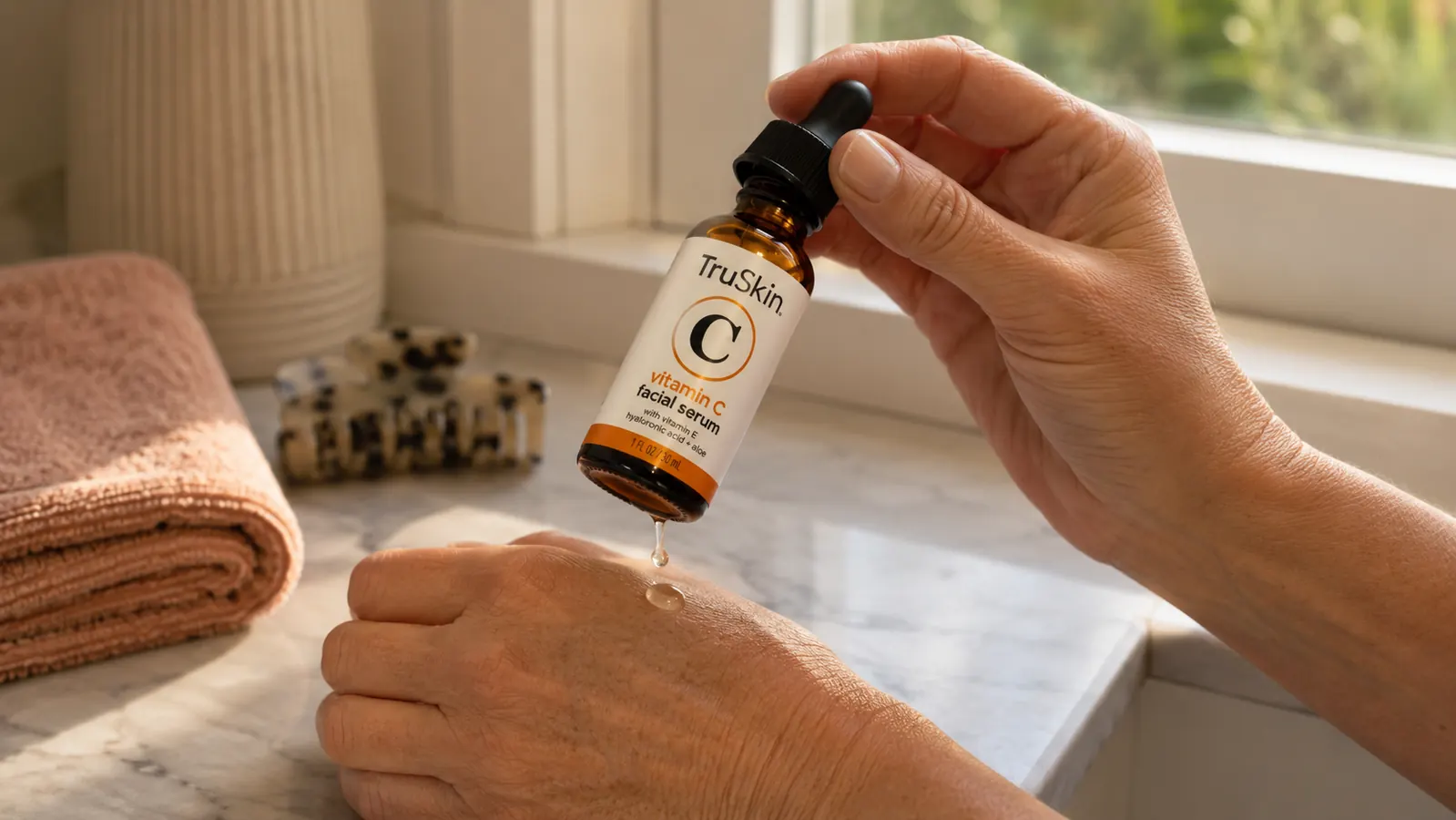
What I landed on was TruSkin's brightening vitamin C serum, mostly because it was under twenty dollars and had more reviews than I could scroll through in one sitting. No claims about erasing anything, just vitamin C and hyaluronic acid on a short ingredient list. Low risk enough that if it did nothing, I wouldn't feel foolish for having tried.
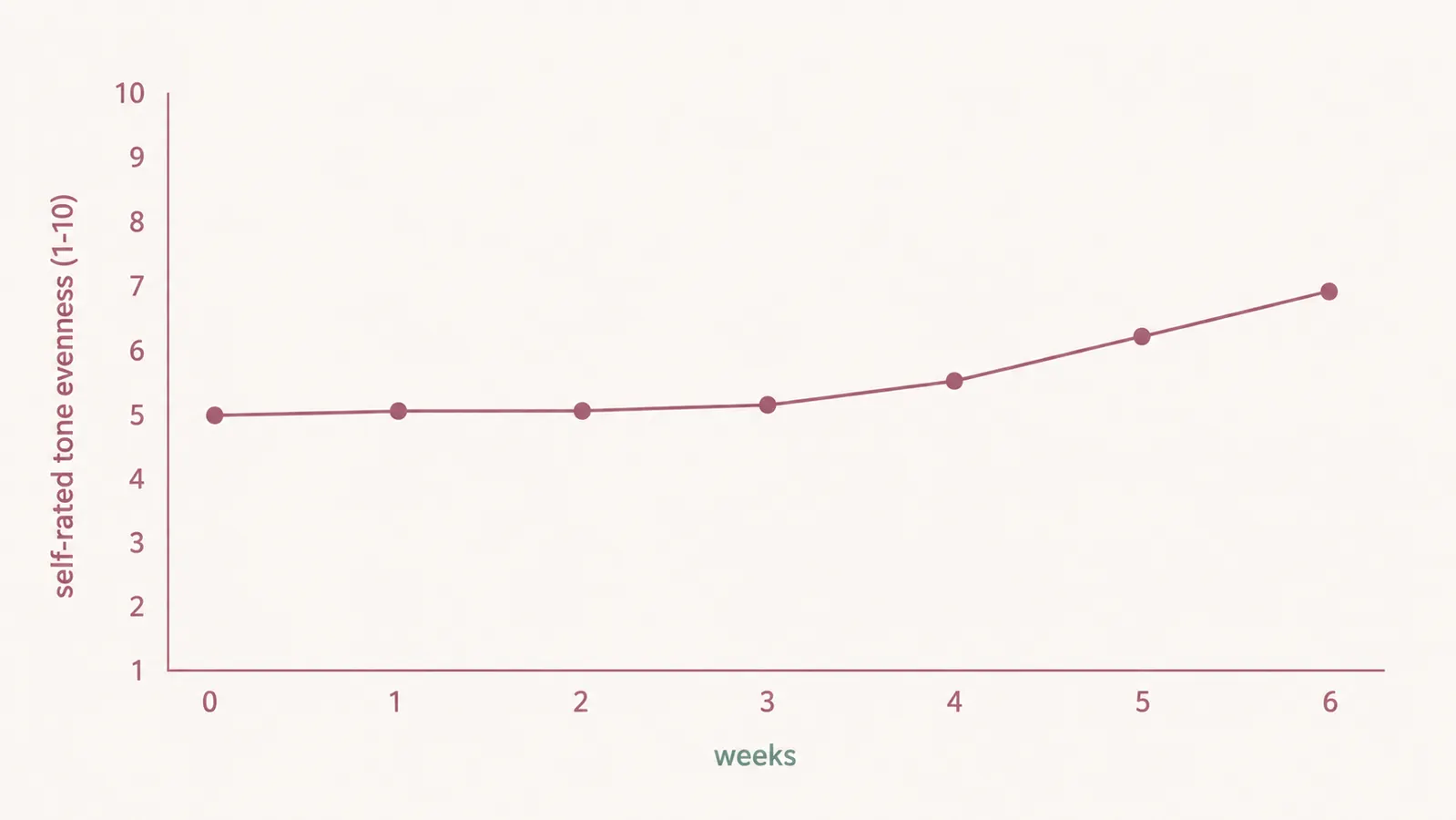
The first two weeks were nothing, and I want to say that plainly, because most of what I read online skips straight to results. I added three drops after washing my face each morning, waited a minute, then put on my regular moisturizer. My skin felt fine, not tight the way some actives had made it feel before, but I didn't see a single difference I could point to. I nearly quit around day twelve out of pure boredom with the routine.
I didn't quit the TruSkin serum, mostly out of stubbornness. Somewhere close to week five, my husband asked if I'd been sleeping better. I hadn't. What had changed was the mirror at 7am, the flat gray light I used to dread. The sallow tone had thinned out. Not gone, thinned. My skin looked more like itself on an ordinary Tuesday instead of only on the rare days I'd slept eight hours and drank enough water.
It didn't erase anything. It just stopped my face from looking like it was apologizing for itself.
The bottle that's still sitting on my sink six weeks later
If you're looking at your own mirror the way I looked at that photo, this is the exact vitamin C serum I've been using every morning since. Current price and reviews are on Amazon.
Amazon Check Today's Price on Amazon →The flaking near my nose is what surprised me most. I'd assumed that was just dryness, something a heavier cream would fix, and I'd been treating it that way for two winters without much luck. Somewhere around week four it stopped showing up, and I think it was less about moisture and more about the vitamin C evening out whatever was making that patch of skin behave differently from the rest of my face. I wrote up the longer version of that stretch, week by week, in my long-term review of the TruSkin serum, if you want the fuller day-to-day account.
I'll be honest about what didn't change too. The two small sun spots on my left cheek from decades of skipping sunscreen in my twenties are still there. Softer at the edges, maybe, but not gone, and I'd be lying if I told you a twenty-dollar serum erased forty years of sun. My daughter, who's much better about SPF than I ever was, teased me about that when I showed her the bottle. I told her the truth, and the unfiltered version of that conversation and everything else I'd change about my routine is in the honest review I wrote up separately.
What kept me using TruSkin, past the point where I'd normally have given up on a skincare product, was how little it asked of me. Three drops, a minute of waiting, then my normal moisturizer. No burning, no reason to skip a day out of caution. If you want the shorter case for why that matters more than any single ingredient, I laid out ten reasons in this piece on what a vitamin C serum actually does for skin like mine.
What I'd Tell You If We Were Sitting at My Kitchen Table
If you got your own version of that photo, the one that stops you mid-conversation because you don't recognize how tired your own face looks, I'm not going to tell you a serum fixes that feeling. It doesn't touch the spots that sun damage left behind, and it won't turn back forty years of not wearing enough sunscreen. What TruSkin did, slowly and without any drama, was make the ordinary version of my face look a little more like the version I remember. Even, less gray, less like I needed a full night's sleep just to look normal. If you're on the fence about trying it, I'd say give it the full six weeks before you decide anything. Mine did nothing for the first two.
Six weeks in, it's still the first thing I reach for
This is the same TruSkin vitamin C serum from the story above, hyaluronic acid included, under twenty dollars the last time I checked. See today's price and current reviews for yourself.
Amazon Check Today's Price on Amazon →