
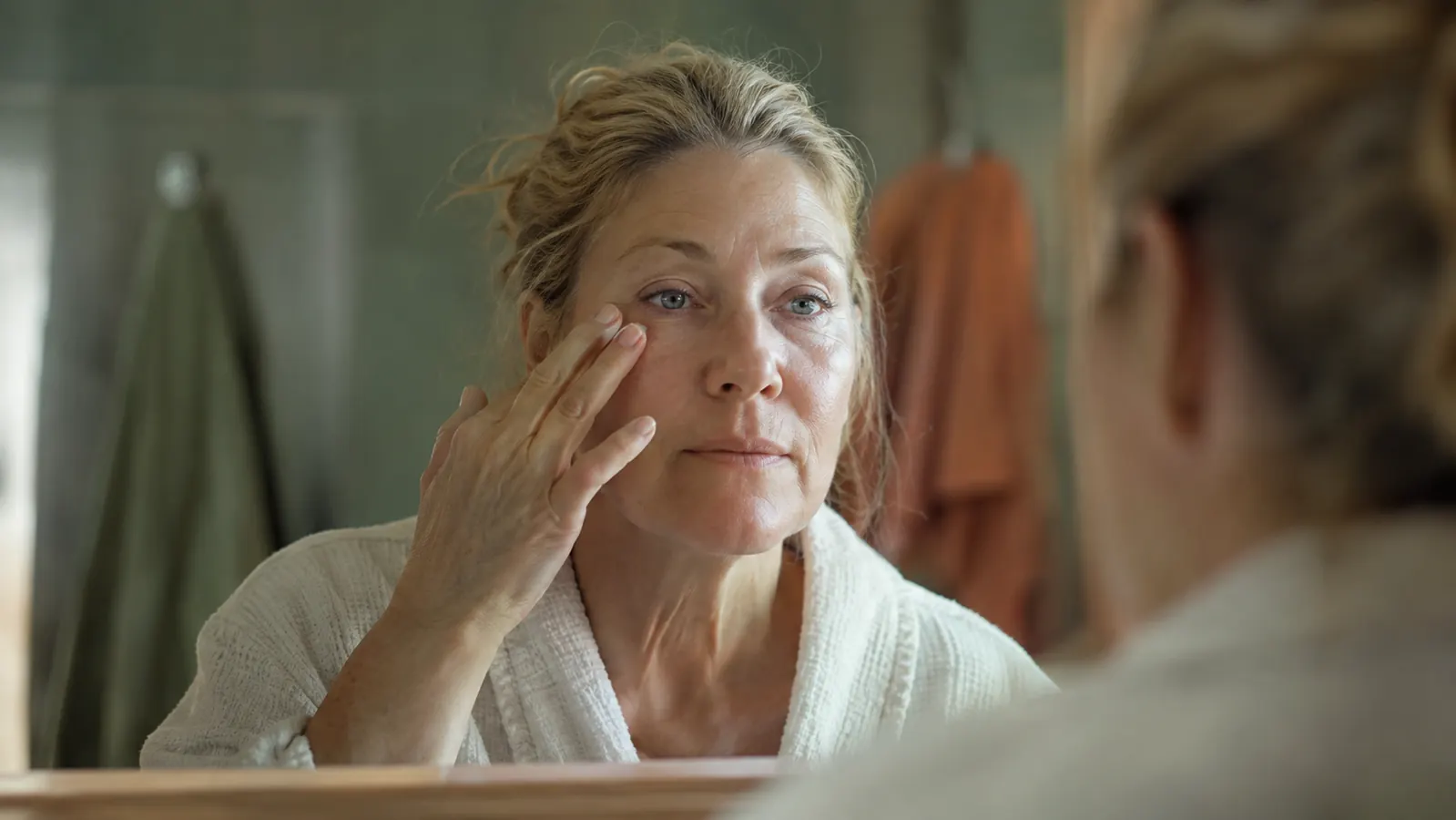
I'm Vivian Slade, I'm fifty-six, and the skin under my eyes has looked tired since sometime in my forties, no matter how much sleep I actually got the night before. Two shadowed half-moons and a puffiness that shows up worse on some mornings than others, coffee or no coffee, regardless of what I do. Last October I bought a small tube of RoC Retinol Correxion Under Eye Cream for Dark Circles and Puffiness, the plain 0.5-ounce tube that kept turning up on ingredient lists I trust because it actually names retinol on the label instead of hiding behind a vague brightening complex. This is what six straight months of using it every night actually did to the circles and the puffiness under my eyes, and what it never touched at all.
I want to say plainly what kind of evidence this is before I get into it, because I think a lot of eye cream reviews oversell what they actually have. I don't have a dermatologist's chart, I don't have side lighting from a clinic, and I'm not a doctor. What I have is my own bathroom mirror at 7am, a tube that's now on its second refill, and fifty-six years on this particular face. That's a narrower kind of proof than a study, and I'd rather say so up front than dress it up as more than it is.
The Quick Verdict
A gentle, gradual retinol eye cream that visibly softened the look of my morning puffiness and evened out some of the surface darkness within about eight weeks, though it never touched the deeper, bluish hollow that's simply how my under-eye area is built.
Amazon Check Today's Price →Tired of Looking Exhausted in Every Morning Photo No Matter How You Slept?
I spent years assuming there was nothing to be done about the shadows under my eyes short of concealer and better lighting. Six months of nightly use with this specific tube changed some of that, and left plenty untouched. Here's the full timeline, plus where to check today's price if you want to see for yourself.
Amazon Check Today's Price on Amazon →How I've Actually Used It Every Night for Six Months
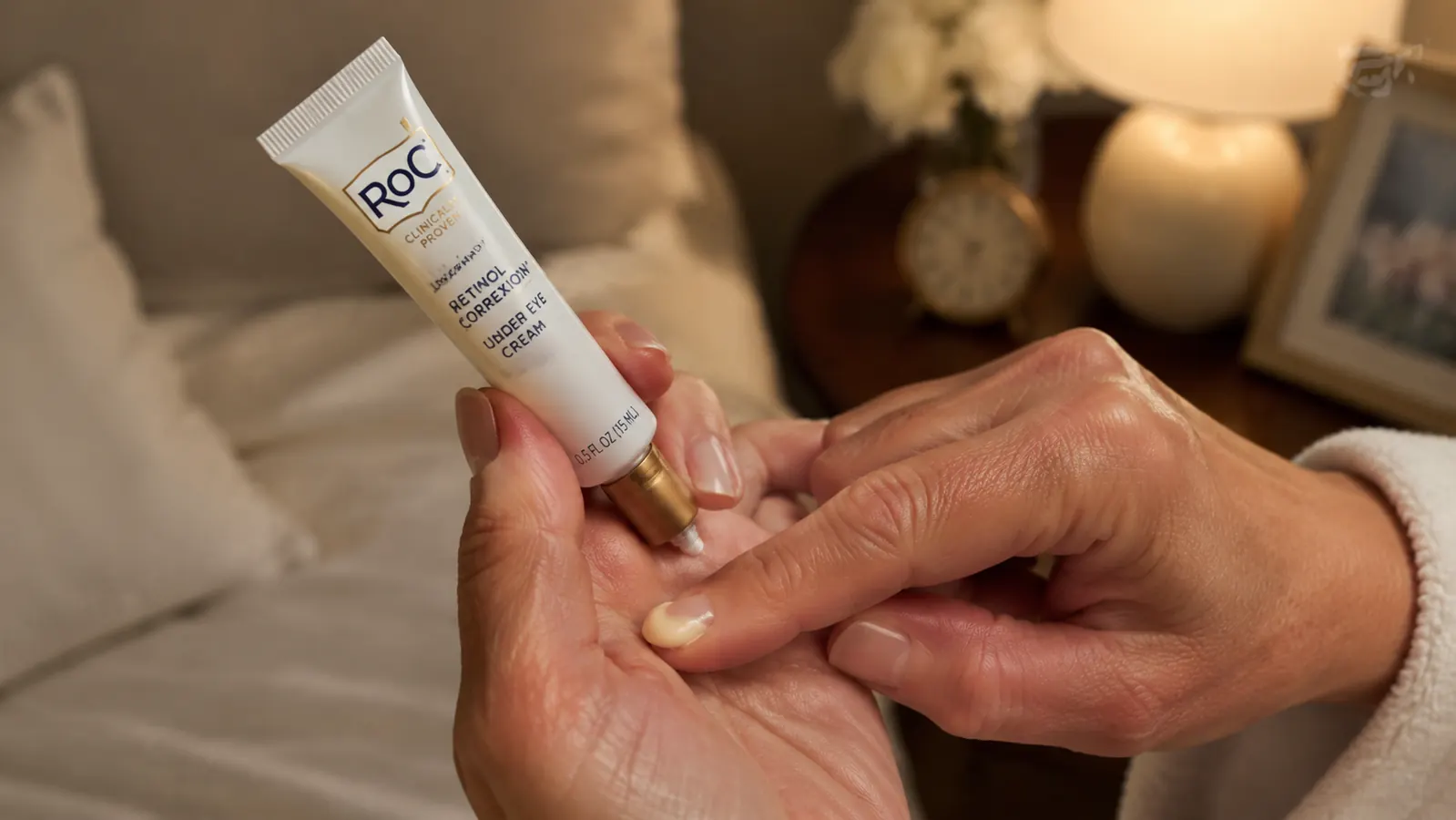
My routine is simple, and I think that's part of why I stuck with it long enough to notice anything at all. After cleansing at night, I dot a rice-grain amount along my orbital bone with my ring finger, never dragging the skin, just pressing it in with small taps until it disappears. I keep it well below my lash line and away from the inner corners, where the skin is thinnest and where I've had retinol sting in the past with other products. The tube has lasted longer than I expected for something used nightly, since such a small amount goes a long way under each eye.
I didn't start at full strength every night, and I don't think anyone should with a retinol product this close to the eye. For the first two weeks I used it every other night, watching for any redness or flaking the next morning. There was some mild dryness at the outer corners during week one, nothing dramatic, and it settled once my skin adjusted. By week three I was applying it nightly without any irritation, and I stayed on that nightly schedule for the rest of the six months.
I also want to be clear about what I didn't change alongside it, since I think that matters for how much credit the cream actually deserves. My sleep habits stayed roughly the same, uneven as they've always been, and my salt intake wasn't any different than it was the October before. The only real variable I introduced was this specific eye cream at night, which is part of why I feel reasonably confident attributing what changed to it rather than to something else I'd also shifted at the same time.
The First Six Weeks: Getting My Skin Used to Retinol This Close to My Eyes
I'll admit I went in braced for irritation, since I'd had a rough experience years ago with a different retinol product applied too close to my lash line. That didn't repeat here. Once I moved past the mild dryness of the first week, my skin tolerated it well, no burning, no persistent flaking, nothing that made me hesitate to use it again the next night. I credit that partly to how gradual the formula seems built to be and partly to being more careful with placement than I was the first time around years ago.
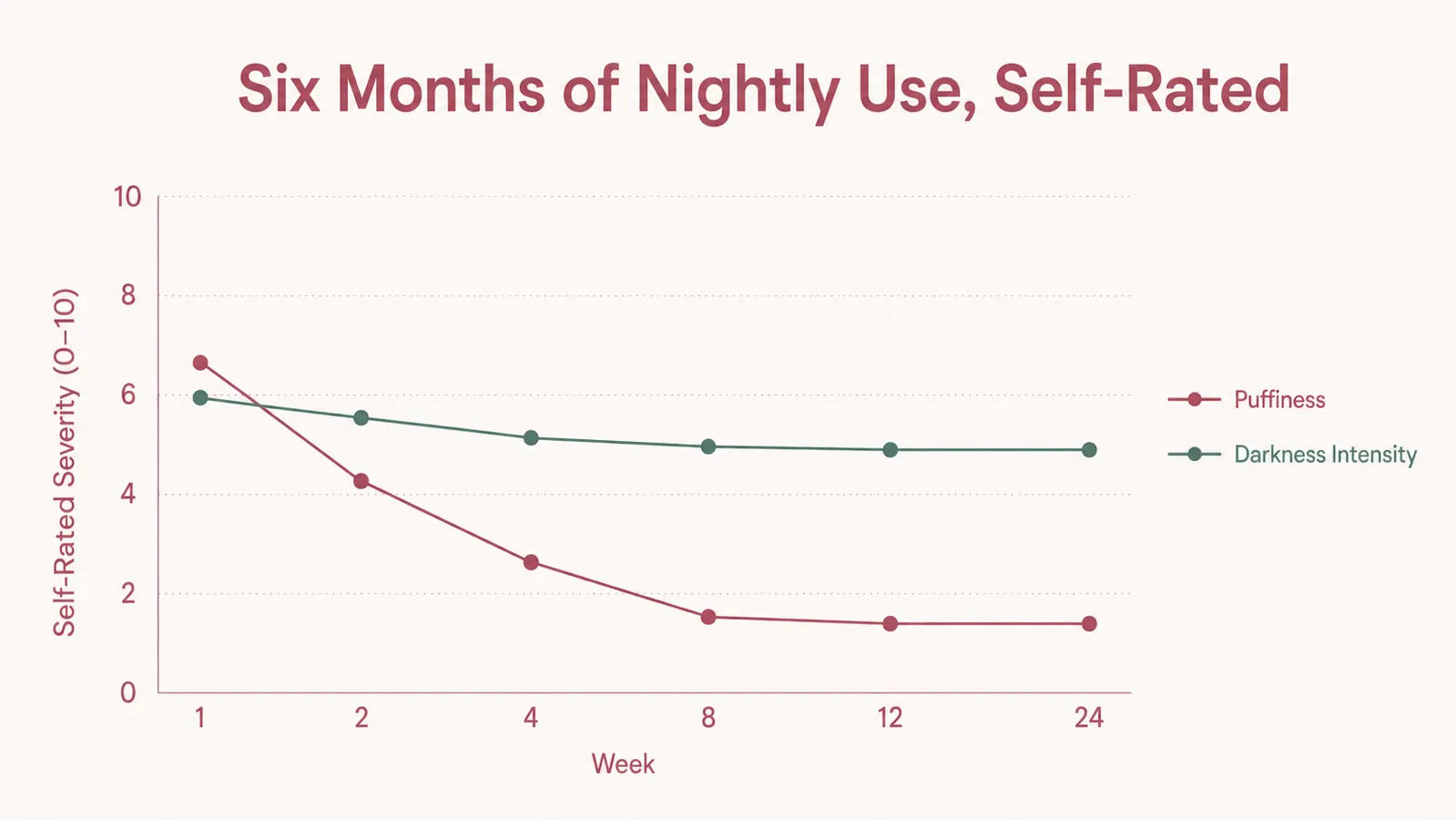
What surprised me was how long it took before I noticed anything beyond tolerance. I'd half expected the puffiness to look different within a week or two, the way some marketing implies. It didn't. The first change I actually noticed, a slight softening in how puffy I looked first thing in the morning, showed up closer to week five or six, and it was subtle enough that I second-guessed myself for a few more mornings before I trusted it was real and not just better sleep that week.
What Actually Changed by Month Six, and What Didn't
The puffiness is the clearest result, so I'll lead with it. By week eight, most mornings showed less of that swollen, heavy look along my lower lid, and by month four it had become something I mostly stopped thinking about, which is a strange thing to notice only in its absence. It hasn't disappeared entirely, and on mornings after very little sleep or a salty dinner the night before, it still shows up. But the baseline, the amount of puffiness on an ordinary morning, is visibly less than it was in September.
The darkness is a more complicated answer, and I want to be honest about it rather than round it up. There's a surface component to my dark circles, a slight brownish tint that I think comes from years of sun exposure and thinning skin, and that piece did lighten somewhat, noticeably by month three. But there's also a deeper, bluish cast underneath that I've since learned comes from the shape of my under-eye area itself, a mild hollow that lets the blood vessels show through no matter how well-rested or hydrated my skin is. Six months of nightly retinol did essentially nothing to that part, and I don't think any topical cream honestly could, since that's a structural feature of my face rather than a surface concern a cream is built to reach.
Texture overall improved more than I expected going in. The fine crepey lines that used to show up under my eyes by early afternoon look smoother now, and concealer sits better than it used to, less likely to crease into those lines by midday. That's a smaller win than dark circles disappearing, but it's a real one, and it's the kind of change I only really appreciated once I looked back at how differently my concealer used to behave last fall.
The Formula Itself: RoC's Mineral Complex, a Named Retinol Concentration, and Why That Mattered to Me
What sold me on trying this over several other eye creams I'd been considering was that RoC actually states a retinol concentration on the packaging rather than hiding behind a vague proprietary blend name. It's built around RoC's own mineral complex paired with retinol, along with hyaluronic acid for hydration, and it's fragrance-free, which mattered to me since I've had scented eye creams migrate into my eyes and sting more than once. The texture is a light, almost gel-like cream rather than a heavy balm, and it absorbs within a couple of minutes, which meant I could apply it and still read in bed without transferring product onto my pillowcase. If you want a broader case for why a dedicated eye cream earns its own step in a routine at all, separate from whatever moisturizer you're already using on the rest of your face, I laid that reasoning out more fully in 10 reasons a dedicated eye cream helps dark circles and puffiness.
It's worth being specific that this is the under-eye formula in RoC's Retinol Correxion line, built for the thinner, more sensitive skin around the eyes, not one of the brand's other Retinol Correxion products meant for the rest of the face. I mention that because I nearly grabbed the wrong tube at the drugstore before I read the label closely, and I think it's an easy mix-up to make when several products in the same line sit on the same shelf.
Where This Cream Hits Its Limit
I want to be honest about where six months stopped being useful, because a fair review needs a ceiling as much as a floor. The deeper bluish darkness under my eyes, the part caused by the natural shape and thinness of the skin there rather than by pigment or puffiness, looked essentially the same in month six as it did in September. If you're shopping for something to erase hereditary hollowing the way a filler might, I don't think any eye cream, this one included, is built to do that, and I'd rather tell you that plainly than let the packaging imply otherwise.
I'd also add that the improvement plateaued for me. The biggest visible changes happened between week five and month three, and month four through month six looked a lot like month three did, just maintained rather than continuing to improve. That's worth knowing if you're expecting a straight line of progress the longer you use it, because in my experience it wasn't one.
What I Liked
- Softened the look of my morning puffiness noticeably by week eight, and it's stayed lower on the baseline since
- Lightened the surface, brownish component of my dark circles by month three
- Named retinol concentration on the label instead of a vague proprietary blend
- Fragrance-free and gentle enough that irritation settled within the first two weeks and never returned
- Small tube lasted longer than expected since so little product is needed under each eye
Where It Falls Short
- Did nothing visible to the deeper, bluish hollow caused by the natural structure of my under-eye area
- Took five to six weeks before I noticed any real change, not a quick fix
- Mild dryness at the outer corners during the first week of use
- Results plateaued after month three rather than continuing to improve through month six
- Easy to grab the wrong RoC Retinol Correxion product off the shelf if you're not reading labels closely
It didn't touch the deep hollow that's simply how my face is built. It did soften my morning puffiness and lighten the surface darkness by month three. That's a smaller claim than most eye cream ads make, but it's the one that was actually true for me.

Who This Is For
If your dark circles have a surface component, a brownish or grayish tint that looks worse on some mornings than others, and you also deal with genuine puffiness rather than just tiredness in your expression, I think a gradual retinol eye cream like this one is a reasonable place to start before spending money on anything more invasive. It's also a sensible fit if you've been burned by scented eye creams that stung near your lash line before, since the fragrance-free formula never gave me that problem once my skin adjusted in the first couple of weeks.
Who Should Skip It
If your dark circles are mostly the deep, bluish, structural kind, the sort that shows up no matter how well-rested you are, I'd set your expectations lower before you buy, because six months showed me clearly that a topical cream doesn't reach that. It's also not the product for anyone who wants dramatic results within the first couple of weeks, since the honest timeline here was closer to five or six weeks before I noticed anything, and if you're brand new to retinol anywhere on your face, I'd start with the every-other-night approach I used rather than going straight to nightly. For the shorter, more blunt version of what actually surprised me about this exact cream, including a few things I didn't have room for here, I also wrote a more straightforward honest review that skips the six-month narrative and gets right to what stood out.
Here's My Honest Bottom Line After Six Months
My morning puffiness is visibly less than it was in September, and the surface darkness lightened by month three. It never touched the deeper hollow that's simply how my under-eye area is built, and I'm telling you that plainly instead of pretending otherwise. Check today's price on Amazon if you want to see what a gradual, fragrance-free retinol eye cream actually does over six months.
Amazon Check Today's Price on Amazon →