
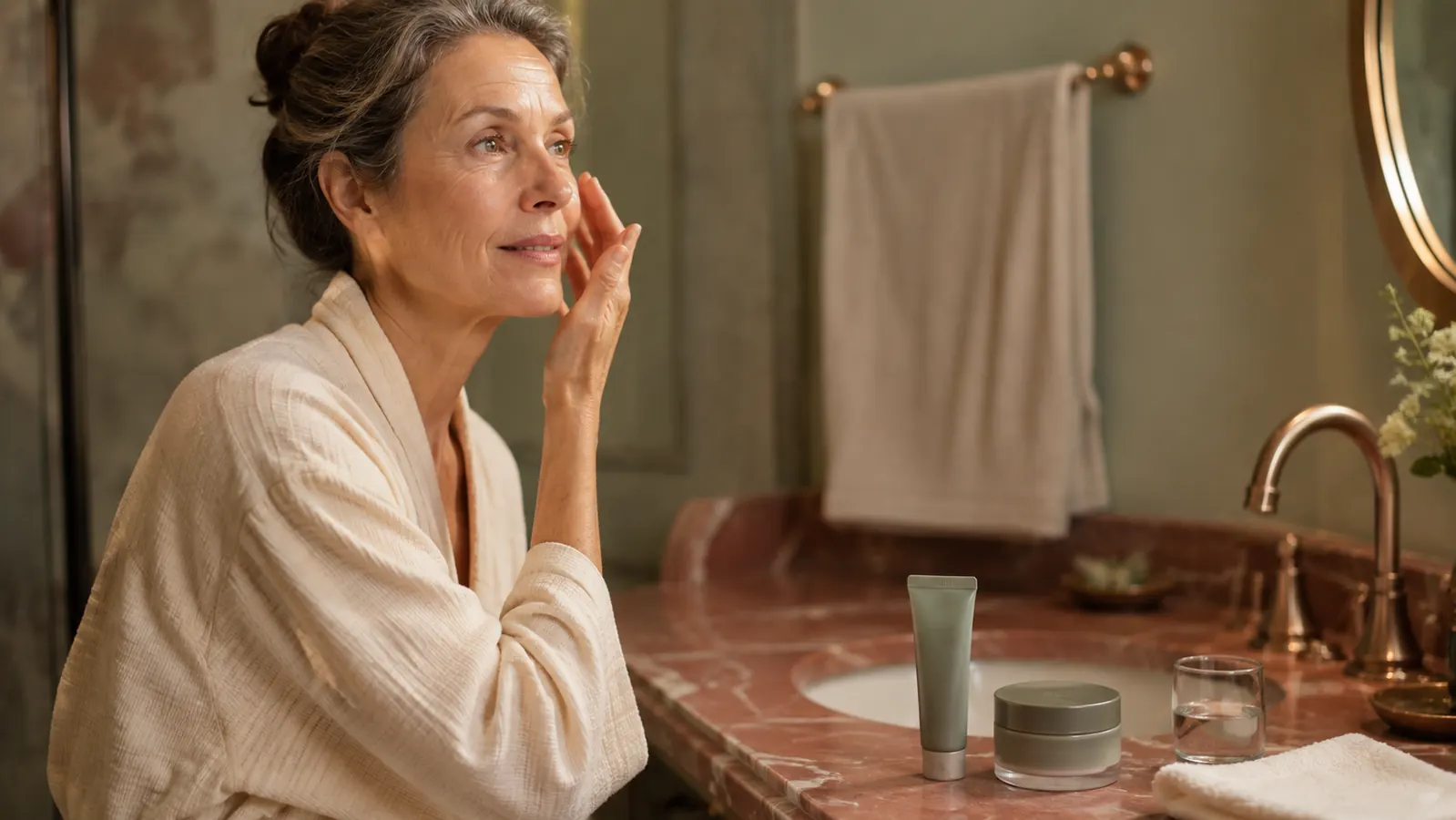
Short answer, since that's usually what brought you here: I keep RoC Retinol Correxion Under Eye Cream on my bathroom shelf and I keep going back to it, even after spending six weeks running Olay Eyes Brightening Eye Cream alongside it on the same face, one product under each eye, deliberately, so neither one had the advantage of being the only thing my skin saw that month. Both showed up on nearly every eye cream list I checked before I started this comparison, and both are priced close enough that cost alone won't make the decision for you. They aren't really solving the same problem, though. One is a retinol formula built to soften puffiness and texture over months. The other is a niacinamide brightening cream built to even out tone faster, with no retinol in the ingredient list at all. I wore both, one under each eye for two weeks, then switched sides, then went back to using RoC on both eyes for the following month because of what I noticed. Here's the full comparison, row by row, plus where each one actually won.
I'm Vivian Slade. I'm fifty-six, and I've already written about six months of nightly RoC use on my own puffiness and dark circles, so I won't repeat that whole story here. What I hadn't done until this spring was put a second, well-reviewed eye cream through the same routine so I could say something more useful than "I liked it." Olay Eyes Brightening Eye Cream kept turning up in the same searches, usually a few dollars cheaper or pricier depending on the week, and marketed toward the same tired, shadowed under-eye area mine has had since my forties. I bought a jar with my own money in March and ran it for six weeks before drawing any conclusions, the same standard I held RoC to.
| RoC Retinol Correxion Under Eye Cream | Olay Eyes Brightening Eye Cream | |
|---|---|---|
| Key Active | Encapsulated retinol, named plainly on the label as the Retinol Correxion complex | Niacinamide and a vitamin brightening complex, no retinol in the formula |
| Texture on Application | Light gel-cream, sinks in fully within about a minute | Richer, cushiony cream, sits on skin for a couple of minutes before it fully absorbs |
| Primary Target | Puffiness and surface texture, with tone as a slower secondary effect | Dullness and uneven tone specifically, not puffiness |
| Tube or Jar Size | 0.5 fl oz tube | 0.4 fl oz jar |
| Price Band | Low double digits to low twenties at today's price | Similar range, occasionally a few dollars less on sale |
| Irritation Risk | Mild tingling near the lash line possible for the first two to three weeks | Essentially none reported in my own use or my friend Donna's, fragrance is faint but present |
| Time to Visible Change | Puffiness looked softer by roughly six weeks of nightly use | Tone looked brighter by roughly three weeks, then held steady rather than improving further |
| Who It Suits | Anyone willing to commit two to three months for puffiness and texture | Sensitive skin that wants a faster brightening effect without retinol |
How I Set This Comparison Up
I didn't run these two under a dermatologist's lamp or measure anything with equipment, so I want to be honest about what kind of evidence this is before you read further. I used RoC nightly under my left eye and Olay nightly under my right eye for two weeks, photographed both in the same bathroom light each morning, then swapped sides for two more weeks to rule out my own face simply being uneven, which it is, a little, like most faces are. After that four-week split, I switched to RoC everywhere for another two weeks, since that was already my established routine and I wanted a longer read on it. Olay never got that same extended solo run on my own face, and I'll say plainly where that limits what I can tell you.
I also asked a friend, Donna, who's used a jar of Olay for about four months on her own, what she noticed over that longer stretch, since a single six-week window from me alone would be a thin basis for a real opinion. Her notes are folded into the comparison below, credited as her experience rather than mine wherever they appear. Neither of us is a chemist, and nothing here should be read as a claim that either product treats or cures anything happening under the skin. What follows is what actually showed up in the mirror, on two separate faces, over real weeks of ordinary use.
Where RoC Retinol Correxion Wins
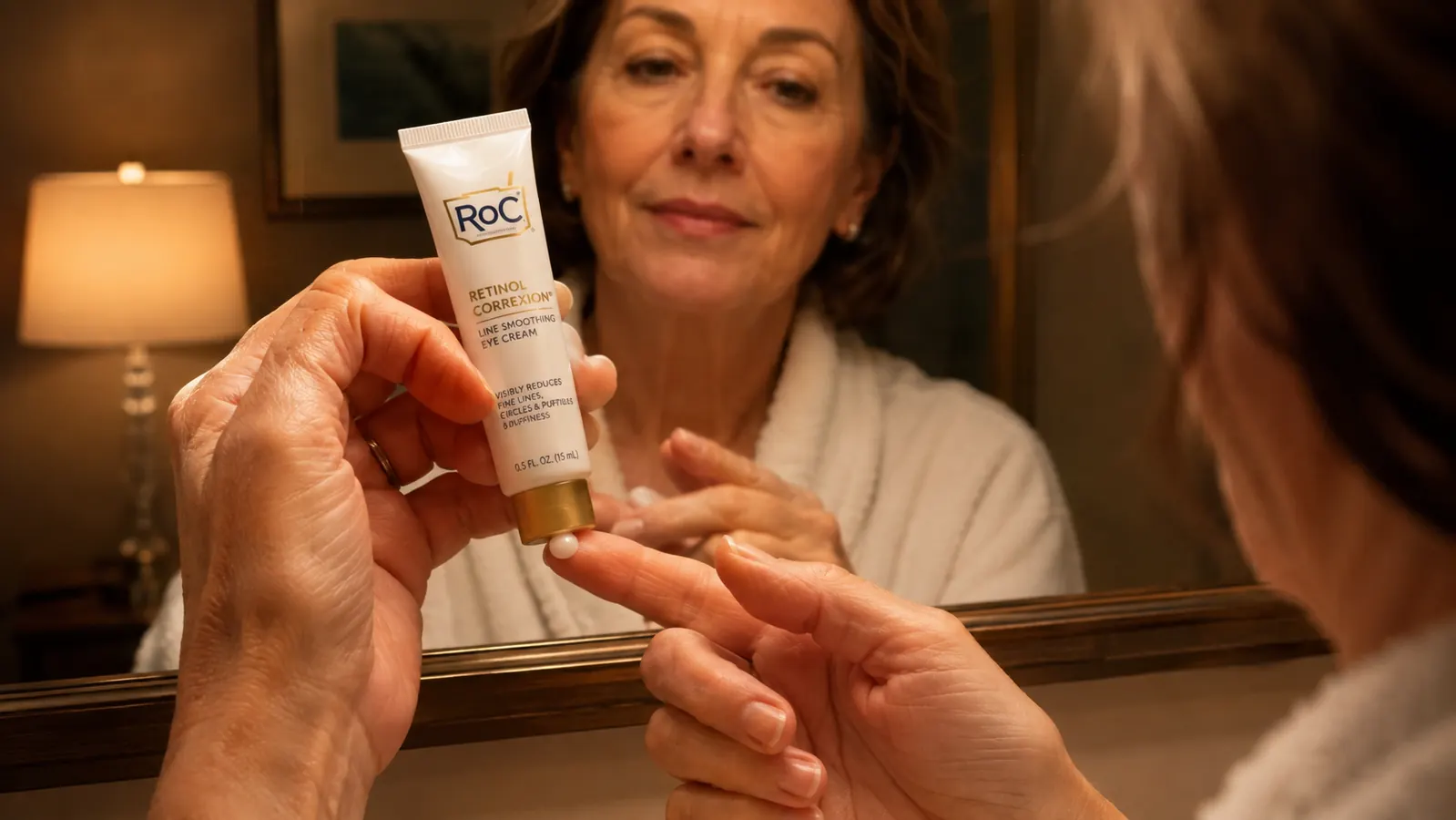
RoC's biggest edge, for me, was what happened to the puffiness itself over time, not just the color underneath it. By week six of steady use, the slight morning swelling I get, worse after salty dinners or a bad night's sleep, looked noticeably softer, especially comparing photos taken at the same time of day under the same lamp. That's roughly what retinol tends to do on skin generally, encourage smoother texture with consistent months of use, and it's the reason I went back to using it under both eyes once the split test ended. Olay didn't move that particular needle in six weeks, at least not on my face or on Donna's.
The other place RoC pulled ahead was value for the tube. Even though the price bands sit close together, the 0.5-ounce tube of RoC has lasted me nearly four months on a nightly rice-grain amount, longer than I expected going in. The Olay jar, used at a similarly small amount each night, ran out closer to ten weeks for me, partly because the richer texture meant I was using slightly more per application without really meaning to. If you're comparing cost per week rather than the sticker price, that gap matters more than the few dollars separating them at checkout.
Where Olay Eyes Brightening Eye Cream Wins
Olay's clearest win was speed on tone. Within about three weeks, the slightly grayish cast under my eyes looked visibly brighter in morning light, faster than anything I saw from RoC in that same early window. Niacinamide tends to act on the surface faster than retinol does deeper in the skin, and that showed up here almost exactly the way I'd expect it to. If brightening dullness is the actual complaint, not puffiness or texture, Olay got there first.
It was also the gentler formula by a wide margin. I never felt so much as a hint of tingling from Olay, even applied close to the lash line where RoC gave me a mild sting for the first two or three weeks before my skin adjusted. Donna, who has reactive skin and has had to ease into retinol products slowly in the past, said Olay was the first eye cream in years that never once made her eyes water on application. For anyone who's tried a retinol eye cream before and given up on the irritation, that's a real point in Olay's favor, not a small one.
Tired of Choosing Between Faster Results and Fewer Side Effects?
RoC took longer to show up, but the puffiness change was the one that actually stuck around and kept improving past six weeks. Current price and availability are on Amazon if you want to see for yourself.
Amazon Check Today's Price on Amazon →The puffiness softened slowly with one cream. The tone brightened quickly with the other. Neither one did both.
Texture, Smell, and How Each One Actually Feels Going On
RoC goes on as a light gel-cream that disappears into the skin in under a minute, no residue, no shine left behind, which matters to me because I apply it after my nighttime skincare and before I just want to get into bed. It's unscented, or close enough that I've never once noticed anything. Olay is a noticeably richer cream, more like a proper moisturizer than a gel, and it sits on the skin for a couple of minutes before it's fully absorbed. It has a faint, clean scent, not unpleasant, but present in a way RoC's simply isn't.
Neither one pilled under makeup for me the next morning, which was a genuine relief given how many eye products I've tried over the years that ball up the second concealer goes on top. Olay's richer finish meant I had to wait a little longer before applying anything over it, closer to five minutes instead of RoC's near-immediate readiness, or I did notice some tackiness under a brush. If your mornings are rushed, that extra wait is worth factoring in before you buy.
A Note on the Rest of Each Ingredient List
Retinol and niacinamide get most of the attention in the marketing copy for both of these, but neither cream is a single ingredient in a tube. RoC's formula also lists glycerin and a handful of standard moisturizing agents that seem to keep the retinol from feeling drying on its own, which matched what I felt on my skin, a little dry for about the first week, then perfectly comfortable after that. Olay's formula leans on peptides alongside the niacinamide, which is likely part of why Donna and I both noticed a slight firming feel to the skin texture even though neither of us saw the same puffiness reduction that RoC eventually delivered.
Neither cream lists sunscreen, so I want to be clear that a separate morning sunscreen still matters no matter which eye cream you pick. Sun exposure is one of the bigger drivers of the kind of dullness and uneven tone both of these products are marketed to address, and I apply a plain facial sunscreen under my eyes every morning along with the rest of my face, regardless of which cream I used the night before. I'd suggest doing the same with either of these, since neither one is built to stand in for it.
What Happened to My Puffiness and Darkness With Each One
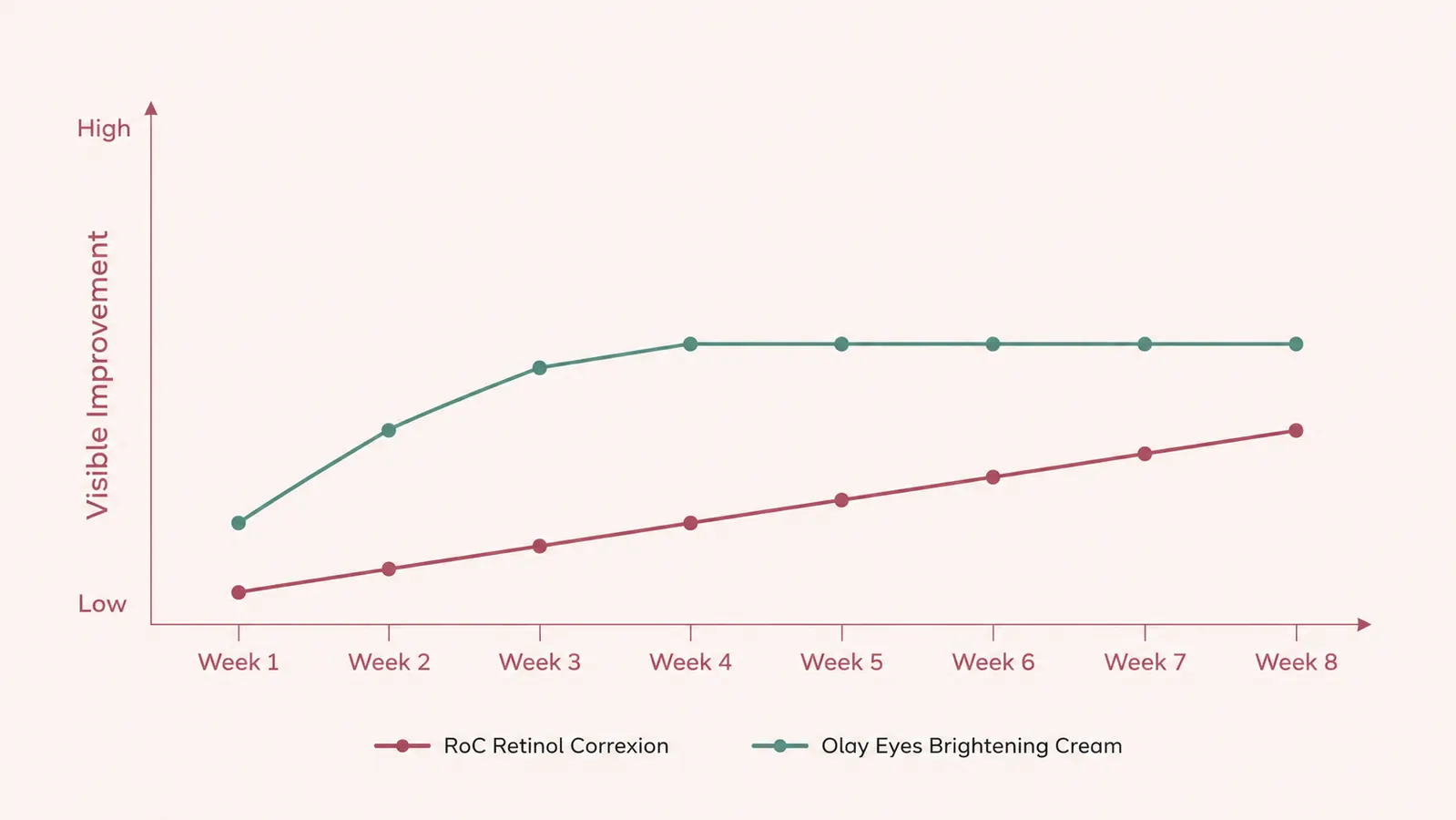
I've gone into far more detail on the retinol side of this in my honest RoC review, including the parts that didn't work at all, so I'll keep this section focused on the comparison itself. Over the eight weeks I tracked both creams, RoC's effect built slowly and kept building, the kind of gradual change you almost miss until you set a week-one photo next to a week-eight one. Olay's effect showed up faster and then leveled off, brighter by week three, but not meaningfully brighter still by week six than it had already been at week four.
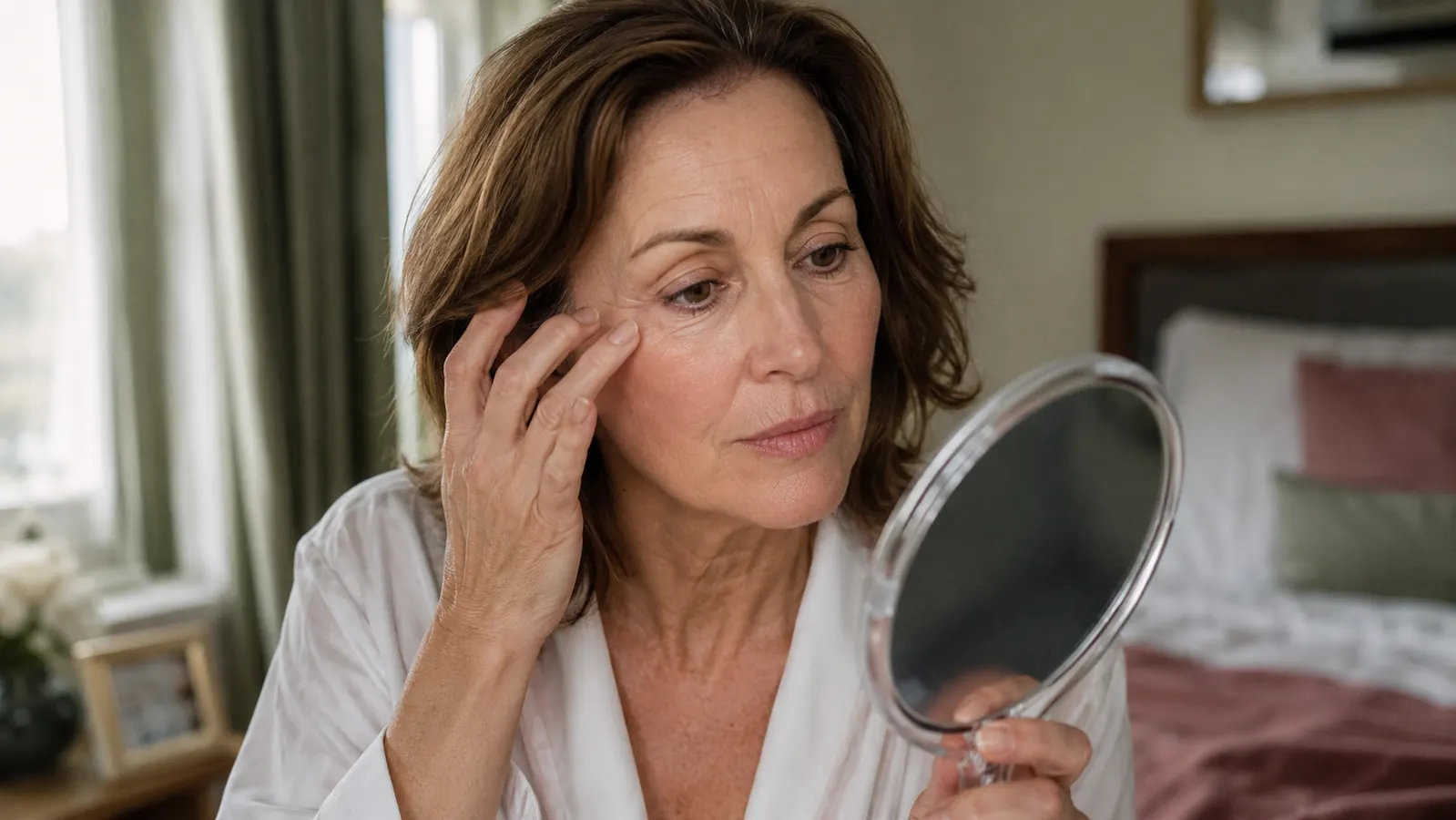
Neither cream touched the actual hollow under my eyes, the structural shadow that's simply how my face is built rather than something surface pigment or puffiness ever caused. I want to say that plainly, because both products are marketed with photos that suggest more dramatic change than either one delivered on my face. If you're expecting either cream to erase that kind of shadow completely, you'll be disappointed by both, and I'd rather tell you that now than after you've already bought one hoping otherwise.
Who Should Buy Which
If puffiness and slow, gradual texture change are your actual complaint, and you're willing to give a product two to three months before judging it, RoC is the one I'd point you toward first. It's also the better buy if you've never had trouble with retinol elsewhere on your face, since the mild adjustment period is real but it does pass within a few weeks, and it's less product to get through the same drawer of half-finished tubes most of us already have. If dullness and an uneven, tired-looking tone are the specific issue, and you want to see something change within a few weeks rather than a couple of months, Olay is a reasonable pick, especially if you've reacted badly to a retinol eye product in the past and would rather avoid that adjustment window entirely.
For what it's worth, I ended up keeping both in my routine rather than committing to just one, RoC most nights and Olay on the mornings I want a quick brightness boost before a photo or an event. But if I had to choose only one to keep reordering for the rest of the year, it's RoC, because puffiness and texture were the complaints that sent me looking for an eye cream in the first place, and it's the one that kept improving the longest without leveling off partway through.
Still Deciding? Here's the One That Kept Improving Past Six Weeks
Between the two, RoC was the one whose results kept building rather than plateauing after a month. See today's price and current availability before you choose.
Amazon Check Today's Price on Amazon →