
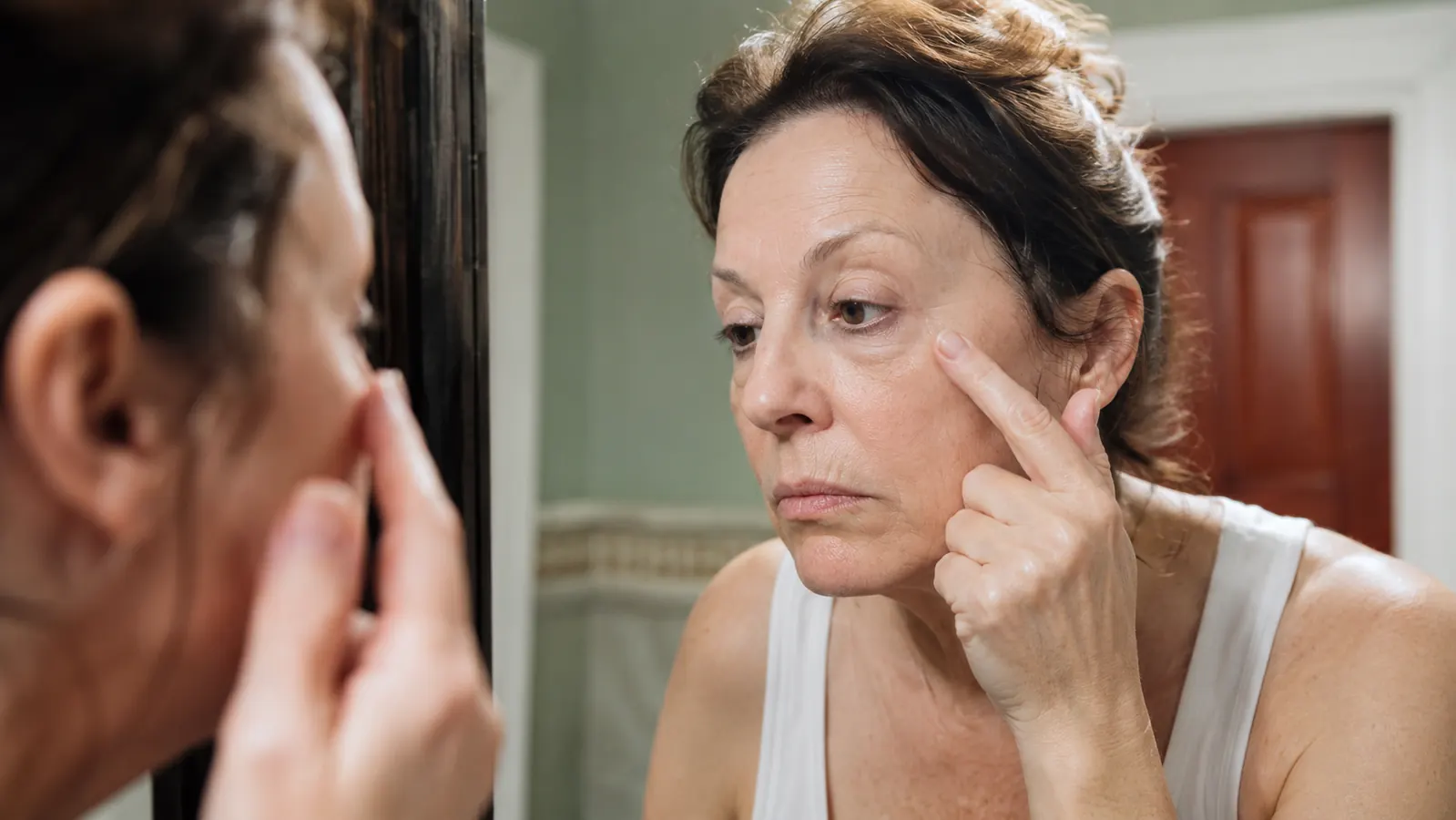
Here's what nobody selling eye cream wants printed on the box. If what you have under your eyes is a hollow, a groove where your cheek stops meeting your lower lid the way it used to, that is shadow from shape, not shadow from pigment, and a jar of anything cannot fill in a change in structure. I'm Vivian Slade, I'm fifty-four, and I spent more money than I want to admit chasing eye creams on the promise that this one, finally, would erase circles that turned out to have nothing to do with the ingredients I kept switching.
RoC Retinol Correxion Under Eye Cream for Dark Circles and Puffiness is the tube I actually kept using past the first month, the small 0.5-ounce one with retinol named plainly on the front instead of buried in a proprietary blend nobody can pronounce. This isn't the six-month diary version of my experience with it, I already wrote that one and you can read the full long-term timeline here. This is the shorter, blunter version, the things I'd tell a friend across a kitchen table before she spent her own money on it, including a couple of things that annoyed me and one thing that genuinely surprised me.
The Quick Verdict
A real, gradual retinol eye cream that earns modest, honest results on puffiness and surface darkness, sold with marketing that quietly lets you believe it does more than that.
Amazon Check Today's Price →Before You Buy Another Eye Cream on a Promise It Can't Keep
Most eye creams get bought on hope rather than information. This is the version of the review that tells you what the tube actually treats, what it doesn't, and whether the small size and the price per ounce still make sense once you know the real math. Check today's price if you want to see it for yourself.
Amazon Check Today's Price on Amazon →How I Tested It, and Why I Almost Sent It Back the First Week
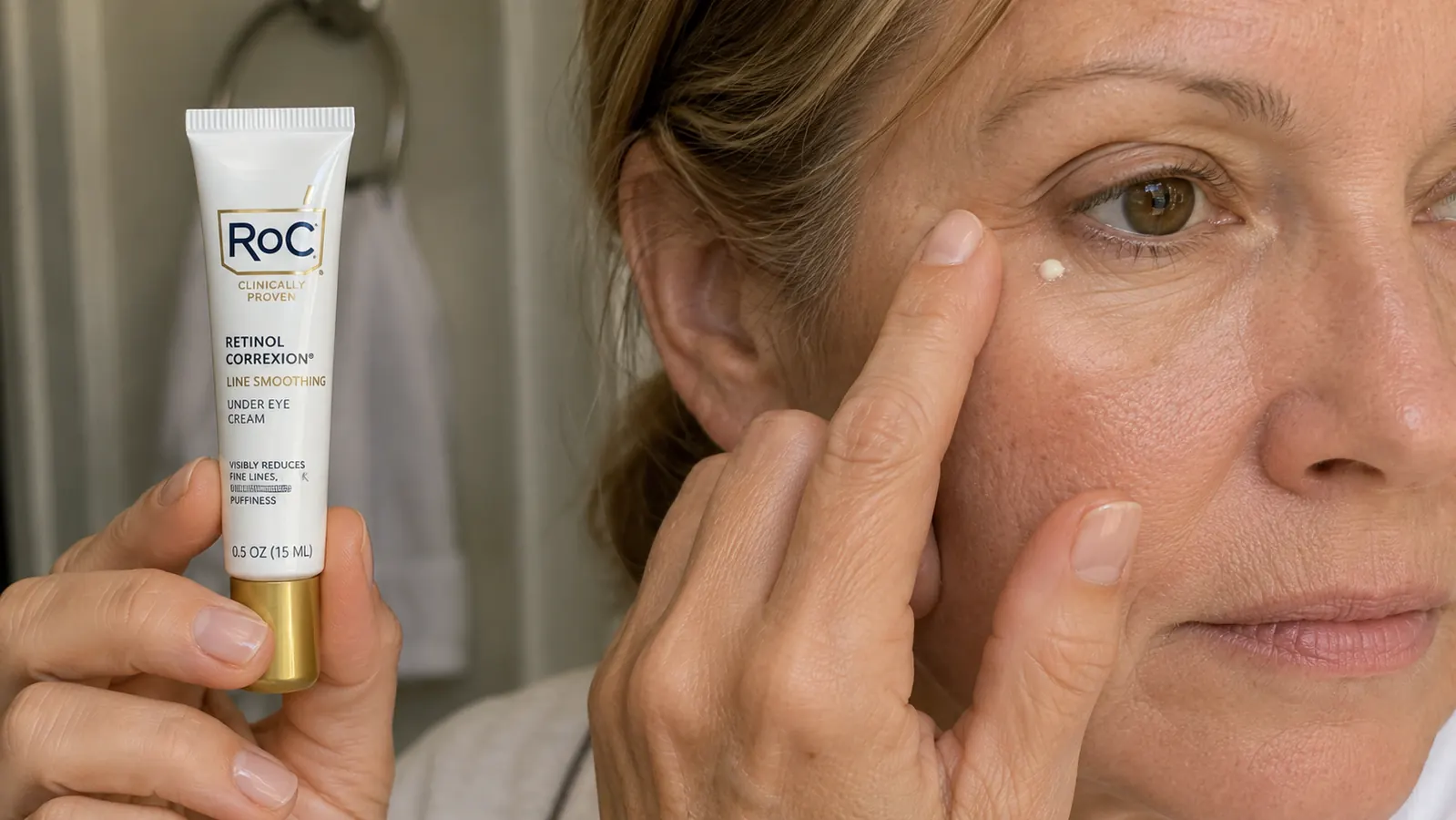
I bought this tube in January, not out of any particular optimism, but because I'd run out of patience with brightening serums that never mentioned an actual ingredient at an actual concentration. The RoC label states its retinol plainly, which is rare enough at drugstore prices that it's what got me to buy it over three other tubes sitting on the same shelf. I used my ring finger to press, never drag, a dot roughly the size of half a grain of rice just below my lower lash line, staying clear of the inner corner where my skin has always been thinnest and most reactive.
By the third night I almost put the tube in the donation bag. There was a mild tingling sensation on application, not painful, but noticeable enough that I second-guessed whether I'd applied too much or too close to my lash line. It faded within a couple of minutes each time, and by the following morning there was no redness or flaking to show for it, but that tingle caught me off guard because nothing on the box mentioned it. I've since read enough other reviews to know I wasn't imagining it, plenty of people notice the same thing and either push through or quit right there.
What kept me from quitting was slowing down rather than stopping. I went to every third night instead of nightly for the first two weeks, which is a slower ramp-up than the packaging suggests you need, and it made the difference between tolerating the product and resenting it. Retinol this close to the eye behaves differently than retinol on the rest of your face, the skin there is thinner and there's less oil to buffer it, and I think any eye cream built around it deserves a slower introduction than most people, myself included at first, assume.
By the end of the first month I'd settled into a routine I still use today, cleanse, let my skin air dry completely, then apply. Applying to damp skin was the other mistake I made early on, since it made the tingling more noticeable and the applicator tip harder to control with any precision. Waiting the extra minute for my skin to actually dry made a real difference, and it's the kind of small detail that never makes it onto packaging copy, only onto the kind of review that admits to trial and error.
The Applicator Tip Isn't What I Expected
The RoC tube ends in a small metal tip that some reviews describe as a cooling massage roller, and I want to correct that before you order expecting a spa tool. It's a dispensing tip, flat and smooth, meant to control how much product comes out per press rather than to roll or massage anything into the skin. It does feel pleasantly cool against the skin for the first second or two, likely just because metal reads cooler than a fingertip does, but it's not a vibrating or rolling device, and if that's the picture you've formed from photos online, you'll be a little disappointed the first time you actually hold it.
I also expected a thicker cream than what's actually in the tube. It's closer to a light gel-cream hybrid, sinking in within a minute or two rather than sitting on the skin the way a heavier night cream would. That's probably the right call for skin as thin as what's under the eye, but if you're used to a richer eye balm, the texture alone might make you wonder if you got a bad batch. You didn't. That's simply the formula, and it's worth knowing before you order so the first application isn't a surprise.
The Dark Circle Myth Nobody Corrects Before You Buy
Most people, myself included for years, use the phrase dark circles as if it describes one single thing a cream can fix. It doesn't. Some dark circles are genuinely pigment, a brownish discoloration from years of sun exposure or simple genetics, and a topical ingredient like retinol can plausibly soften that over time by encouraging skin turnover. Some dark circles are vascular, a bluish or purplish cast from blood vessels showing through skin that's thinned with age, and that responds a little to retinol too, since thickening the skin slightly can make those vessels less visible.
But a real amount of what people call dark circles, especially past fifty, is hollowing. It's the tear trough deepening as the fat pad under the eye shifts and the bone structure of the face changes with time, and that creates a shadow from an actual dip in the surface, not from pigment sitting in the skin. No eye cream, this one included, touches that, because there's nothing to lighten. You'd need volume added back, not surface treated, and no jar on a drugstore shelf does that. I want to say this clearly because I don't think the marketing ever will: if you look in the mirror and what you see is a groove, not a tint, set your expectations before you spend the money.
For me it turned out to be a mix, mostly pigment and vascular with a small amount of hollowing starting to show at the inner corner. That mix is probably why I saw real, visible improvement in the parts that were pigment and vessels, and no change at all in the small hollow that's simply started with age. If you're not sure which kind you're dealing with, standing in bright, unflattering daylight rather than a flattering bathroom light and gently stretching the skin under your eye will usually tell you. If the darkness disappears when you stretch it, that's more likely pigment or vessels. If a shadow stays because there's an actual dip, that's structural, and worth knowing before you buy anything.
The Fragrance Question Nobody Asks Until Their Eyes Are Already Watering
This RoC formula is labeled fragrance-free, and technically it is, no added perfume listed on the ingredient panel. But fragrance-free doesn't mean scentless in the way some people expect. There's a faint, slightly medicinal smell that comes through in the first few seconds after application, the kind you get from certain preservatives and stabilizers rather than an actual fragrance ingredient. It's mild and it fades quickly, and it never migrated into my eyes or made them water the way a genuinely perfumed cream has in the past, but I think anyone with a sensitive nose or a history of reacting to any scent at all deserves to know it's there before they open the tube expecting absolutely nothing.
I mention this because I've bought fragrance-free products before and been caught off guard when they still smelled like something, and I don't think that's dishonest labeling so much as an unspoken gap between what fragrance-free technically means on an ingredient list and what a customer pictures when she reads it. If you've had a bad reaction to a scented eye cream before, I'd still call this one safe to try. If you're hoping for something that smells like literally nothing at all, adjust that expectation before you open the box.
The Math Nobody Runs on That Tiny Tube
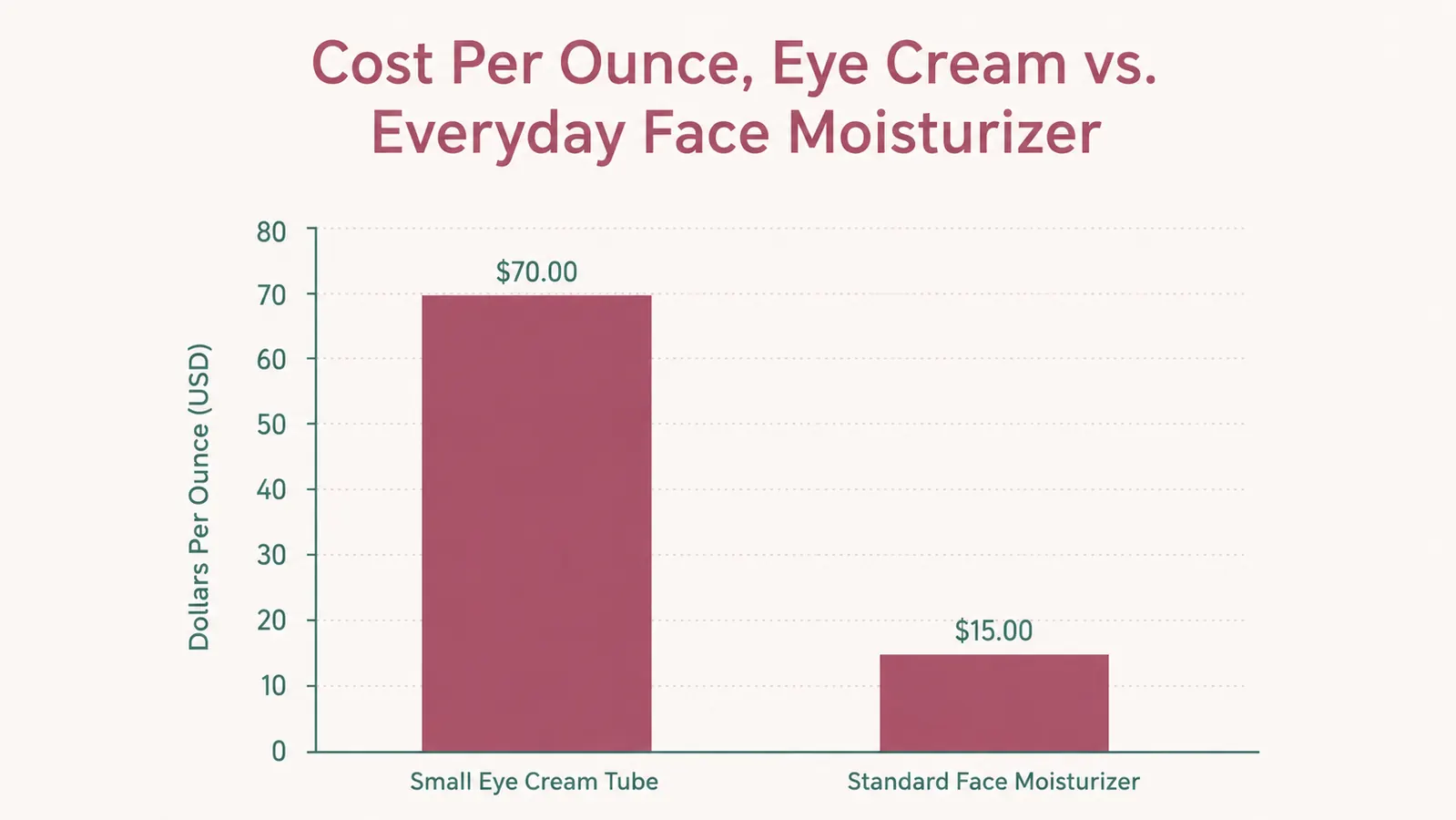
The RoC tube, all 0.5 ounces of it, sounds small until you actually hold it, and then it looks smaller than that. At today's price, that works out to a noticeably higher cost per ounce than almost anything else in my routine, including serums I use across my entire face. I understand why, formulating for the eye area costs more and the packaging with a metal applicator tip isn't cheap either, but I don't think most people run that math before they buy, and I think they should, because it changes how you'll feel about the purchase a few weeks in.
Here's the part that actually made the math work out fine for me in the end. Because so little product is used per application, a dot barely bigger than a grain of rice for both eyes combined, that small tube lasted me close to ten weeks of nightly use once I was past the every-third-night introduction. Priced per ounce it looks expensive sitting on the shelf. Priced per week of actual use, it landed closer to what I'd spend on a cup of coffee, and that's the number that matters more than the one on the price tag.
What I Liked
- States an actual retinol concentration on the label instead of a vague proprietary blend
- Real, visible softening of pigment and vascular darkness for me, not just puffiness
- So little product is needed per use that the small tube lasted close to ten weeks
- Fragrance-free formula never made my eyes water once I understood the mild residual scent
- Metal applicator tip keeps the amount you dispense controlled rather than squeezing out too much
Where It Falls Short
- Mild tingling on application that the packaging never mentions or prepares you for
- Cost per ounce is genuinely high if you don't also account for how little product each use takes
- Does nothing for hollowing or structural shadow, only for pigment and vessel-related darkness
- Needs a slower every-third-night introduction than the label implies, or irritation is more likely
- Easy to confuse with other RoC Retinol Correxion products on the same drugstore shelf
If what you see in the mirror is a groove, not a tint, no eye cream reaches that. Mine was mostly pigment and vessels, and that's the part that actually changed.

Who This Is For
This makes sense for you if your darkness is more brownish tint or bluish vessel than actual dip, if you've never used retinol near your eyes before and want the RoC formula's gentler on-ramp instead of a full-face retinol product, or if you've been burned by scented eye creams that stung or watered your eyes in the past. It's also a reasonable pick if you want an ingredient you can actually name on the label rather than trusting a brand's proprietary complex, and if you're realistic that a tiny tube used sparingly can still last long enough to be worth the price per ounce. It suits someone patient enough to wait five or six weeks for a real answer, rather than someone hoping for an overnight change.
Who Should Skip It
Skip this if your darkness is mostly hollowing, the groove that appears when you stretch the skin and the shadow stays. No topical product, this one included, is built to fix that, and you'll spend money and patience on something that was never going to move the needle. Skip it too if you're new to retinol anywhere and impatient, since the honest timeline runs closer to five or six weeks before pigment and vessel changes show up, not the overnight difference some marketing implies. And skip it if you're pregnant or nursing without first checking with your own doctor, since that's a conversation worth having about any retinol product regardless of where it's applied. If you want the fuller, step-by-step version of introducing a product like this without irritation, I laid out the exact routine in how to reduce under-eye puffiness with a targeted eye cream, and if you're still deciding whether a dedicated eye cream is worth adding at all, the broader case is in 10 reasons a dedicated eye cream helps dark circles and puffiness.
The Honest Version, One More Time
It won't touch a structural hollow, it tingles the first few nights, and the tube is smaller than the price makes you expect. It also genuinely softened the pigment and vessel-related darkness I actually have, and lasted close to ten weeks doing it. Check today's price on Amazon if that honest trade-off sounds like a fair one for you.
Amazon Check Today's Price on Amazon →